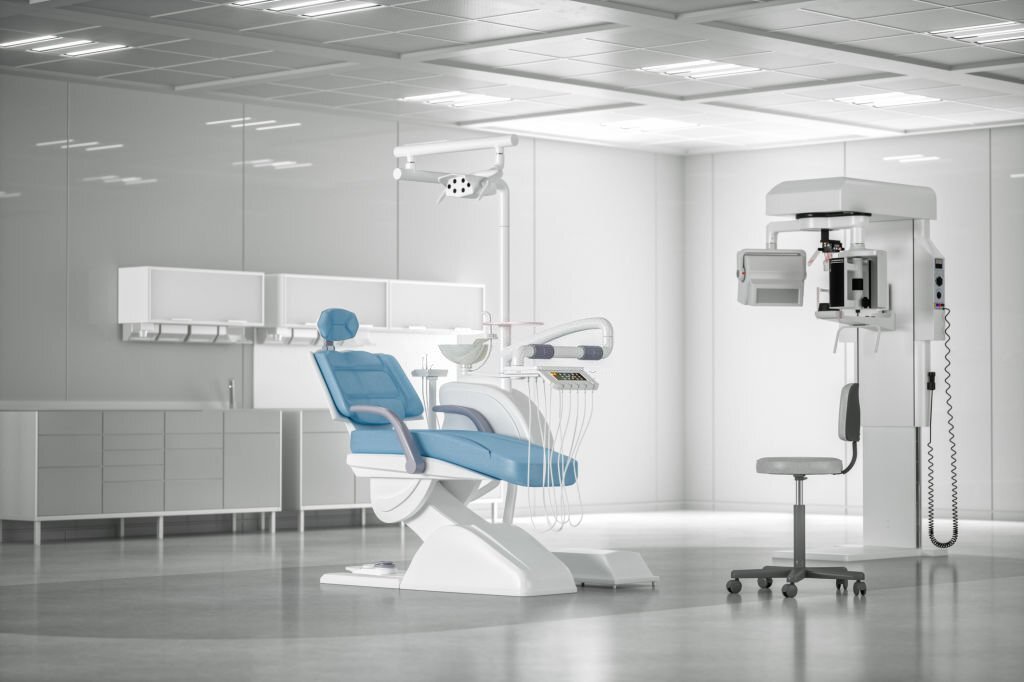
Seamless epoxy and resin flooring specified by room—for operatories, instrument processing,
corridors, reception areas, labs, and support spaces.
Priority One Epoxy Flooring plans each system around the concrete, rolling chair and cart traffic,
cleaners used, wet exposure, appearance goals, and the clinic’s available shutdown window.
Options include high-build epoxy, durable resin topcoats, broadcast finishes, selected
urethane-cement systems, and integrated cove details where the conditions justify them.
Richmond-based · 20+ years serving BC · 500+ completed epoxy and resin flooring projects company-wide · Licensed and insured
Dental Office Flooring Built Around Each Clinic Zone
The best dental office flooring is not chosen from one generic list of benefits. An operatory,
instrument-processing room, lab, corridor, reception area, and staff room can have different traffic,
cleaning, moisture, appearance, and scheduling requirements.
Priority One installs dental office and dental clinic flooring across Vancouver and Metro Vancouver.
We start with the substrate and the way each room is used, then recommend the resin build, surface texture,
edge details, and cure schedule that fit the project. A seamless resin floor can reduce field joints and grout
lines and make routine housekeeping more straightforward, but a floor does not sterilize a clinic or establish
infection-control compliance on its own.
In British Columbia, clinic owners and oral-health teams should coordinate their renovation decisions with the
applicable BCCOHP standards and infection-prevention resources,
the project designer or consultant, and the manufacturers' written cleaning and maintenance instructions.
20+ yearsServing British Columbia
500+ projectsEpoxy and resin work company-wide
Richmond basedCore Metro Vancouver service area
Written scopePreparation, system, timing, and care
Room-by-Room Floor Selection for Dental Clinics
A room schedule is more useful than specifying “epoxy everywhere.” The following are starting directions;
the final build depends on the existing floor, concrete condition, products used in the clinic, and the approved shutdown window.
Operatories and Treatment Rooms
Rolling stools, chairs, mobile carts, repeated foot traffic, spills, and patient-facing appearance all matter.
A smooth high-build epoxy system with a durable, product-compatible topcoat is often a practical direction
when the concrete substrate is suitable.
Instrument Processing and Sterilization
Review wet exposure, equipment heat, cleaning products, and the actual chemicals used. A more resistant
resin topcoat, broadcast system, or selected urethane-cement build may be appropriate—but only after the
exposure list is checked against current manufacturer data.
Dental Labs and Utility Rooms
These spaces can see different stains, liquids, equipment loads, and impact than public areas. The floor
should be chosen around the known exposure rather than a blanket “chemical-resistant” claim.
Corridors, Reception, and Waiting Areas
Appearance, abrasion, cleaning, and a comfortable patient experience usually lead the decision. Smooth
solid-colour or decorative resin finishes can create a continuous visual field, while other resilient
flooring types may also be reasonable where softness or acoustics take priority.
Washrooms, Staff Rooms, and Wet Support Areas
Traction and cleanability have to be balanced. More texture can improve grip under wet conditions, but an
unnecessarily aggressive surface can hold soil and take longer to clean. Aggregate size and finish should
be selected for the room, footwear, cleaning method, and owner-approved safety requirements.
Epoxy vs Other Dental Office Flooring Options
Searchers comparing dental flooring are not always ready to choose resin. This practical comparison shows where
each common option can fit and where a project team should look more closely.
Flooring option
Useful strengths
Limitations to assess
Typical fit
Seamless resin flooring
Continuous surface, optional coves, varied colours and textures, and a system that can be built around the exposure.
Requires sound preparation, controlled installation conditions, cure time, and product-specific chemical review. It is firmer underfoot than many resilient finishes.
Operatories, processing rooms, labs, corridors, and support areas where joint reduction and durability are priorities.
Heat-welded sheet vinyl or linoleum
Resilient underfoot, familiar healthcare aesthetic, and relatively few seams when detailed correctly.
Welds, edges, punctures, indentation, substrate flatness, and moisture below the material all require attention.
Clinical and public areas where comfort, acoustics, and resilient-floor specifications lead the decision.
Luxury vinyl tile or plank
Broad design range and individual pieces can be replaced.
More joints, possible rolling-load indentation or movement, and less suitability for consistently wet or higher-exposure rooms.
Reception, waiting, consult, and selected dry administrative areas.
Porcelain or ceramic tile
Hard-wearing surface with familiar design options.
Grout, transitions, repairs, and rolling comfort become part of the long-term maintenance plan.
Selected washrooms, entries, or areas where tile is already part of the design specification.
When resin is the right choice: it should be selected because the clinic benefits from a
continuous, bonded floor system and the slab, schedule, room use, and maintenance plan support it—not because
every dental room supposedly needs the same material.
Dental Resin Systems and Where They Fit
High-Build Epoxy with a Durable Topcoat
Often suited to dry operatories, treatment rooms, corridors, and public-facing areas. The complete build—not
simply the word “epoxy”—determines finish, wear, stain response, and maintenance.
Quartz or Broadcast Resin Systems
Aggregate can add texture and build where wet exposure or harder use calls for it. Texture is adjusted to
the cleaning method and traction requirement rather than maximized automatically.
Urethane Cement for Selected Support Areas
Urethane cement can make sense in more demanding wet, thermal, or chemical-service areas. It is not the
default answer for every operatory and may be unnecessary where exposure is light.
Rapid-Return Resin Options
Faster-cure systems can support staged or weekend work where appropriate. Product choice still depends on
ventilation, temperature, odour sensitivity, full-cure requirements, and the time before chairs and equipment return.
Cove Base, Thresholds, and Equipment Details
A floor can fail at its edges even when the field area looks good. The scope should define cove height and
termination, door thresholds, cabinetry and toe-kick interfaces, floor drains where present, equipment bases,
and accessible floor penetrations. Dental-chair or utility disconnection belongs with the appropriate dental-equipment
or mechanical trade unless it is expressly included by a qualified contractor.
What a Complete Dental Flooring Quote Should Cover
Price per square foot is not meaningful until the preparation, detail work, system thickness, cure schedule, and
exclusions are clear. Provide the following information so contractors can quote the same scope.
Room list and approximate square footage by zone
Existing flooring and removal requirements
Concrete condition, repairs, cracks, joints, and previous failures
Moisture history and testing where conditions indicate a risk
Cleaning products, disinfectants, concentrations, and contact times
Rolling chairs, carts, equipment loads, and floor penetrations
Cove base, wall, cabinet, drain, edge, and threshold details
Finish colour, sheen, texture, and sample expectations
Clinic closure window, phasing, access, and ventilation constraints
Return-to-service milestones for foot traffic, furniture, and chemicals
Protection of fixed equipment and adjacent finished surfaces
Written maintenance guidance and warranty terms
Ask for documentation: the proposed system layers, approximate thickness, preparation method,
current product data sheets, relevant chemical-resistance information, cure assumptions, exclusions, and care instructions.
Broad terms such as “medical grade,” “antimicrobial,” “non-slip,” or “health-authority approved” should not replace product-specific evidence.
Site and workflow review. Confirm room use, current finishes, operating hours, access, equipment coordination, and the practical shutdown window.
Substrate and exposure assessment. Review removal, concrete condition, joints, cracks, contamination, moisture risk, cleaners, liquids, and traffic.
Written room schedule. Define the preparation, repairs, system layers, finish, edges, coves, cure assumptions, and areas excluded from the scope.
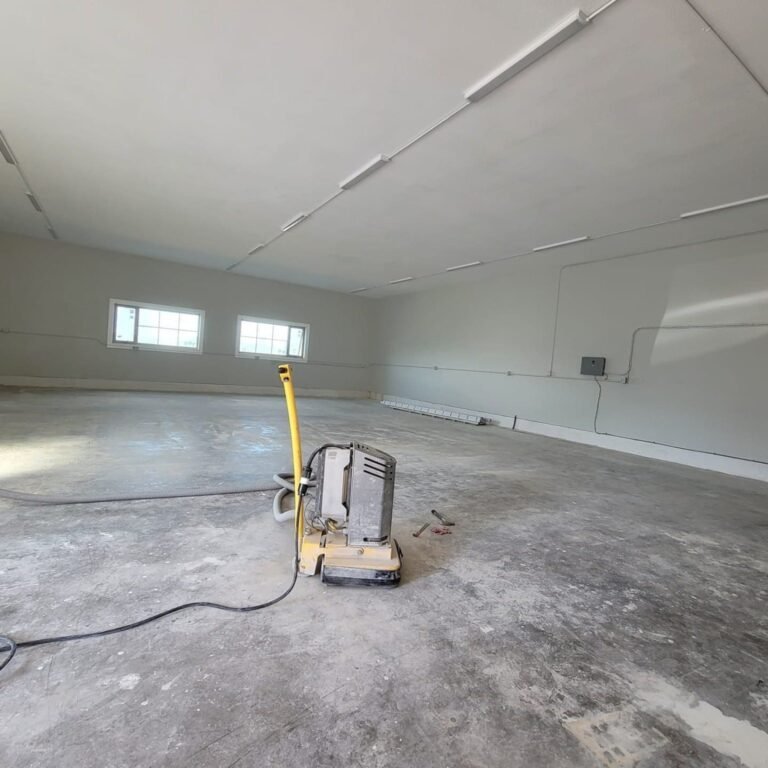
Protection and mechanical preparation. Coordinate dust control and protection, remove incompatible materials, mechanically profile the concrete, and complete approved repairs.
Phased resin installation. Install each specified layer under acceptable site conditions and protect finished areas through the stated cure period.
Handover. Confirm return-to-service timing for foot traffic, furniture, chairs, cleaning, and chemical exposure; provide maintenance and warranty information in writing.
Cure and reopening times vary by product, temperature, humidity, layer thickness, and exposure. A responsible proposal
gives project-specific milestones instead of promising that every clinic can reopen overnight.
Why Priority One Epoxy Flooring
Preparation Before Product
The recommendation begins with the slab, existing flooring, repairs, moisture risk, and details that control adhesion—not with colour or gloss alone.
Room-Specific Scope
Operatories, processing rooms, labs, public areas, and wet support spaces are evaluated separately so the floor build fits the exposure.
Local Commercial Experience
Priority One is based in Richmond and reports 20+ years serving BC and 500+ completed epoxy and resin flooring projects across commercial, industrial, residential, and specialty work.
Clear Expectations
The goal is an itemized scope with realistic preparation, scheduling, cure, handover, maintenance, and qualifying warranty information.
There is no universal best material. Seamless resin is a strong option when joint reduction, a bonded surface,
durability, and custom detailing are priorities. Heat-welded sheet flooring may be preferable where resilient
comfort or an existing healthcare specification leads the decision. Choose by room, substrate, cleaning routine, and schedule.
Does epoxy flooring make a dental clinic hygienic or compliant?
A properly installed resin floor can provide a continuous, cleanable surface with fewer joints, but no floor
sterilizes a clinic or creates compliance by itself. Infection-prevention procedures, cleaning products, room design,
equipment, and applicable professional standards all remain important.
Will dental disinfectants stain or damage a resin floor?
Compatibility depends on the exact flooring product, disinfectant chemistry, concentration, temperature, contact time,
and how spills are handled. Provide the current product list before specification and request written manufacturer data
for the proposed topcoat rather than relying on a generic chemical-resistance statement.
Can a resin floor be installed around dental chairs and equipment?
Sometimes, but the cleanest result is usually coordinated with planned equipment removal or replacement. Fixed bases,
service penetrations, cabinetry, and utilities must be reviewed before quoting, and dental equipment should be disconnected
and reconnected by the appropriate qualified trade unless expressly included.
How long must a dental office close for installation?
It depends on removal, repairs, system choice, temperature, ventilation, room sequence, and the return-to-service requirement.
Some projects can be staged or scheduled over weekends; others need longer. The proposal should identify separate times for
foot traffic, furniture, equipment, cleaning, and full chemical exposure.
Is cove base required in every dental room?
Not automatically. Integrated resin coves can simplify floor-to-wall transitions in selected clinical or support areas,
but the appropriate height, termination, and room coverage should follow the owner’s cleaning plan and the project designer,
consultant, or applicable standard.
Dental Clinic Flooring Across Metro Vancouver
Priority One serves dental office flooring projects in Vancouver, Richmond, Burnaby, Surrey, Coquitlam,
New Westminster, North Vancouver, West Vancouver, Delta, and surrounding Lower Mainland communities.
Larger projects elsewhere in British Columbia can be reviewed according to scope, schedule, and travel requirements.
See the full epoxy and resin flooring service area.
Plan the Dental Floor Before the Shutdown Window
Send the clinic location, room list, approximate square footage, current floor photos, known problem areas,
cleaning products, and preferred closure dates. Priority One can review the substrate and prepare a room-by-room flooring recommendation.