Review the texture
A glossy photograph cannot establish slip resistance. Review an actual finish sample for the expected wet and dry conditions, staff footwear, animal movement and paw contact. More texture can also take more effort to clean.
Boarding facilities · Dog daycares · Wash areas
A better surface for every clean-down.
Priority One Epoxy Flooring installs seamless epoxy and resin floors for commercial kennels, boarding facilities and dog daycares across Metro Vancouver. We match the floor to your cleaning products, wet areas, animal traffic and available shutdown window.
Compare kennel flooring systems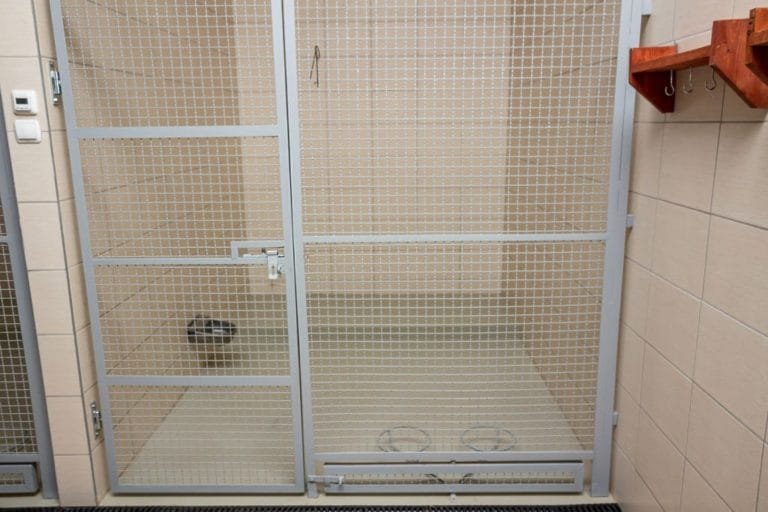
Commercial dog kennel flooring · Vancouver, BC
A properly specified epoxy system can provide a durable, cleanable surface for indoor dog kennels. Its suitability depends on the slab, cleaning chemicals, water exposure, texture and edge details.
Daily kennel use puts very different demands on a floor than an occasional mop. Urine, tracked-in grit, claws, gates, carts and repeated disinfection all need to be considered. We review the complete space before recommending high-build epoxy, a quartz broadcast system or urethane cement.
The aim is a floor your staff can clean consistently, with suitable texture and carefully finished transitions at walls, drains and pens. Flooring supports your sanitation programme; it does not replace it.
Planning several types of rooms? Explore our commercial epoxy flooring service for the wider facility scope.
Different spaces. Different demands.
Open a space below to see the details we consider during a kennel flooring assessment.
For boarding and animal-shelter kennel rooms, review urine exposure, pen divisions, gate movement and routine washdowns. The scope can include resin coves, sealed penetrations and transitions that remain accessible for cleaning. Texture is considered alongside animal movement and resting arrangements.
Shampoo, hair, water and disinfectants change the surface conditions. We review wet traction, chemical compatibility, drain connections and whether existing falls move water effectively. Correcting a drainage problem needs a defined repair scope before the finish is installed.
Active dogs need a different discussion than a storage room. Review texture samples for traction, surface abrasiveness and cleanability with your team. Hard resin flooring does not provide cushioning; rest areas and any removable mats need their own comfort and cleaning plan.
Select practical colours and finishes for reception, feeding preparation, storage and staff circulation. Separate wet utility areas from drier public spaces when specifying texture and cleaning requirements. For clinical treatment spaces, see our veterinary clinic flooring service .
Epoxy & resin system selection
Epoxy dog kennel flooring is a system: preparation, repairs, primer, resin build, texture and compatible finish. The product combination matters more than choosing a coating by name alone.
| System | Where it may fit | What we check |
|---|---|---|
| High-build epoxy | Indoor runs, boarding rooms, corridors and support areas with compatible cleaning conditions. | Slab condition, moisture limits, wear, specified texture and resistance to the actual cleaning products. |
| Quartz broadcast resin | Wet circulation, wash areas and kennel zones needing a textured, decorative resin finish. | Aggregate profile, seal coats, paw contact and how staff will scrub and rinse the surface. |
| Urethane cement | Demanding wet-service rooms where heat, repeated washdowns or chemical exposure justify this system. | Actual temperatures, chemical resistance, required thickness, drainage and the manufacturer's installation conditions. |
A polyurethane or polyaspartic topcoat may form part of a compatible system. “Fast cure” does not mean the floor is immediately ready for disinfectants, washdowns or returning animals. Each exposure has its own return-to-service requirements.
Have a cleaning-product list or an existing floor specification? Include it with your enquiry.
Request a System Review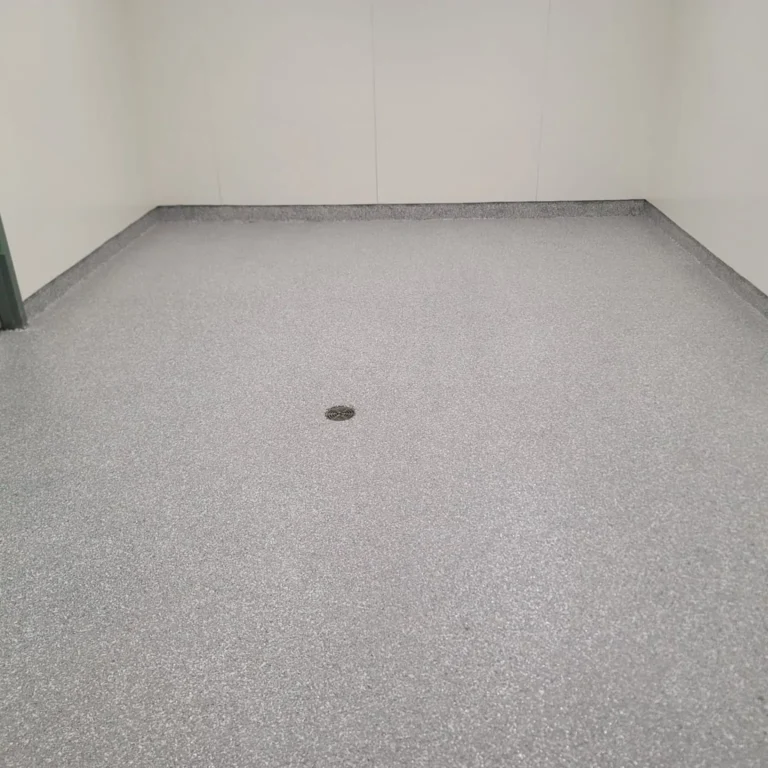
The details behind easier cleaning
A new finish cannot solve every problem beneath or beside it. We look at the floor, wall junctions and drainage together so the quote covers the places most likely to collect water and waste.
Cove base creates a curved floor-to-wall transition. Drain edges, posts and thresholds need compatible detailing. Movement joints remain functional; a seamless field finish does not mean coating across every joint or making an entire room waterproof.
Where urine has entered porous concrete, failed coatings or adjacent materials, the contamination needs assessment before resurfacing. A coating alone is not a reliable remedy for an existing odour source.
Explore flooring for demanding washdown areasDesigned around daily kennel operations
A glossy photograph cannot establish slip resistance. Review an actual finish sample for the expected wet and dry conditions, staff footwear, animal movement and paw contact. More texture can also take more effort to clean.
Provide the product names, concentrations, dwell times and wash temperatures. Resistance varies by resin system and exposure. Your facility's cleaning protocol and the flooring manufacturer's care instructions need to work together.
Include animal relocation, work-zone separation and ventilation in the installation plan. Animals return only after the specified cure and return-to-use conditions have been met, including any cleaning before reopening.
Preparation through reopening
Review contamination, coatings, cracks, moisture, drains and equipment access. Identify repairs and testing needed before choosing the system.
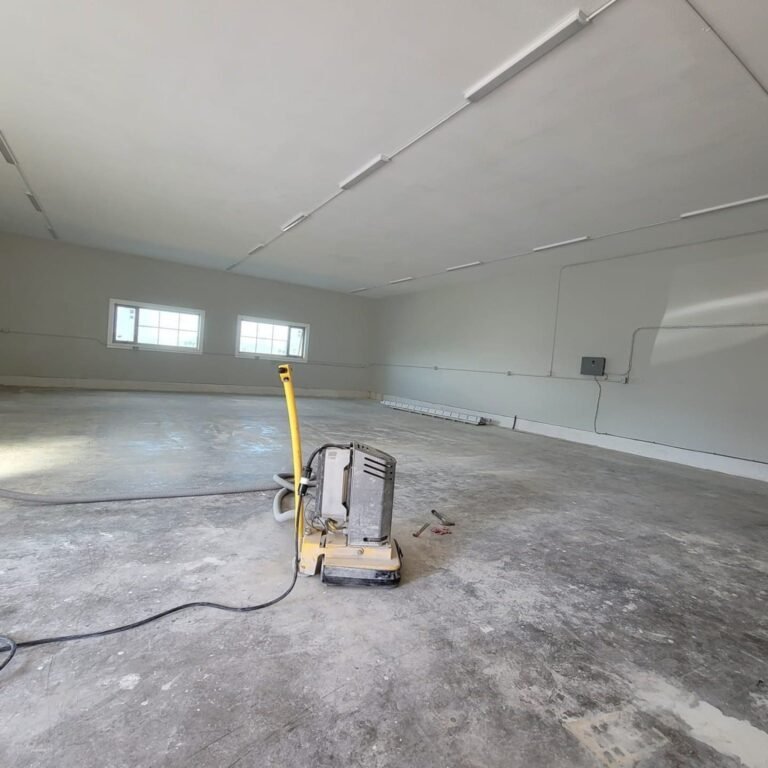
Mechanically prepare suitable concrete to the specified profile, manage dust, and complete agreed repairs. Resolve unsuitable or contaminated material before coating.
Build the agreed primer, body coats, texture and finish. Complete coves, edges, drain junctions and joint details within the defined scope.
Set separate milestones for foot traffic, equipment, wet cleaning and animal use. Provide care guidance and inspect the finished work before the agreed reopening.
Quote the work that is actually needed
Floor area is only one part of the price. A small wash room with contaminated concrete, several drains and extensive coving can require more detailed work than a larger, clear room on a sound slab. A site review helps make the scope comparable.
Ask for preparation, repairs, coves, resin system and reopening assumptions to be identified in the proposal. A square-foot price without these details can leave important work undefined.
Kennel flooring questions
Planning a boarding facility renovation, new indoor runs or a daycare floor? Start here, then discuss the specifics of your site with us.
Explore resin floor coloursIt can be, when the complete system suits the slab, animal traffic, moisture and cleaning exposures. The specification should cover preparation, resin build, texture, coves, drains and joints. Some demanding wash areas may call for urethane cement instead.
A suitable, intact resin system can limit liquid absorption into the floor and make waste easier to remove. It does not eliminate odours from drains, walls, damaged joints or contaminated material beneath an old finish. Prompt cleaning and assessment of existing contamination remain necessary.
Texture can be adjusted within the selected system, but there is a balance between wet traction, abrasiveness and cleanability. Review a sample for your facility's conditions and the dogs using the space. No floor is slip-proof, especially when water, hair, shampoo or waste is present.
Resin provides a hard, continuous finish that can be detailed with coves and drains. Rubber products may offer different cushioning, acoustic and traction characteristics. Compare the actual products, seams, drainage, cleaning compatibility and resting needs rather than assuming one material suits every daycare area.
The schedule depends on preparation, repairs, floor area, detailing, ambient conditions and the resin system. Animals need to remain away from affected work areas during preparation, application and cure. Agree a return-to-use plan for animals, equipment, disinfectants and wet cleaning before work starts; foot-traffic readiness alone is not enough.
Only after assessing the substrate, adhesion, moisture, contamination and movement. Loose tile, failing coatings or unsuitable material may need removal. We identify the preparation and repair requirements before recommending an overlay.
Exterior areas require a separate assessment of UV exposure, rain, freezing conditions, drainage and substrate movement. An indoor epoxy specification should not automatically be carried outside. We review whether a suitable exterior system is available for the location.
Follow your facility's sanitation procedure and the installed system's care instructions together. Confirm cleaner compatibility, dilution, dwell time, rinsing and water temperature. Remove hair and soil, maintain drains and inspect worn or damaged areas so defects can be repaired promptly.
Dog kennel epoxy flooring · Metro Vancouver
Tell us what your staff clean, where water collects and when the space can close. We will review the surface, detail work and resin options with your operating needs in mind.
Serving commercial kennel and daycare facilities in Vancouver, Burnaby, Richmond, Surrey, Coquitlam, Delta, Langley and the North Shore. For other BC locations, check our service areas .