Plan for tools, wheels and daily wear
Caster materials, equipment feet, grit and repeated turning affect the wear layer and detailing. A coating protects a suitable surface; it does not increase the slab’s structural load capacity.

Commercial workshops · Fabrication & repair · Vancouver, BC
A working floor. A carefully planned installation.
Priority One Epoxy Flooring installs epoxy and resin floors for fabrication shops, repair workshops and contractor workspaces. We assess your concrete, oils, rolling loads and cleaning routine, then plan the finish and installation around your operating window.
Explore your workshop zones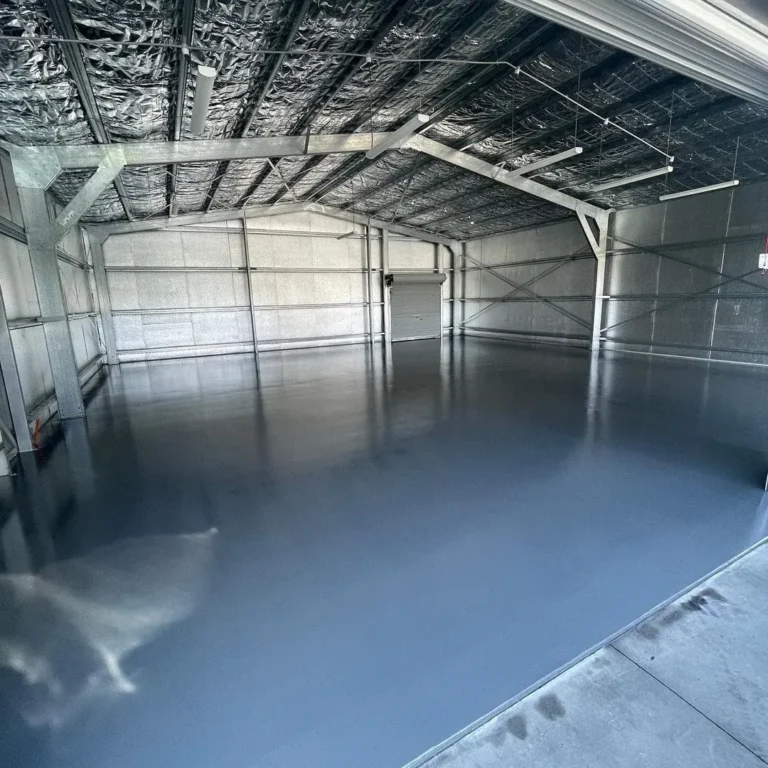
Commercial workshop flooring
Benches, rolling toolboxes, daily cleanup and occasional spills place different demands on different parts of the same workshop.
Our workshop epoxy flooring service in Vancouver covers fabrication, general repair, contractor and equipment-support workspaces. The assessment connects concrete preparation, resin build, surface texture and maintenance to the work happening in each area.
Solid-colour epoxy, decorative flake, quartz broadcast and compatible protective topcoats offer different finishes. We confirm the complete system against your traffic, actual fluids and available closure time before recommending a build.
Caster materials, equipment feet, grit and repeated turning affect the wear layer and detailing. A coating protects a suitable surface; it does not increase the slab’s structural load capacity.
Specify traction where water or spills are likely, while keeping dry work areas practical to sweep and clean. Texture, footwear, housekeeping and spill control work together.
Equipment relocation, preparation, installation and curing all belong in the schedule. Foot access and loaded equipment traffic may have different release times.
Start with your work zones
Open an area below to see the conditions that shape the floor specification. One workshop may need more than one texture or level of protection.
Review dropped tools, metal offcuts, dust, workbench feet and material movement. A suitable high-build epoxy with a compatible wear coat can be assessed for general dry working areas.
Identify welding and hot-work locations separately. Hot metal and weld spatter can burn resin; protection and floor details must suit those exposures.
Identify lubricants, hydraulic fluids, degreasers and any solvents that contact the floor. Product name, concentration, temperature and contact time guide compatibility checks.
Inspect existing oil-stained concrete before choosing a finish. Deep contamination may require treatment, further removal or a trial area.
Rolling toolboxes, service carts, delivery routes and tight turns create repeated wear. Review wheel hardness, wheel condition, loads, grit and joints along the route.
Agree aisle markings, door transitions and access routes before installation. Keep heavy storage and equipment movement within the approved cure schedule.
Water tracked through a roller door, cleaning stations and recurring spills may call for a more textured broadcast finish. Assess drainage, footwear and the cleaning method together.
Where hot washdown or harsher exposure is present, review an appropriate urethane-cement system rather than assuming a standard epoxy build is sufficient.
System selection
“Epoxy flooring” can describe several layered assemblies. Specify the primer, build thickness, broadcast, wear coat and cure conditions together. The comparison below is a starting point for your site assessment.
| System | Where it may fit | What to confirm |
|---|---|---|
| High-build epoxy with a compatible wear coat | Dry fabrication, general repair and contractor workshops needing a cleanable, solid-colour finish. | Rolling loads, actual fluids, build thickness, texture and UV exposure near open doors. |
| Quartz-broadcast resin | Wet entrances, cleaning areas and spill-prone zones where additional texture is useful. | Aggregate profile, cleaning effort, drainage and footwear. Texture alone cannot eliminate slip risk. |
| Full-flake resin | Selected workrooms and public-facing workshop areas where a decorative finish suits the use. | Wear coat, texture and chemical compatibility. Flake appearance is not a performance specification. |
| Urethane cement | Selected areas with hot washdown, repeated thermal exposure or more demanding service conditions. | Product-specific resistance, thickness, detailing and cure requirements. Hot-work damage still needs separate protection. |
Bring the names or safety data sheets of fluids and cleaners used in the shop. Chemical resistance is specific to the installed system and exposure; no resin floor is resistant to every chemical under every condition.
Commercial floor finish references
Explore grey flake and resin finishes in industrial interiors. Compare colour, texture and sheen; your final floor assembly is selected after the concrete and work areas are assessed.
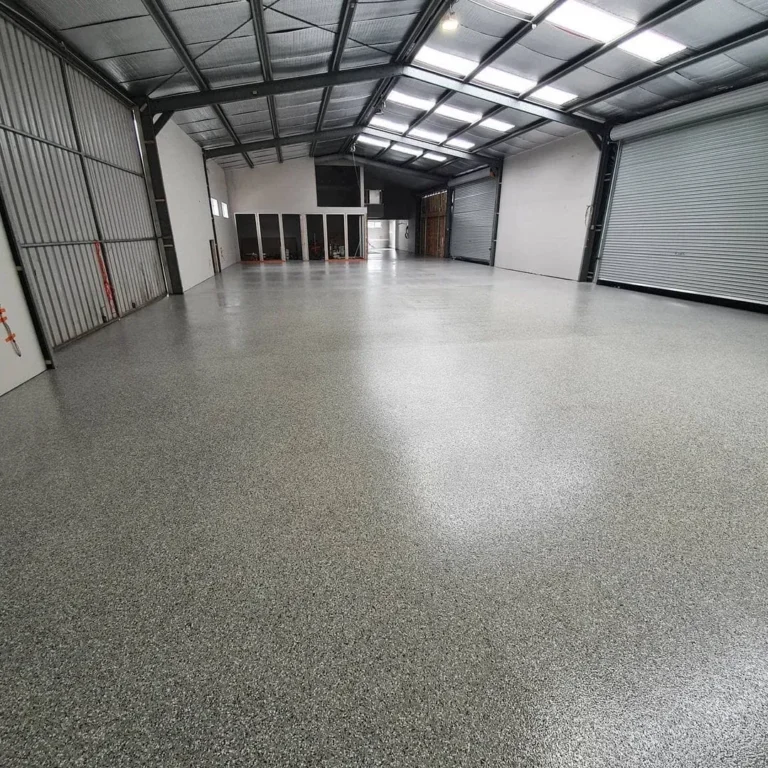
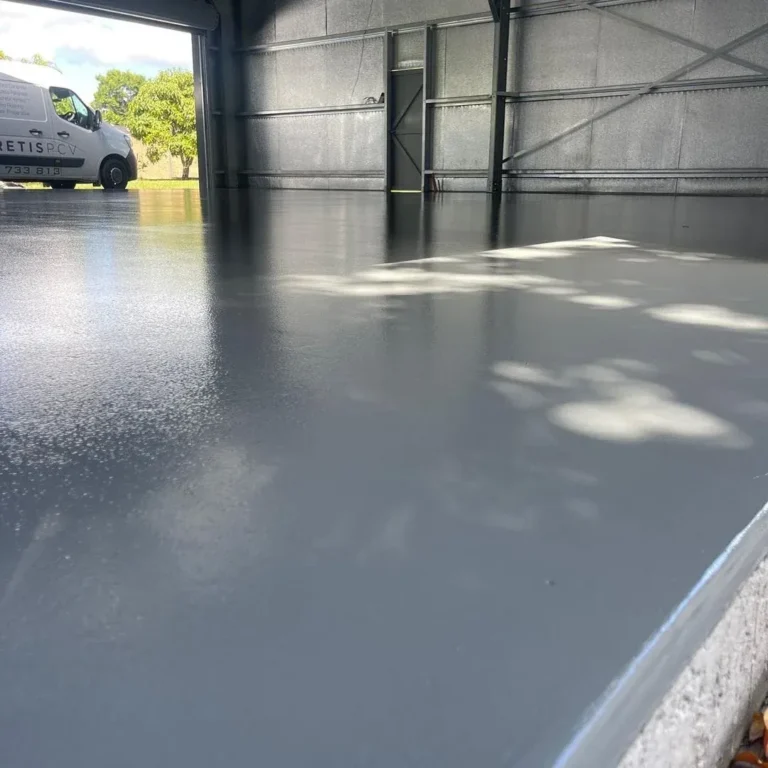
Light and mid-grey floors can help contrast with small parts and debris. Review samples under the actual lighting and against your equipment.
Choose texture by wet exposure and cleaning needs. A photograph cannot tell you how the floor performs with your footwear, oils or cleaning method.
Agree finish transitions, aisle colours and marked storage areas before work begins. Confirm sample colour, gloss and texture for the selected assembly.
The foundation of the installation
Old paint, embedded oils, weak patches and moisture can affect the bond. The preparation scope should be clear before the resin system is installed.
Review existing coatings, contamination depth, slab condition and moisture history. Agree any testing, treatment or trial areas needed to assess suitability.
Diamond grinding or other mechanical preparation must achieve the profile required by the selected system. Define coating removal, crack and spall repairs, joints and door transitions.
Apply the approved assembly, including broadcasts and wear coats where specified. Confirm cure milestones and provide cleaning guidance before returning the area to use.
Deeply oil-contaminated or unsound concrete may need further removal or a revised scope. Moving joints need suitable detailing; they should not simply be buried under a rigid coating.
Cost & operating time
The floor area is one part of the price. Removal, contamination, repairs, the specified build and your installation window can change the scope substantially.
Request an itemized written scope covering preparation, system, detailing, exclusions and applicable taxes. Your quote should identify which assumptions need a site inspection.
Request a Workshop QuotePhasing & reopening
Workshops often need a clear route to storage, tools and equipment. Where practical, the work can be planned in zones or around an agreed shutdown. Preparation dust, ventilation, noise and isolation still need to be addressed.
Confirm who moves equipment, which routes remain accessible and how adjoining work is protected.
Removal, repairs, layer installation and curing are separate tasks. Product chemistry and site temperature affect the schedule.
Confirm approved times for foot traffic, loaded carts, equipment placement and cleaning before reopening.
After the handover
Follow the installed system’s maintenance instructions. The cleaning method must remove shop residue without damaging the finish or leaving a slippery film.
A resin finish can make cleanup easier, but it still needs routine care. Recoat and repair decisions depend on actual wear and the condition of the complete assembly.
Find the service for your space
This service covers general commercial workshops. Explore the relevant service below for the conditions of a specialized facility.
Based in Richmond, Priority One serves Vancouver, Burnaby, Richmond, Surrey, Coquitlam, Delta, Langley and North Vancouver, with other Lower Mainland projects reviewed by scope. See our Vancouver epoxy flooring service for broader local flooring options, or garage floor coatings for residential parking spaces.
Workshop flooring questions
The best system depends on the concrete, traffic, actual fluids, cleaning routine and closure time. High-build epoxy with a compatible wear coat can suit many dry workshops; quartz broadcast can be considered for wetter zones; urethane cement may suit specified harsher exposures. The site assessment should determine the complete build.
A correctly selected system can resist many workshop fluids, but resistance depends on the product, concentration, temperature and contact time. Provide the names or safety data sheets of oils, solvents and cleaners so compatibility and cleanup requirements can be checked before specifying the floor.
Sometimes. Existing coatings, contamination depth, concrete strength and moisture need assessment. The scope may include removal, cleaning, mechanical preparation, repairs and a trial area. Deeply contaminated or unsound concrete may require further removal or a revised specification.
The assembly can be selected for expected traffic, but wheel hardness, debris, turning, concentrated equipment feet and impact all matter. Suitable protection may be needed at point loads. A coating does not increase the structural load capacity of the concrete slab.
Epoxy can suit general workshop areas, but hot metal and weld spatter can burn or scar resin. Identify hot-work locations during the assessment and agree suitable protection or an alternative detail for those areas. A standard resin floor should not be treated as fireproof.
Texture can be adjusted using a suitable broadcast or traction aggregate. The specification should consider water, oils, footwear, rolling traffic and cleaning. More texture can increase cleaning effort, and no floor finish removes the need for spill control and routine housekeeping.
Cost depends on floor area, existing coating removal, contamination, repairs, moisture treatment, system thickness, texture, detailing and access. A useful quote identifies the preparation, complete assembly, exclusions, scheduling and applicable taxes. Priority One offers a free site visit to review the scope.
Phasing or after-hours work may be practical where access, isolation, ventilation and the available cure window allow it. Equipment relocation, adjoining work and routes through the shop must be agreed before installation. The project plan should define which areas close and when each can reopen.
Timing depends on preparation, repairs, the complete resin system, site temperature and the type of traffic returning. Foot traffic, loaded carts, equipment placement and cleaning may have different release times. Confirm the approved milestones in the project schedule before booking the closure.
Your floor. Your working conditions.
Start with the concrete, daily use and time available. Request a free site visit for your commercial workshop in Vancouver or the Lower Mainland.
info@priorityonepoxyflooring.com