Forklift aisles & turns
Review tire type, turning frequency, loads and wear lanes. The condition of the underlying concrete and joint edges matters as much as the surface finish.

Warehouse & distribution floors
Warehouse floor coatings in Vancouver need to account for more than square footage. Hard wheels repeatedly cross joints, loaded forklifts turn in the same areas, and dock approaches collect grit and water. We map those conditions before choosing a primer, repair scope, coating build and traction level.
Actual Priority One project
Priority One completed industrial warehouse flooring for Liebherr in Abbotsford, BC. The project included a large warehouse floor and support spaces. These are photos from that completed job, which show the scale and appearance of the actual installation. The project is in Abbotsford; Priority One also quotes warehouse floors in Vancouver and the Lower Mainland.
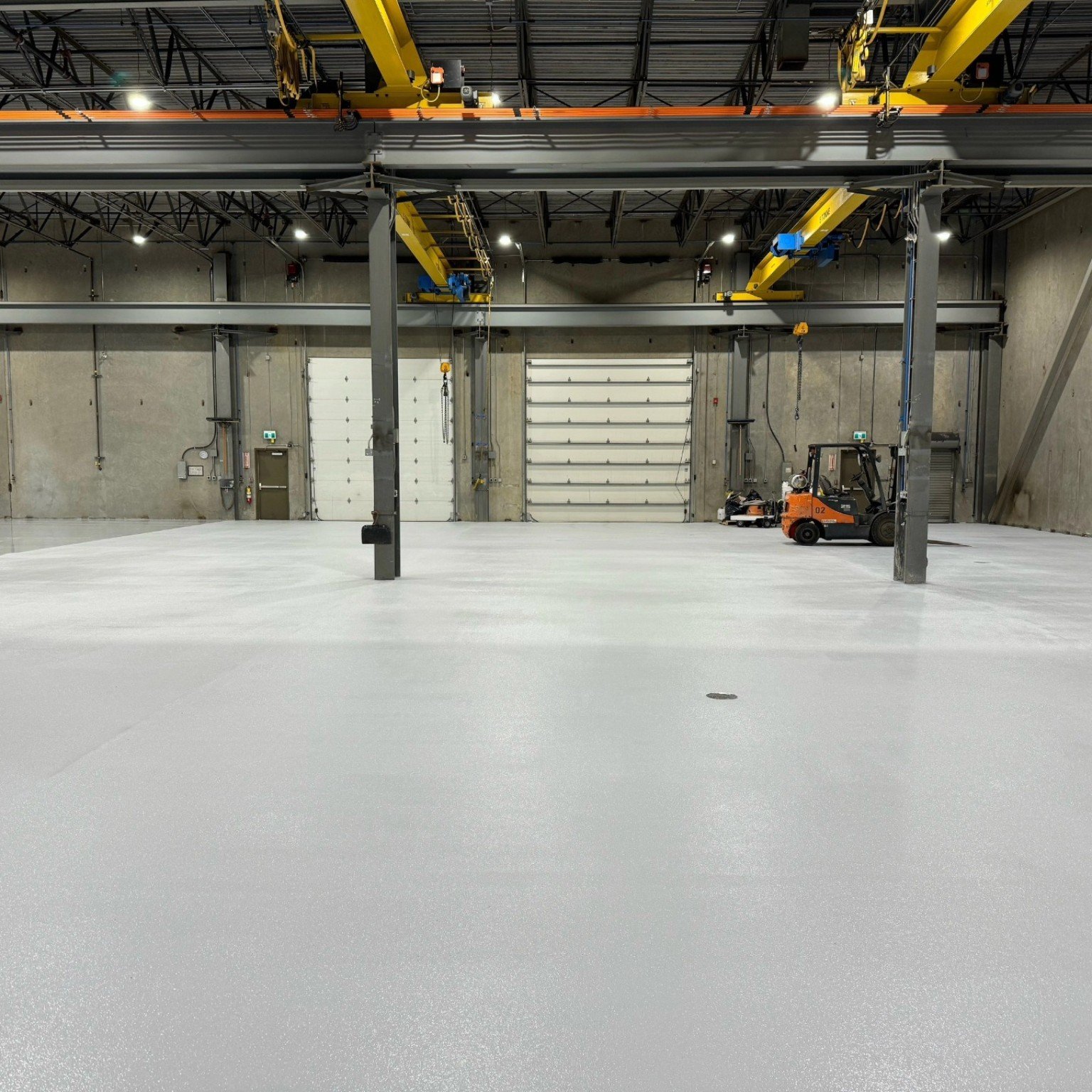
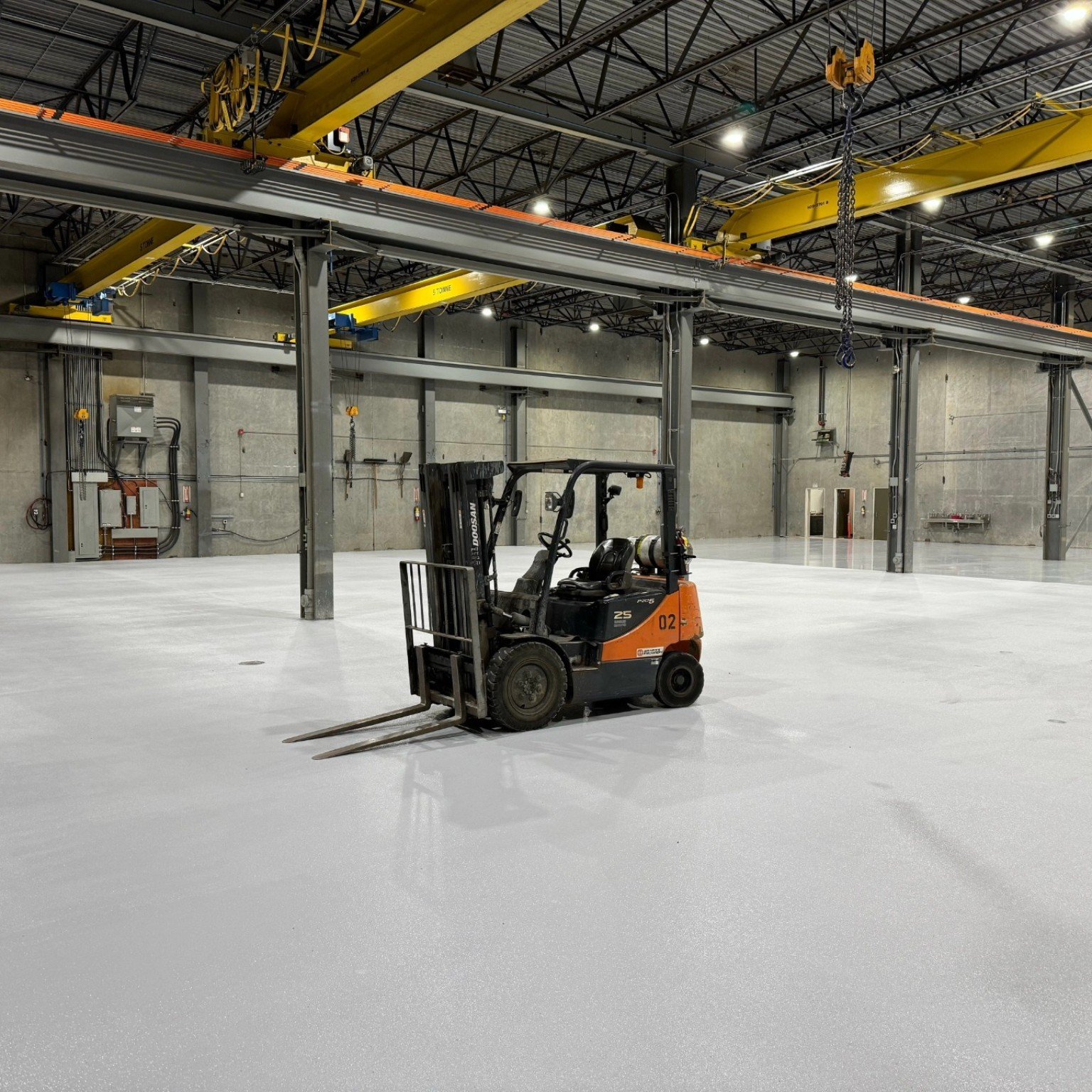
See additional photographs of the Liebherr warehouse and support areas.
Specify by use
Review tire type, turning frequency, loads and wear lanes. The condition of the underlying concrete and joint edges matters as much as the surface finish.
Assess spalls, grit, tracked-in water, sunlight at open doors and pallet movement. Texture and the wear coat should suit the exposure and cleaning method.
Compare the expected traffic and dust-control needs. Low-use storage may call for a simpler treatment than active forklift routes.
Plan pedestrian routes, aisle lines and work zones with the facility team. Markings can be included in the flooring scope where the layout is approved.
A coating protects a sound substrate; it does not change the slab's structural load capacity. Persistent slab movement, severe damage or racking concerns need separate evaluation.
Compare options
The lowest quote can describe a very different floor. Ask what preparation, repairs, primer, coat build, texture and cure window are included. These options are starting points for a site review, not a product specification.
Consider for: dust control in selected lower-wear areas. It is a different finish from a multi-layer resin coating and should be judged against the actual traffic and stain exposure.
Consider for: prepared warehouse slabs where a cleanable, more substantial resin surface is needed. Build and topcoat are selected for the wheel traffic and maintenance routine.
Consider for: concentrated turning, impact or wet transition zones. Aggregate and texture can add grip or wear protection, balanced against scrubber cleaning.
Consider for: battery charging, cold rooms, hot washdown or aggressive chemicals. These require a separate compatibility and temperature review; see our industrial flooring systems.
The material selected, its manufacturer's data sheet and site conditions determine its actual suitability for equipment traffic. A faster-curing topcoat alone does not make every complete floor system ready for forklifts the next day.
Preparation & joints
We review the existing coating, slab soundness, contamination, moisture concerns, crack pattern and worn joint edges. The approved system determines the mechanical preparation method and profile.
Spalls and damaged joint edges may need repair before coating. Moving joints require a detail suited to movement; simply bridging them with a rigid resin finish can lead to failure.
Dry forklift aisles, wet dock transitions and charging areas can demand different textures and materials. We discuss sweeping or scrubber use, active aisles, open dock doors, staging space and which areas can be isolated during installation.
After the site assessment, the proposal should identify the work zones, repairs, system layers and restrictions during cure.
Budget & operations
Return-to-service is confirmed after system selection. Foot access, pallet traffic and forklift traffic can have different cure requirements, which also vary with temperature and humidity.
From assessment to handover
Some facilities can isolate aisles or docks in stages. The practical phasing plan depends on material cure, safe access, equipment movement and the site schedule.
Questions from facility teams
Many properly specified resin systems can serve warehouse traffic. The right build depends on wheel material, loads, turns, slab condition and joint details. A thin paint-like film should not be treated as equivalent to a heavier wear system.
Phased work may be practical when aisles, loading areas and access routes can be isolated safely. We plan section size and reopening around the actual system and the facility's operating schedule.
We assess the joint type and damage before specifying repairs. Spalled edges may need rebuilding, while moving joints need to keep the movement detail required by the selected system.
Traction depends on the finish and conditions. Wet dock approaches may need more texture than dry storage areas, while an overly rough finish can make mechanical cleaning harder.
There is no universal time. The answer depends on the whole floor system, surface and air temperature, humidity and equipment loads. The proposal should give separate access and traffic milestones for your project.
Site-specific pricing depends on size, repairs, prep, chosen build, markings and the available work window. A written quote after reviewing the slab is more reliable than a generic square-foot rate.
Priority One Epoxy Flooring is based in Richmond and serves warehouse projects across Vancouver, Richmond, Burnaby, Surrey, Delta, Langley, Coquitlam and the Lower Mainland. Larger BC projects can be reviewed by scope and location.
For process areas exposed to harsh washdown or chemicals, explore our industrial epoxy flooring. For dock-specific work, see loading dock coatings.