01 · Heat & temperature change
Record hot-water temperature, steam use, contact duration and the floor temperature before cleaning. Include concentrated discharge beneath equipment, not only general hose washing.

Sanitation rooms · Wash bays · Wet service areas
Built around your cleaning cycle.
Priority One Epoxy Flooring installs seamless epoxy and urethane-cement floors for commercial washdown areas across Metro Vancouver and selected BC projects. We review cleaning temperatures, chemical exposure, drainage and traffic before selecting the floor system and installation plan.
Compare washdown flooring systems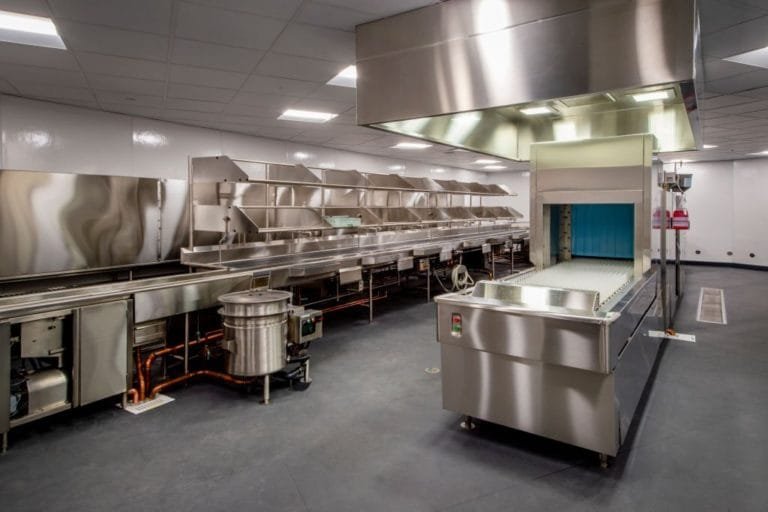
Washdown flooring systems for Vancouver & BC
Repeated wet cleaning brings heat, chemistry and water movement together on one surface.
A washdown flooring system needs to suit the cleaning process as well as daily traffic. The resin, thickness, texture and edge details all matter when water, detergents and sanitizers reach the floor repeatedly.
We assess sanitation rooms, equipment-washing areas, rinse bays and wet support spaces. The scope can include failed-coating removal, concrete repairs, falls, coves and drain interfaces alongside the selected epoxy or urethane-cement assembly.
Build your washdown exposure briefReview the water temperature reaching the floor, cleaning duration, frequency and the temperature of the slab. Repeated rapid changes can require a system specifically rated for thermal shock.
Account for hose use, cleaners, water flow, equipment feet and cart routes. Identify where residue collects and whether the existing falls actually deliver wash water to the drains.
Distinguish regular cool-water cleaning from hot or aggressive chemical exposure. A compatible epoxy system may suit some secondary wet areas after moisture and drainage have been assessed.
Coordinate texture, thresholds and wheel traffic between adjoining areas. Choose each zone’s finish around the cleaning method, expected contamination and practical access requirements.
Your washdown exposure profile
Send the actual cleaning procedure with your enquiry. It helps us move from a general product category to a floor assembly suited to the room.
Record hot-water temperature, steam use, contact duration and the floor temperature before cleaning. Include concentrated discharge beneath equipment, not only general hose washing.
List detergents, caustic cleaners, sanitizers and process residues. Include product names, concentrations, dwell times and rinsing requirements so compatibility can be checked.
Identify ponding, low spots, drain locations and areas that remain wet. Distinguish surface wash water from moisture moving through the concrete below the floor.
Describe footwear, trolleys, loaded carts and equipment movement. Include residues such as grease or foam that influence traction and how the floor must be cleaned.
Chemical resistance and thermal performance are product-specific. We check the proposed assembly against current manufacturer information for the stated exposure and seek technical review where the conditions fall outside published guidance.
Epoxy or urethane cement for washdown areas?
Urethane cement is often a strong starting point for demanding hot-water washdowns. Epoxy remains an option for suitable wet areas with less severe thermal exposure. Final selection depends on the complete service conditions.
| System | Where to consider it | What the specification must resolve |
|---|---|---|
| Urethane cement / polyurethane cement | Primary washdown zones with repeated hot-water cleaning, demanding wet service or significant temperature changes. | Product and thickness rated for the actual thermal exposure; chemical compatibility, texture, anchoring details and return to wet service. |
| High-build or broadcast epoxy | Secondary wet rooms, cool-water rinse areas and support spaces where the chosen system meets the cleaning conditions. | Substrate moisture, cleaner compatibility, coating build, sealed texture and the limits of the product’s temperature resistance. |
| Specialty chemical-resistant resin | Designated zones where concentrated cleaners or process chemicals require a more specific formulation. | Exact chemical, concentration, temperature and contact time; confirm splash, prolonged contact or immersion ratings as applicable. |
Quartz is an aggregate used within a resin assembly; it does not establish thermal or chemical resistance by itself. A topcoat or fast-cure label also does not make an unsuitable base system fit for hot washdowns.
Have lifting coatings, worn grout or repeated patches? Include photos and your cleaning routine so the cause can be reviewed before another finish is applied.
Discuss Your Washdown Floor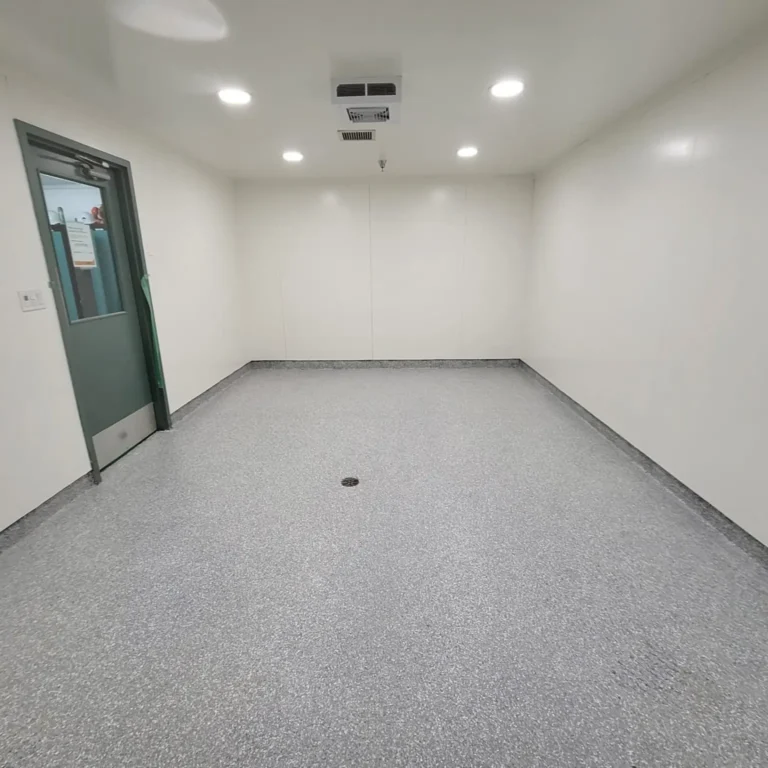
Drainage & sanitary floor details
A durable wearing surface is one part of the floor. Falls, drains, wall junctions and movement details need to work together.
Identify low spots and review the condition, height and perimeter detail of each drain. Agree any slope correction or drain repairs before coating. Include anchor grooves at drains and free edges where the selected system requires them. A self-smoothing finish follows the prepared substrate; it does not create drainage falls automatically.
Specify the cove height, radius, wall substrate and top termination. Include equipment plinths and penetrations so the junction can be cleaned and maintained. The detail should suit the facility’s sanitation procedure.
Assess cracks and carry necessary movement joints through with compatible details. Coordinate door thresholds and adjoining floors. Where the project requires a waterproofing or containment assembly, confirm it separately from the resin wearing surface.
Wet traction & cleanability
Surface texture should be reviewed with the expected water, residue, footwear and cleaning method. More aggressive texture can increase the effort needed to remove soil; a very smooth finish may be unsuitable for a wet working route.
Agree a sample or mock-up where appropriate. Consider the wet working conditions, cart movement and cleaning equipment together before approving the final texture.
Follow the agreed dilution, dwell time and rinsing procedure. A chemical-resistant floor still needs a maintenance routine suited to the installed product.
Remove residues, keep drains clear and inspect coves, joints and damaged areas. Address open edges or failed patches before repeated cleaning enlarges the problem.
Installation, cost & shutdown planning
Washdown flooring cost depends on more than square footage. Removal, contamination, repairs, slope correction, coves, drain edges and access can change the work substantially.
Establish temperatures, chemicals, wash frequency, water flow and traffic. Identify existing failures and where the next system needs to perform differently.
Review moisture, contamination and substrate condition. Mechanically prepare and repair the slab to the selected manufacturer’s requirements, with work-zone protection planned for the facility.
Complete agreed slope work, drain interfaces, joints and coves, then install the specified resin assembly and finish.
Separate permission for foot traffic, loaded carts, wet cleaning, chemicals and hot-water service. Confirm cure conditions and the facility’s agreed acceptance checks.
Washdown flooring questions
These answers explain the main choices. The project specification and selected manufacturer’s technical information determine the final assembly.
A urethane-cement system specifically rated for the actual exposure is often a strong choice. Confirm the product, installed thickness, water or steam temperature, contact time and temperature change. A generic resin name alone does not establish suitability.
Yes, a compatible epoxy assembly can suit some secondary wet rooms and cool-water cleaning areas. Verify the thermal and chemical limits of the complete system. Specifying a thicker epoxy alone does not resolve an unsuitable exposure rating.
A finish alone does not correct low spots or inadequate falls. The assessment should identify where water collects, whether the drain is functioning and what slope correction or drain work is needed before the wearing surface is installed.
Texture can be selected to suit the wet conditions, residues, footwear and traffic. Review cleanability at the same time, using a representative sample or mock-up where appropriate. No finish removes the need to control spills, residues and cleaning practices.
Suitability depends on the actual product, concentration, temperature and contact time. Provide the cleaning procedure so the proposed resin assembly can be checked against manufacturer resistance information. Aggressive or unlisted exposure may need specialist review.
Phasing may be possible when access, separation and drainage allow it. The plan must account for preparation, repairs, ventilation, cure and equipment movement. Returning to foot traffic can occur before the system is ready for hot water or chemical cleaning.
A suitable resin floor, maintained coves, appropriate drainage and compatible cleaning procedures can support a facility’s sanitation plan. The floor is one part of that plan. Your quality and design teams should confirm project requirements and acceptance criteria.
Plan your washdown flooring
Send your photos, floor area, cleaning procedure and shutdown window. We’ll review preparation, system options, texture and drainage details for your Vancouver or BC washdown project.