Cracks & concrete distress
The treatment follows the condition and movement of the crack. Exposed reinforcement, significant delamination or suspected structural movement may need an engineer's repair design before coating work is defined.

Strata & commercial parking · Vancouver & Metro Vancouver
Protect the concrete.
Plan the repair around your property.
Priority One installs and repairs parkade membranes and waterproof traffic deck coatings for strata and commercial properties. From leaking details to worn drive lanes, we define the preparation, system and phasing around your parking structure.
Compare repair, recoat & replacement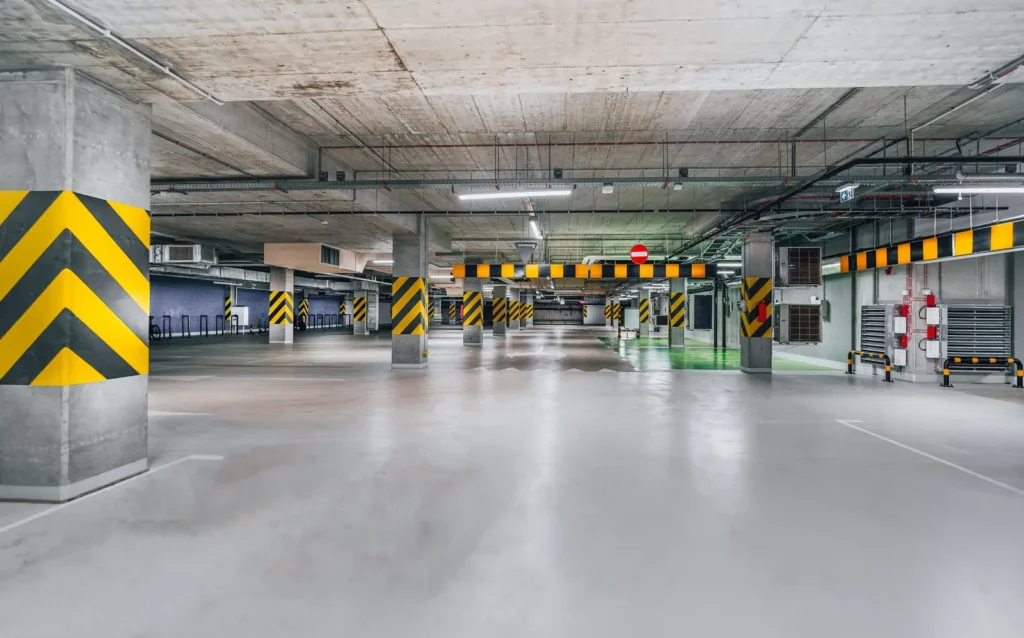
Parking garage waterproofing · Concrete protection
A parkade membrane is a traffic-bearing waterproofing assembly that helps limit water and de-icing salt entry into the concrete while providing a wearing surface for vehicles.
For Vancouver strata councils, property managers and commercial owners, the starting point is the condition of the deck: where water is entering, what remains bonded, and which areas take the most traffic.
We review covered parking levels, suspended slabs, exposed top decks and vehicle ramps. Your proposal brings the concrete repairs, waterproofing details, traffic surface and access requirements into one defined scope.
Seeing leaks below the parking level? Include photographs of the underside as well as the surface above. Water can travel from joints, drains or other building details before becoming visible.
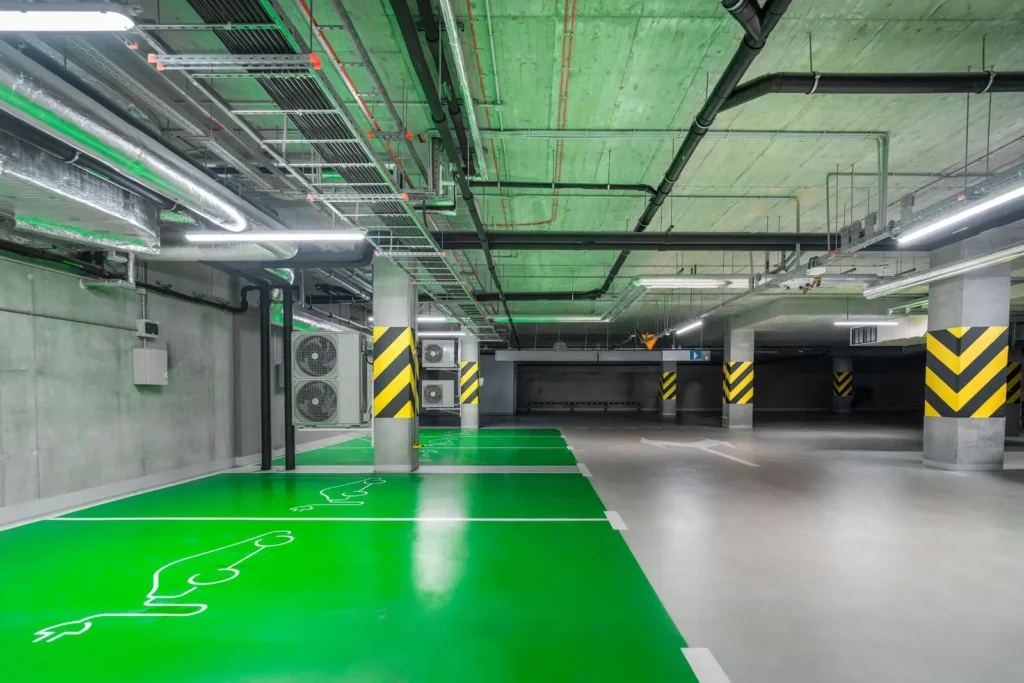
Parkade membrane repair & renewal
A leaking drain detail, a worn traffic coat and a debonded membrane can require different work. Explore the three common directions below; inspection and compatibility checks establish which one suits your deck.
Consider targeted parkade membrane repair when the affected area is limited and the surrounding assembly is compatible and well bonded. Work may include selected cracks, damaged patches, drain transitions or small wear zones.
Confirm: the leak source, repair boundaries, adhesion and the detail needed to tie the repair into the existing system.
Suitable repair limits follow the site review.
A prepared recoat may be appropriate when the waterproofing layer remains intact but the wearing surface has lost texture or coverage. The existing coating needs cleaning, mechanical preparation and a compatible recoating specification.
Confirm: membrane condition, adhesion, contamination, coating intervals and additional wear protection at turns or ramps.
Recoating does not resolve a failed layer underneath.
Replacement may be needed where the existing membrane is extensively peeling, blistering or debonded, or where recurring water entry and deteriorated details make isolated repairs unsuitable.
Confirm: removal quantities, concrete repairs, movement-joint details, the specified membrane build and a workable closure sequence.
Repairs and removal are defined before installation.
Not sure where your parkade fits?
Send a few wide photographs, close-ups of damage and the approximate
floor area.
Parkade coatings & traffic deck systems
Suspended decks, exposed parking levels and slabs on grade have different waterproofing and moisture requirements.
A conventional epoxy floor coating is not automatically a crack-bridging waterproof membrane. We assess what the slab supports, what lies beneath it, and the manufacturer's requirements before recommending the assembly.
| Deck or area | Main requirements | What the scope should confirm |
|---|---|---|
| Suspended parking level | Traffic-rated waterproofing and compatible crack detailing over areas below. | Membrane flexibility, adhesion, transitions, moisture conditions and complete wear layers. |
| Exposed top deck or podium | Waterproofing under rain, UV, temperature changes and de-icing exposure. | UV-stable finish where required, drainage, movement details and suitable installation conditions. |
| Vehicle ramp and turning lane | Repeated braking, turning tires and wet traction. | Aggregate profile, reinforced wear zones where specified, transitions and cleaning requirements. |
| Covered slab on grade | Concrete protection and traffic wear, with moisture from below assessed. | Whether a waterproofing membrane is required or a suitable epoxy/resin traffic coating is appropriate. |
| Drains and movement joints | Waterproof continuity at drainage points and moving interfaces. | Manufacturer-approved terminations, flexible detailing and serviceable joint components. |
Tremco Vulkem and Sika Sikalastic traffic systems. These manufacturers offer assemblies for vehicular waterproofing. We review the appropriate system against your consultant's specification, deck condition, exposure and closure window. The selected Canadian product instructions govern the installation and return to traffic.
Technical references: Tremco vehicular traffic deck assembly · Sika Canada vehicular membrane systems.
The work beneath the finish
Parkade traffic coatings need a sound substrate and continuous waterproofing at the places water collects or the slab moves. Colour and line markings come after the preparation and repair work.
A complete assembly · From the concrete upward
Conceptual assembly. Products, coat count, thickness and reinforcement follow the selected system and project specification.
The treatment follows the condition and movement of the crack. Exposed reinforcement, significant delamination or suspected structural movement may need an engineer's repair design before coating work is defined.
Inspect the drain interface and identify low areas. Drainage or slope corrections are separate scope items; a finish coat alone does not change where water collects.
Specify texture and wear protection for wheel paths, turns and braking areas. Wet traction and the cleaning method need to be reviewed together.
Finish & layout references
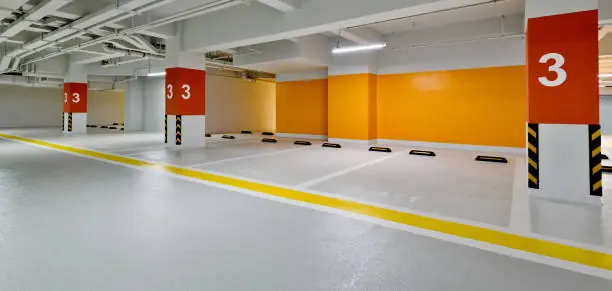
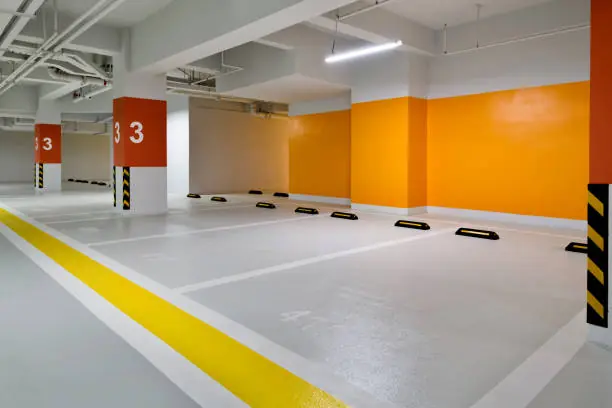
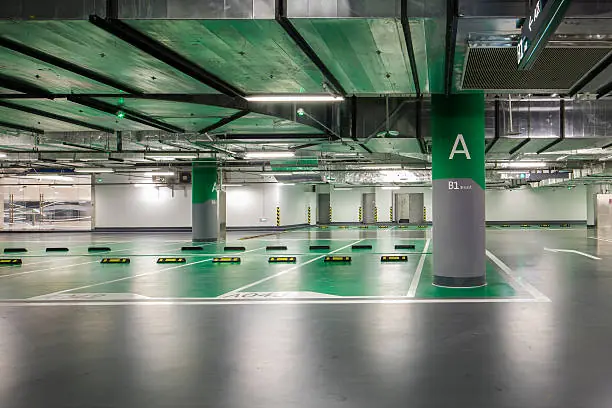
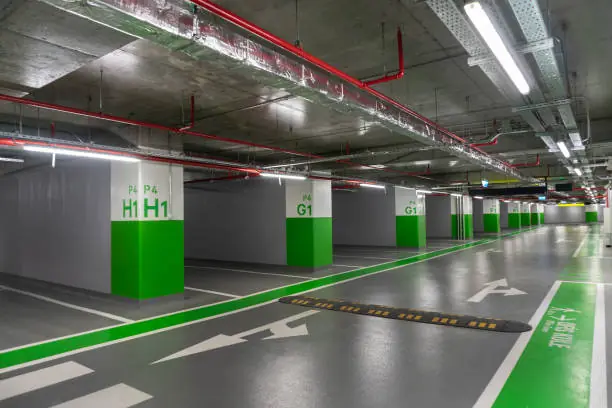
Use these finish references to discuss colours, drive aisles, stall boundaries and pedestrian routes. The waterproofing specification follows the deck condition and the selected system.
From assessment to return to traffic
We review the existing conditions and operating needs before setting the work boundaries and installation sequence.
Document known leaks, worn areas, concrete distress, drains, joints and existing coatings. Review available drawings, reports and membrane records.
Establish removal, preparation, repair quantities, waterproofing details, traction and finish requirements. Review the consultant's issued specification where provided.
Agree parking restrictions, access routes, preparation hours, work-area separation and closure windows with the owner or property manager.
Remove unsuitable material, mechanically prepare the concrete and complete the agreed concrete repairs and waterproofing details.
Apply the specified primer, membrane, aggregate and wearing layers. Check application conditions and the required coating intervals.
Review the completed work and cure requirements. Confirm vehicle access, care instructions and the applicable written warranty terms.
Occupied strata & commercial properties
Phasing can keep part of a parkade available where the layout, repairs and selected system allow it.
Single entrances, shared ramps and narrow access lanes can limit that flexibility. We review these constraints early so residents, tenants and deliveries have clear expectations.
Installation time and cure time are separate. Product chemistry, repair depth, temperature, humidity and the number of phases affect the closure. We establish a project schedule after reviewing the deck and system.
Parkade membrane cost in Vancouver
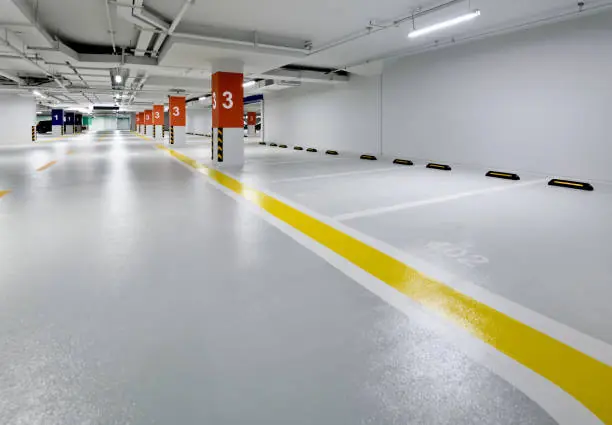
Two parking decks with the same square footage can need very different restoration work. A meaningful price separates the membrane area from the removal, repairs, details and access requirements.
Maintenance & future renewal
Remove abrasive grit and clean spills with products compatible with the coating. Keep drains clear and report new leaks, blisters or exposed areas before the damage spreads.
Review ramps, entrances and turning lanes alongside the stall areas. Local wear-coat renewal may be appropriate before the waterproofing layer is exposed, subject to the existing system's condition and compatibility.
Retain the installed product names, repair scope, care instructions and warranty documentation for future maintenance planning.
Before you commit
Tell us where the deck is failing and how the property operates. We can help identify the next step and the information needed for a defined proposal.
Discuss Your ParkadeNo. Conventional epoxy is generally a hard protective floor finish. A traffic-rated waterproofing membrane is an assembly selected for waterproof continuity and the specified movement or crack-bridging performance. Some assemblies use epoxy components; the complete system determines its suitability.
Localized repair may work when the leak source is identified and surrounding material is sound and compatible. Widespread adhesion loss, failed details or deteriorated concrete can require a larger repair or replacement scope. The surface and the area below should be reviewed together.
Cost follows the measured coating area, removal, concrete repairs, joint lengths, drains, membrane build and phasing. A site review and defined repair quantities provide a useful basis for pricing. The proposal should state what is included and how uncertain repair quantities will be handled.
Often, where the layout allows separated work zones and a safe access route. Shared ramps, gates, pedestrian access, repairs and cure times can limit phasing. The parking plan and closure sequence are agreed before installation begins.
The selected system's vehicle-traffic cure requirements govern reopening. Temperature, humidity, repair materials and coating intervals affect the actual schedule. Foot traffic, vehicle access and chemical cleaning may have different waiting periods.
Sometimes, after the existing membrane has been assessed for adhesion, soundness and compatibility. Unsuitable, contaminated or debonded material needs removal. A recoat specification should identify preparation and the treatment of exposed or damaged areas.
We review Tremco Vulkem and Sika Sikalastic vehicular assemblies for parkade work where appropriate to the site and issued specification. The proposal identifies the selected system, preparation, detailing, thickness and return-to-traffic requirements. Product selection does not imply a particular manufacturer warranty.
Installation must meet the selected product's substrate, temperature, moisture and weather limits. Exposed decks may need a different work window or suitable protection. We assess these conditions when planning the system and schedule.
Yes. Send the drawings, repair schedule, traffic coating specification and phasing requirements. We can prepare a proposal around the issued scope and identify installation details or access questions that need clarification.
Service life depends on preparation, system design, traffic, drainage, exposure and maintenance. Ramps and drive lanes may need wearing-layer renewal before less-used stalls. We provide care guidance and state applicable warranty terms in the written proposal.
Vancouver & the surrounding region
We review strata and commercial parking structures in Vancouver, Burnaby, Richmond, Surrey, Delta, New Westminster, the North Shore, Tri-Cities and surrounding Metro Vancouver communities.
This page covers shared parking decks and parkade waterproofing. For another part of your property, explore the relevant flooring service below.
For broader local flooring services, visit epoxy flooring in Vancouver .
Plan the next step
Share your parkade photos, approximate area and preferred dates. We'll review the existing conditions, discuss the required work and arrange a free site assessment.
info@priorityonepoxyflooring.com