Before preparation
Agree work windows, guest and staff routes, equipment movement, noisy tasks and the separation or ventilation measures required for adjacent occupied areas.

Hospitality facilities · Vancouver & selected BC resorts
A considered finish.
A practical plan for your property.
Priority One Epoxy Flooring installs epoxy and resin floors for hotel public areas, kitchens, laundry rooms and service spaces. We assess each area’s concrete, traffic and cleaning routine, then plan the finish and work sequence around your operations.
Explore our Whistler hospitality work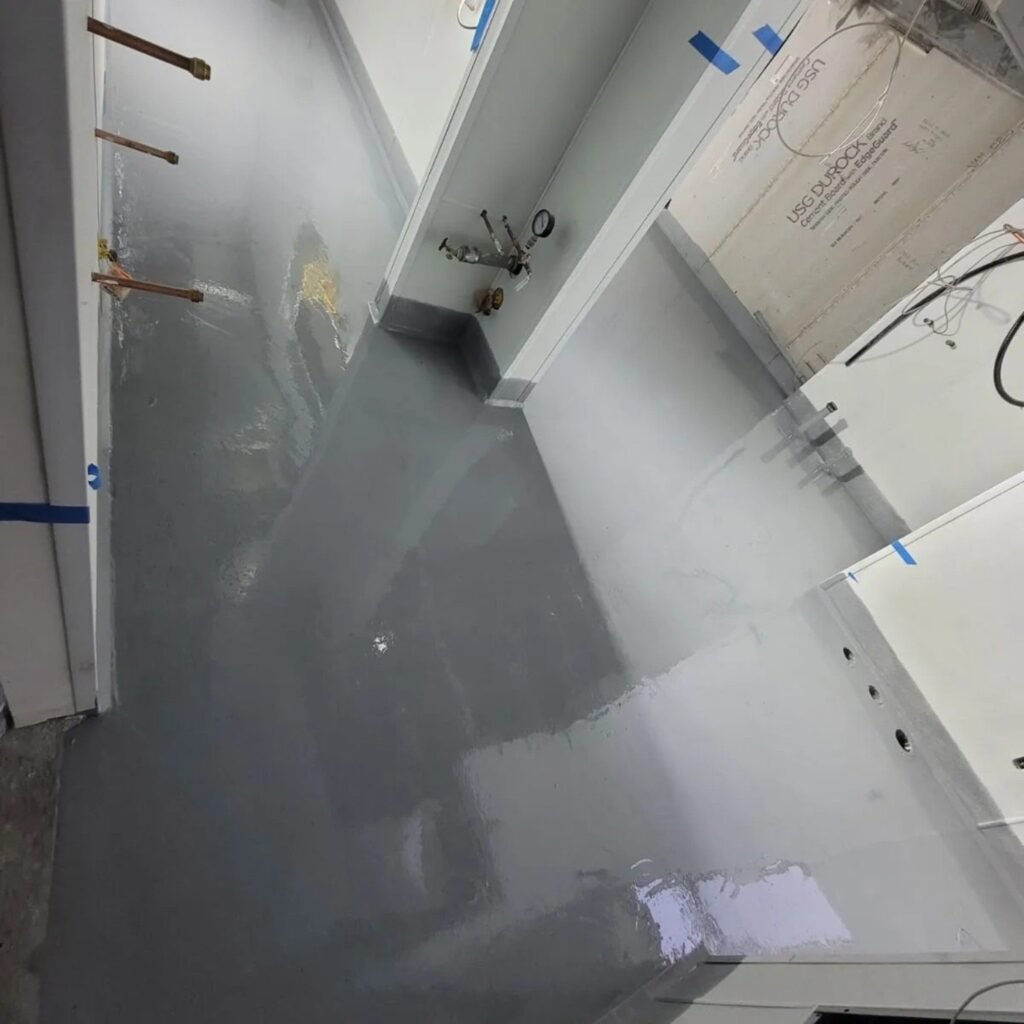
Selected hospitality project · Whistler, BC
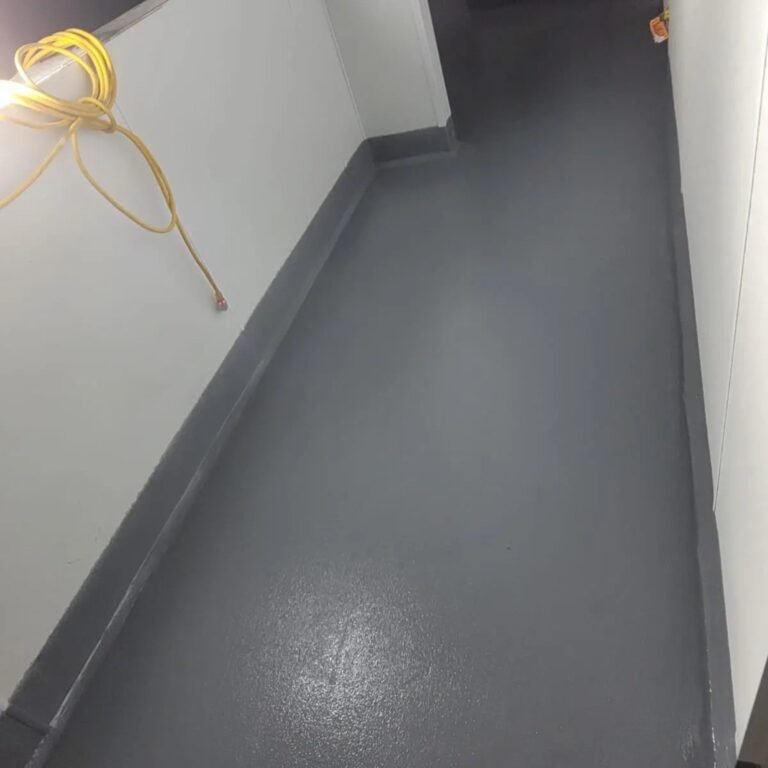
Grey resin flooring and coved wall junctions in a commercial restaurant service environment.
The photographs show our flooring work during restaurant fit-out. This project provides relevant experience with hospitality service areas in a resort market. Your hotel’s proposed system follows its own concrete condition, cleaning exposure and reopening requirements.
Choose the areas in your scope
Resin flooring can suit selected public spaces and demanding service areas. Guest bedrooms and quiet guest corridors also need comfort and acoustic requirements considered, often alongside carpet, resilient flooring or other finishes.
Explore the areas below. Each needs its own balance of appearance, traction, cleaning, traffic and installation access.
Review entry moisture, luggage wheels, lighting, sheen, sound and transitions. Decorative resin or selected concrete finishes may suit the design when the substrate and hard-surface requirements are appropriate.
Explore lobby flooringDining and bar areas need a finish selected for appearance, chair movement, spills and daily cleaning. We review the service routes, thresholds and wet areas alongside the visual samples.
Explore restaurant flooringHot water, grease, chemicals, drains and thermal cycling need a purpose-selected floor build. Urethane cement may suit demanding rooms; the product, thickness, texture and details follow the actual exposure.
Review kitchen floor systemsHousekeeping carts, equipment, detergents and repeated service traffic affect wear and texture. Assess leaks, slab moisture, coves, machine access and the routes staff use throughout the day.
Review laundry room flooringIndoor and exterior amenities need different specifications. Review barefoot use, cleaning, water, drainage, sunlight and any membrane requirements before choosing texture and finish.
Explore pool deck coatingsVehicle routes need traffic-rated systems selected for movement, water, salts and wear. The proposal must address the slab, interfaces, phasing and conditions required before vehicles return.
Explore parkade traffic coatingsCompare the complete assembly
Preparation, primer, resin build, aggregate and topcoat work together. Named products, thickness and exposure limits provide a useful basis for comparing proposals.
| System direction | Where to consider it | What to confirm |
|---|---|---|
| Decorative epoxy or resin | Suitable lobbies, dining areas and selected public interiors. | Appearance, UV exposure, sheen, traction, acoustics and maintenance expectations. |
| High-build epoxy | Storage, service corridors and selected utility rooms. | Slab moisture, preparation, traffic, chemical exposure and compatible protective topcoat. |
| Quartz or aggregate-broadcast resin | Areas needing a textured wear surface and detailed wall junctions. | Aggregate, resin thickness, wet traction, cleaning effort, coves and drain details. |
| Urethane cement | Selected kitchens, dish rooms and more demanding hot, wet service zones. | Product and thickness, temperature limits, chemical chart, terminations and cure. |
| Traffic coating or waterproof membrane | Parkades, ramps and specified exterior or elevated areas. | System purpose, movement, drainage, waterproof connections and return to traffic. |
A wear coating and a designed waterproofing assembly have different roles. Moisture mitigation, active leaks and protection of occupied space below need separate assessment.
Share the room schedule or drawings. We can help identify which areas need different floor builds.
Discuss Your Hotel FloorsThe installation is part of your operating plan
We review occupancy, dining service, event bookings, deliveries and housekeeping with the project team. Phased or off-hour work may be possible where the layout, products and site conditions allow it.
Agree work windows, guest and staff routes, equipment movement, noisy tasks and the separation or ventilation measures required for adjacent occupied areas.
Plan boundaries, temporary transitions, deliveries and the condition of each handover. Confirm which facilities remain available during the proposed sequence.
State separate cure requirements for walking, luggage and housekeeping carts, equipment, wet cleaning and vehicles where applicable. Full use follows the selected system’s requirements.
The work beneath the finish
A new finish depends on the condition beneath it. Existing coatings, tile, contamination and weak patches need assessment before the proposed resin system is installed.
Movement joints must remain functional. Cove bases, drain interfaces, thresholds and penetrations should be identified in the agreed scope.
Review existing floors, moisture-testing requirements, damage, access and the owner’s specification. Confirm the included areas.
Remove unsuitable material, mechanically profile the concrete and complete the agreed repairs and substrate work.
Apply compatible primers, resin layers, broadcasts, coves and topcoats under suitable application conditions.
Confirm the completed scope, cure restrictions, cleaning guidance and applicable written warranty terms.
Appearance and everyday care
Review samples in the property’s actual lighting. The right colour, sheen and texture should work with the design and the cleaning routine.
Consider adjoining floors, furniture, daylight and repair visibility. Solid colours, quartz, flake and decorative finishes depend on the selected system.
Review wet entry conditions, footwear, barefoot areas and cart routes. Texture affects cleaning effort; no floor finish is slip-proof.
Confirm compatible cleaners, equipment, spill response and maintenance access. Plan how each finish will be cared for after reopening.
Budget and written scope
Area alone does not describe the work. A clear lobby slab, a tiled dish room and a phased service corridor require different preparation, details and access. We price the measured scope and proposed system.
Ask for included work, exclusions, taxes, schedule and applicable warranty terms in writing when comparing proposals.
Before you commit
Tell us how each space operates. The recommendation should explain suitability, preparation, downtime and care.
The best assembly depends on the area. Decorative resin may suit selected public interiors, high-build or broadcast epoxy may suit service spaces, and urethane cement may be considered for demanding hot, wet rooms. Product selection follows the substrate, exposure and operating requirements.
Sometimes. Layout, ventilation, noise, guest routes and cure requirements determine whether phasing is practical. We review the proposed sequence with the property team before committing to work windows.
Removal, repairs, temperature, resin build and product cure affect the schedule. Foot traffic, loaded carts, equipment and wet cleaning can require different waiting periods. The proposal should identify the relevant return-to-use conditions.
Guest rooms and quiet corridors need acoustic performance, comfort, maintenance and design assessed together. Carpet, resilient flooring or other finishes may suit those requirements. We identify the areas appropriate for the proposed resin-flooring scope.
That requires an assessment of adhesion, movement, moisture, contamination and transitions. Unsound finishes or weak substrates need removal. A sample or trial area may help assess a proposed renovation system.
A water-resistant resin surface does not by itself establish a complete waterproofing assembly. Where protection below is required, the membrane, joints, drains, penetrations and terminations need a coordinated specification.
The proposal identifies the included preparation, repairs, floor system, details, access assumptions and exclusions. Applicable warranty terms and maintenance requirements should be confirmed for the agreed installation.
Vancouver and selected BC resort projects
Based in Richmond, Priority One serves hotels and hospitality facilities in Vancouver, Burnaby, Surrey, the North Shore and surrounding Metro Vancouver communities. Whistler and selected BC resort projects are reviewed around scope, access and mobilization.
For other properties in your portfolio, explore our commercial resin flooring services .
Explore our service areasPlan your next hotel floor
Share the areas, photographs and preferred dates. We’ll review the conditions, discuss suitable systems and arrange a free site assessment.