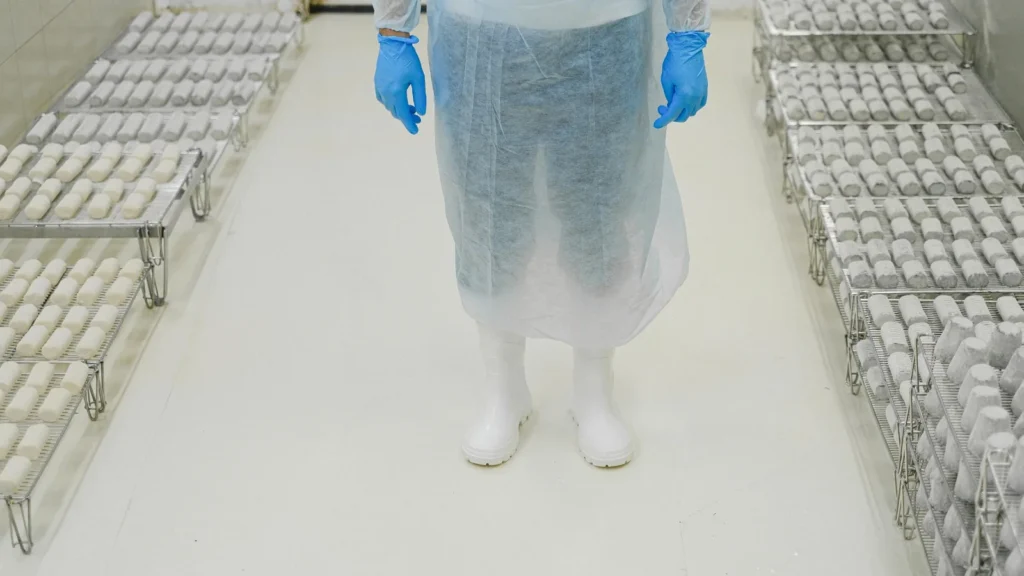
Receiving, pasteurization & production
Review milk spills, hose traffic, equipment bases and cleaning temperatures. Include drainage, thresholds and the floor around tanks and pipe supports in the assessment.
Milk processing · Cheese production · Cultured dairy
Built around production. Specified for the clean.
Priority One Epoxy Flooring installs urethane cement and epoxy flooring for dairy processing facilities. We assess milk, whey, cleaning chemicals, washdown temperatures and traffic before recommending a complete floor system for each production area.
Serving dairy facilities across Vancouver, the Lower Mainland and the Fraser Valley.
Dairy industry flooring
Dairy production combines wet processing, chilled spaces and dry packaging. The right floor depends on what reaches its surface, how it is cleaned and how people and equipment move through the room.
Review milk spills, hose traffic, equipment bases and cleaning temperatures. Include drainage, thresholds and the floor around tanks and pipe supports in the assessment.
Identify whey, brine, fats and acidic residues, together with rack and trolley movement. Chemical concentration, temperature and contact time matter when selecting the assembly.
Assess operating temperature, condensation and transitions between cold operation and warmer cleaning. Application conditions and curing need a separate installation plan.
Selected epoxy systems may suit dry rooms with lower thermal stress. Review pallet jacks, abrasion, dust removal, spills and the actual sanitation routine before specifying a finish.
Epoxy & urethane cement
Urethane cement, also called polyurethane cement, is often considered for demanding wet dairy rooms. Epoxy remains an option for suitable dry and support areas. Preparation, thickness, texture, joints and compatible finish coats all affect performance.
| System | Potential application | Confirm before selection |
|---|---|---|
| Urethane cement | Wet processing and rooms with demanding cleaning or thermal cycles. | Temperature limits, chemicals, thickness, substrate and detailing. |
| High-build epoxy | Selected dry packaging, storage and lower-exposure support rooms. | Moisture, traffic, cleaning chemistry and thermal suitability. |
| Broadcast resin assemblies | Areas needing a specified texture and cleanable wearing surface. | Underlying resin, aggregate profile, cleaning effort and seal coats. |
| Rapid-return options | Projects with a restricted installation window. | Preparation, ventilation, application conditions and full-service cure. |
A thicker coating does not automatically solve an unsuitable resin choice. Provide the sanitation chemical list, dilution rates, temperatures and exposure times for a product-specific review.
Cleanability & drainage
Dairy flooring needs more than a clean-looking open surface. Junctions at walls, drains, equipment and doorways should be included in the agreed installation scope.
Sanitation & traction
Review milk fats, whey, brine and the cleaning products that actually reach the floor. Resistance is specific to the product, chemical concentration, temperature and duration of contact.
Review texture samples alongside footwear, expected liquids and cleaning tools. Excessive roughness can make residue removal harder. Spill control and housekeeping remain essential.
A properly selected floor can support cleanability and sanitation. The coating alone does not certify a dairy plant or replace its preventive controls, maintenance and operating procedures.
Read CFIA guidance for dairy processors →Installation & shutdown planning
Review failed coatings, tile, concrete condition, contamination, moisture, cracks and drainage. Confirm the testing and repairs needed before selecting an assembly.
Agree on equipment access, isolation from production, ventilation and the work sequence. Prepare the concrete and install repairs, resin layers and interfaces to the specified system requirements.
Foot traffic, equipment movement, wet cleaning and chemical exposure can have different cure requirements. Confirm each milestone and the cleaning instructions before reopening.
Dairy flooring questions
The choice depends on each room’s exposure. Urethane cement is often considered for wet processing and demanding thermal cycles. Epoxy may suit selected dry packaging and support areas. Cleaning chemistry, temperatures, drainage, traffic and substrate condition determine the final assembly.
It can be suitable in selected areas, but should not automatically be specified throughout the plant. Frequent hot washdowns, aggressive cleaning or temperature cycling may call for another resin system.
Suitable systems are available, but resistance depends on the specific product, concentration, temperature and contact time. Provide the chemical list so the proposed assembly can be checked against current manufacturer information.
Phasing can be reviewed where the layout allows effective separation, access and suitable application conditions. Preparation, repairs, ventilation and curing determine the practical sequence and reopening milestones.
Only where assessment and the selected system allow it. Loose tile, failed coatings, contamination or weak concrete may require removal. Bond, movement, moisture and finished floor levels need review before an overlay is proposed.
No. A flooring system can support cleanability and sanitation, but the facility’s requirements also depend on installation details, drainage, maintenance and operating controls.

Vancouver · Lower Mainland · Fraser Valley
Tell us what reaches the floor and when the room is available. We’ll review the substrate, system options and details that belong in your project scope.