Industrial Loading Dock Flooring • Vancouver & Lower Mainland

Loading Dock Epoxy Flooring in Vancouver, BC

Prep-first resin systems for forklift traffic, dock thresholds, impact zones and wet-weather exposure

Priority One Epoxy Flooring installs loading dock and loading bay floor coatings for warehouses, distribution facilities, manufacturing plants and commercial service areas across Vancouver and the Lower Mainland. We review traffic, concrete condition, moisture, joints, cleaning and shutdown windows before recommending the flooring build.

20+ Years Company-Wide Experience 500+ Completed Projects Prep-First Installation Traffic & Moisture Review Licensed & Insured

Commercial Loading Dock & Loading Bay Flooring

Flooring Specified for the Dock—not Just the Warehouse

A loading dock concentrates wear at door lines, dock levellers, turning areas and staging lanes. Forklifts and pallet jacks repeatedly brake, turn and carry concentrated loads in the same routes, while rain, grit, fluids and cleaning can change the conditions from one zone to the next.

Priority One assesses the slab and the operation before recommending loading dock epoxy flooring or another resin build. The scope may include mechanical preparation, concrete repairs, joint and threshold detailing, primers, broadcast aggregate, high-build epoxy, urethane cement and a suitable wear topcoat. The final specification depends on the actual facility conditions and selected product documentation.

Traffic-Zone Planning

Turning lanes, staging areas, thresholds and lower-use zones are reviewed separately so the build and texture follow the actual wear pattern.

Prep Before Coating

Existing coatings, contamination, cracks, spalls, joints and weak concrete are addressed in the scope before the finish system is selected.

Plan Around Operations

Access routes, loading schedules, product cure requirements and phased handover are discussed before installation dates are confirmed.

Verified Priority One Work

Relevant Warehouse, Equipment & Service-Floor Experience

These completed Priority One projects are identified by their actual BC locations. For a loading-dock scope, ask which preparation method and flooring build is most comparable to your slab, traffic and operating conditions.

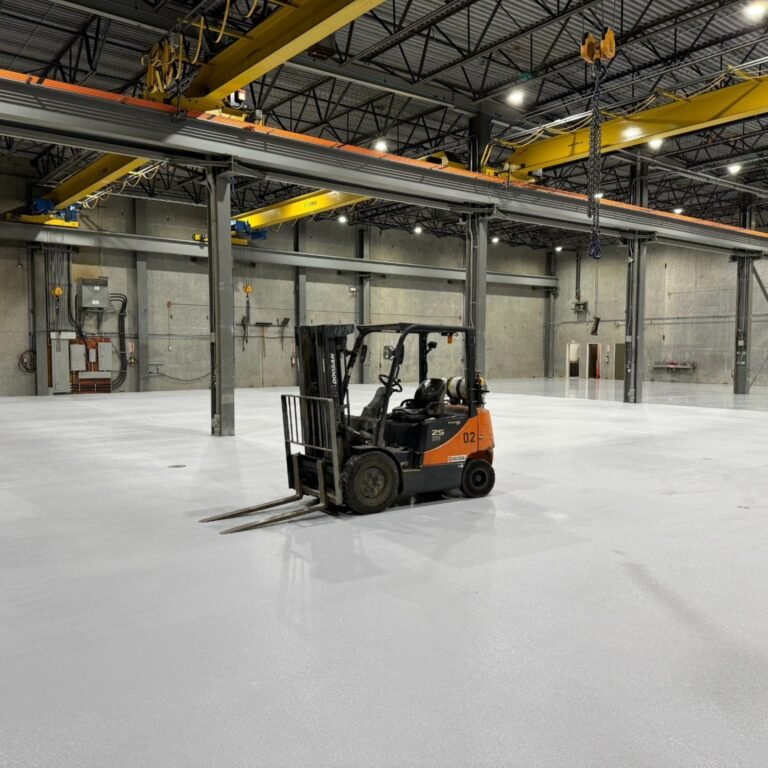
Forklift on completed Priority One industrial warehouse flooring at Liebherr in Abbotsford, BC
Liebherr industrial facility • Abbotsford, BC
Completed flooring shown in an active equipment environment with rolling traffic.
Completed grey resin flooring in the Brian Jessel BMW service and storage area in Burnaby, BC
Brian Jessel BMW • Burnaby, BC
Grey resin flooring in an automotive service and storage environment.

Project locations and uses are stated as completed; ask us which details are relevant to a loading-dock specification.

Why Loading Dock Floors Need a Site-Specific Build

A dock is a transition zone between exterior exposure and indoor logistics. Conditions can include repetitive wheel paths, concentrated loading, vibration near levellers, impact at slab edges, wet entry, tracked-in grit, oils, battery-related fluids, cleaners and seasonal temperature changes. A coating that is adequate in a dry storage aisle may be underbuilt at the door line or forklift turning zone.

Resin flooring can create a denser, more uniform and easier-to-maintain surface where the substrate and system are suitable. It does not correct structural movement, drainage problems or weak concrete by itself. Those conditions need to be identified and incorporated into the repair and detailing scope.

What Commonly Wears a Dock Floor

  • Forklift braking, turning and repetitive wheel paths
  • Pallet jacks, hard wheels and concentrated point loading
  • Dropped materials, dragged pallets and metal contact
  • Rainwater, grit and debris carried through dock doors
  • Oil, hydraulic fluid, cleaners or site-specific chemicals
  • Damaged joints, broken edges, cracks and concrete spalls

What We Review Before Recommending a System

  • Slab condition, strength and existing coating bond
  • Traffic type, wheel material, load and route frequency
  • Dock plates, levellers, steel interfaces and thresholds
  • Moisture, drainage, washdown and cleaning routines
  • Chemical or fluid exposure by product and concentration
  • Temperature, access, phasing and handover requirements

Loading Dock Epoxy & Resin Flooring Options

“Loading dock epoxy” is not one standard product. The right system may use epoxy as the core build, a mortar or broadcast layer in harder-use zones, urethane cement where wet or thermal exposure is more demanding, and a polyurethane or polyaspartic topcoat where its documented properties fit the site.

High-Build Epoxy

Often considered for indoor loading bays, staging areas and general forklift routes where the slab is sound and the moisture, temperature and chemical conditions support an epoxy build. Thickness and wear-layer selection should follow the traffic profile.

Epoxy Mortar or Quartz Broadcast

A heavier resin-and-aggregate build may be appropriate for worn areas, repair transitions, turning zones or spaces needing more texture. Aggregate size and finish affect both traction and cleanability.

Urethane-Cement Systems

Often considered where frequent wet cleaning, stronger temperature changes or harsher chemical exposure make a standard epoxy-only system less suitable. The actual product and build must be checked against the facility conditions.

Polyurethane or Polyaspartic Topcoats

Topcoat selection can influence wear, stain resistance, cleanability, appearance and UV stability near open dock doors. Return-to-service timing depends on the chosen product, temperature and site conditions.

Flooring Recommendations by Loading-Dock Zone

Different dock areas can require different repair, texture or wear-layer decisions. The table below is a planning guide; the final recommendation follows a site review and the selected manufacturer's data.

Dock Zone Typical Exposure Planning Priority
Door line & threshold Rain, grit, UV, temperature change and edge impact Review drainage, concrete-to-steel transitions, texture and an exposure-appropriate topcoat.
Dock leveller interface Movement, vibration, repeated loads and vulnerable edges Detail the interface and repair weak edges; do not treat moving components like a static slab.
Forklift turning & staging Braking, abrasion, concentrated wear and dropped loads Match build thickness and wear layer to the route intensity and wheel type.
Warehouse transition Continuous travel between dock, aisle and storage zones Coordinate the dock specification with the broader warehouse floor and traffic plan.
Ramp or grade change Vehicle traction, water movement and increased wear Review slope, drainage and whether a dedicated traffic-bearing ramp system is required.
Wet or washdown receiving Frequent water, cleaners, food residue or temperature swing Compare urethane-cement and specialty resin options against the documented exposure.

Our Prep-First Loading Dock Flooring Process

  1. Facility and traffic review: confirm the dock layout, traffic routes, wheel types, operating schedule, cleaning and exposure conditions.
  2. Concrete assessment: review the slab, existing coatings, contamination, cracks, joints, edges, spalls, thresholds and steel interfaces.
  3. Moisture review: consider slab history and site conditions, with testing or a moisture-aware primer strategy where appropriate.
  4. Mechanical preparation and repairs: prepare the surface by the method specified for the slab and system, then complete agreed repairs and detail transitions.
  5. System installation: install the agreed primer, resin build, aggregate, wear layer, markings and topcoat under the required site conditions.
  6. Handover and care: confirm the product-specific cure window, reopening sequence and maintenance information before the area returns to traffic.

Cracks, Joints, Spalls & Dock Edges

Coating over damaged concrete does not make the underlying problem disappear. Repairable cracks, surface spalls, broken joint shoulders and weak threshold edges are reviewed before installation. Movement joints and dynamic steel interfaces require appropriate detailing rather than being buried indiscriminately.

Moisture, Wet Entry & Traction

Vancouver rain at open dock doors is different from moisture vapour moving through a concrete slab. Drainage, wet-use exposure, slab moisture and the required texture should be considered separately. Texture can improve traction, but heavier profiles also require a suitable cleaning plan; no floor is slip-proof in every condition.

Uncoated Concrete or Thin Paint Compared With a Specified Resin Floor

Consideration Uncoated Concrete / Thin Paint Purpose-Specified Resin Flooring
Traffic wear Dusting, worn wheel paths and peeling paint can become recurring maintenance issues. The build can be selected around traffic intensity, wheel type and concentrated wear zones.
Cleaning Porous or rough concrete can hold dirt, fluids and residue. A denser, more uniform finish can simplify routine cleaning when texture is selected appropriately.
Repairs & joints Cracks, damaged edges and open joints remain exposed to traffic. Agreed repairs and joint detailing are incorporated before the coating build is installed.
Wet entries Smooth paint or worn concrete may provide inconsistent footing when contaminated. Texture can be adjusted by zone, balanced against cleanability and the actual wet-use risk.
Maintenance planning Reactive patching can create an uneven surface and repeated shutdowns. A documented system and care plan make future inspection and maintenance easier to organize.

Loading Dock Flooring Cost, Phasing & Downtime

Loading dock flooring cost depends on square footage, access, existing coating removal, contamination, concrete repairs, joint and threshold work, moisture conditions, system thickness, texture, markings and the number of installation phases. A small but badly deteriorated dock can require more preparation per square foot than a larger sound slab.

We plan around the actual loading schedule and selected product requirements. Overnight, weekend or phased work may be possible on some projects, but the reopening time cannot be confirmed until the system, temperature, site conditions and inspection requirements are known.

What to Send for a Useful Quote

  • Facility address and approximate dock-floor area
  • Photos of the full area, door lines, joints and damage
  • Existing coating or bare-concrete condition
  • Forklift, pallet-jack, load and operating details
  • Water, cleaning, fluid and chemical exposure
  • Available shutdown windows and target completion date

What We Review With You

  • Preparation, removal and concrete repair requirements
  • System options by traffic and exposure zone
  • Texture, colour, striping and safety-marking needs
  • Joints, thresholds, drains and steel transitions
  • Access sequence and product-specific cure requirements
  • Written scope and pricing for the agreed work

Benefits of a Well-Specified Dock Floor

  • Build and texture selected by loading-dock zone
  • Preparation and repairs considered before coating
  • More uniform surface for cleaning and inspection
  • Wear-layer planning for repetitive rolling traffic
  • Clear transitions, markings and perimeter details
  • Care information for ongoing maintenance

Why Priority One Epoxy Flooring

  • Richmond-based team serving Vancouver and the Lower Mainland
  • 20+ years of company-wide flooring experience
  • 500+ completed projects company-wide
  • Prep-first installation and substrate-focused planning
  • Licensed and insured
  • Written warranty details available on qualifying systems

Learn about Priority One or review our flooring gallery.

Vancouver & Lower Mainland Service Area

Priority One Epoxy Flooring serves loading dock, warehouse and industrial projects in Vancouver, Richmond, Burnaby, Surrey, Delta, Coquitlam, New Westminster, North Vancouver and Langley, with selected larger projects elsewhere in British Columbia. View our service areas.

Frequently Asked Questions

What flooring is best for a loading dock?

The best system depends on slab condition, forklift and pallet-jack traffic, wheel type, wet entry, cleaning, chemicals, temperature changes and shutdown limits. High-build epoxy may suit many indoor dock and staging areas, while heavier broadcast, mortar, urethane-cement or specialty topcoat strategies may be more appropriate in demanding zones.

Can epoxy flooring handle forklift traffic?

It can when the complete system is specified for the traffic and properly installed over a suitable, prepared slab. Forklift turning areas, hard wheels, repetitive routes and concentrated loading affect the required build, repairs and wear-layer selection.

How do you treat the wet area at an open dock door?

We review drainage, rain and grit, temperature change, UV exposure, slab moisture and the transition to steel components. Texture and topcoat options are then selected for the documented conditions while keeping the cleaning routine practical.

Can you coat a loading dock with damaged concrete?

Many cracks, spalls and damaged joint edges can be repaired as part of a flooring scope, but the cause and extent of the damage need to be assessed first. Structural movement, unstable concrete or drainage problems may require separate corrective work before a resin system is appropriate.

What happens at joints, thresholds and dock levellers?

These interfaces are reviewed individually. Static repairs, moving joints and dynamic steel components do not receive the same detail. The agreed scope should state how joints, edges and transitions will be prepared, repaired or left functional.

Can loading dock flooring be installed around active operations?

Phased, off-hours or weekend work may be possible depending on access, ventilation, temperature, system requirements and the facility's traffic plan. We discuss temporary routes and reopening sequence before confirming the schedule.

How long before the loading dock can return to service?

Return-to-service time depends on the selected product, system thickness, temperature, humidity, traffic type and site conditions. We provide the applicable cure and handover requirements with the agreed scope instead of promising one universal timeline.

What do you need to quote a loading bay floor coating?

Helpful information includes the facility location, approximate square footage, photographs, slab and coating condition, cracks or spalls, traffic and wheel types, liquids or cleaners, access limits and the preferred shutdown window.

Plan Loading Dock Flooring in Vancouver, BC

Send the dock location, approximate area, slab photos, traffic details, known damage, wet or chemical exposure and available shutdown window. We will use that information to determine the right next step.