
Epoxy flooring for your Vancouver property
Choose a floor around the way the space operates. Vehicle traffic, customer foot traffic, wet cleaning and equipment use place different demands on the coating and the concrete beneath it.
Garage floor coatings
Full-flake flooring for attached, detached and workshop garages. We review cracks, old sealers, oil contamination, wet tires and sunlight at the garage door before selecting the base coat and protective finish.
Explore garage coatings, colours & pricingCommercial epoxy flooring
Resin floors for shops, showrooms, studios, service areas and building interiors. Solid-colour, flake, quartz and decorative systems offer different appearances, textures and cleaning requirements.
Explore commercial flooring systemsWarehouse & industrial floors
Flooring planned for forklift routes, pallet jacks, storage aisles, workshops and production areas. Preparation, system thickness, joint details and wear zones are matched to the operating conditions.
Industrial resin flooringStrata and shared buildings: We also assess bike rooms, storage rooms, mechanical rooms and service corridors. Parkades and suspended parking decks may need a dedicated waterproofing and traffic-coating system; review our parkade coating service.
How much does epoxy flooring cost in Vancouver?
Our standard residential full-flake garage planning range is $8.50–$11.50 per sq. ft. CAD. Commercial, warehouse and industrial flooring require a separate specification and quote.
Garage flooring budget example
$3,400–$4,600 Illustrative 400 sq. ft. garage · CAD
A 20 × 20 ft. garage measures 400 sq. ft. Multiplying that area by the standard full-flake planning range gives this starting budget.
Final pricing depends on concrete condition, removal, repairs, moisture treatment, access and finish selection. Small projects may carry a minimum charge. Your written quote confirms inclusions and applicable taxes.
See detailed garage flooring pricesWhat your flooring quote should identify
- Measured floor area and preparation method
- Old coating removal, crack repair and joint treatment
- Any moisture testing or mitigation allowance
- Specified coating layers, topcoat and surface texture
- Coves, drains, edges, line marking and transitions where required
- Access, work phases, reopening and applicable warranty terms
Compare the complete scope. Quotes with different preparation, repair allowances or coating builds do not describe the same floor, even when both are called “epoxy.”
Vancouver flooring project examples
These selected photos from our Vancouver project gallery show garage finishes and a utility-room floor. Look at coverage, perimeter details and how the finish works around the room's features.
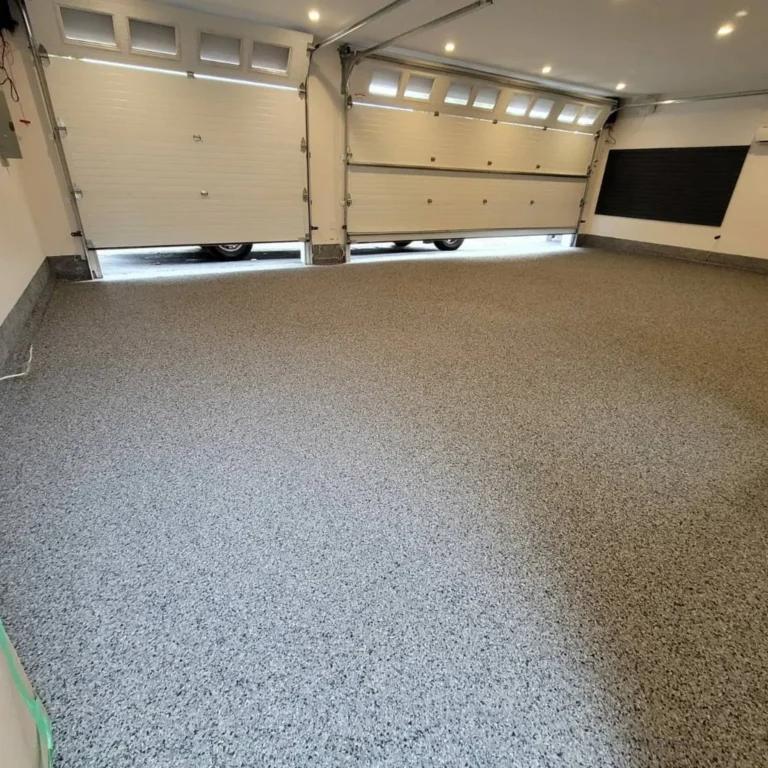
Downtown Vancouver garage
Full-flake coverage across a multi-bay garage, with the finish continuing up the perimeter base.
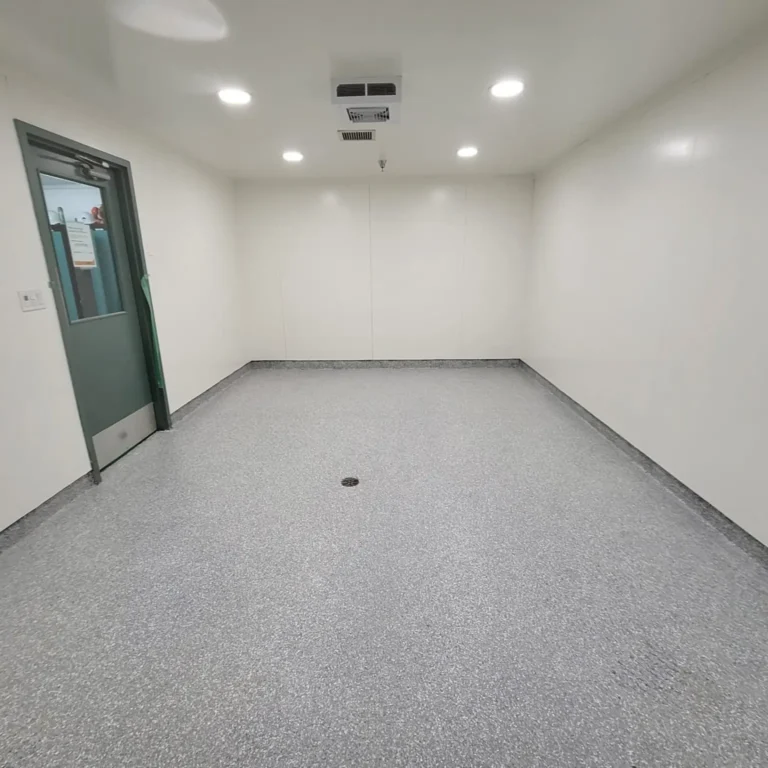
Yaletown utility room
A floor finished around a central drain, with a coved transition at the walls.
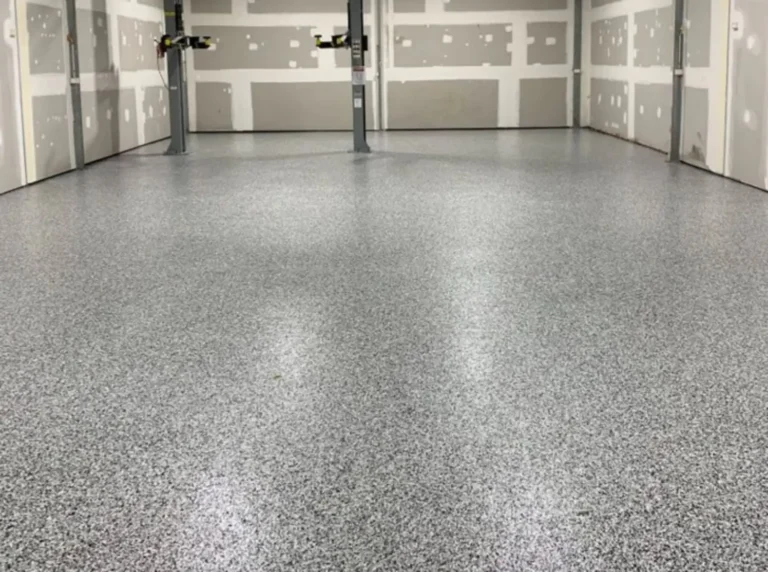
South Granville garage
A decorative flake floor installed through a garage containing vehicle lifts.
Recent residential project · July 2026
Vancouver single-car garage: Gravel full-flake finish
This separate residential project combined concrete preparation with a neutral Gravel flake finish for everyday parking and cleanup. It is included among the recent project scopes on our garage flooring page.
Review the recent garage project scopesConcrete preparation, repairs and installation
The finish is only one part of the job. A coating needs a suitable substrate, compatible layers and enough cure time to perform under its intended use.
-
Assess the concrete and operating conditions
We review existing coatings, cracks, contamination, moisture concerns, traffic and cleaning products. Where testing is required, the results are checked against the proposed system's limits.
-
Prepare the surface mechanically
Preparation includes diamond grinding where appropriate and removal of incompatible or failing material. The required surface profile depends on the specified coating and the condition of the slab.
-
Repair and install the specified layers
Repairs, edges, drains and joints are addressed to the agreed scope. Primer or base coat, resin layers, flake or aggregate, and the protective finish are installed as a compatible system. Moving joints need suitable detailing.
-
Confirm reopening and maintenance
We distinguish installation time from cure time. Walking, parking, equipment traffic and chemical cleaning can require different waiting periods. The handover follows the installed products and site conditions.
For Vancouver buildings: We discuss tracked-in rain, below-grade moisture, garage-door sunlight, loading access, strata coordination and occupied work areas. These conditions help determine texture, preparation and work sequencing. Active leaks need their own remedy before coating.
Epoxy, polyaspartic and resin flooring options
Epoxy and polyaspartic can be layers of the same floor. An epoxy base with decorative flake and a compatible polyaspartic topcoat is one option; a washdown room or industrial work area may need a different system.
| System | Where to consider it | What determines the specification |
|---|---|---|
| Full-flake epoxy | Garages, workshop garages and selected commercial spaces | Concrete condition, flake coverage, traction and a topcoat matched to wear and sunlight. |
| Solid-colour epoxy | Warehouses, work areas and building support rooms | Specified thickness, rolling loads, chemical exposure and the maintenance routine. |
| Polyaspartic finish | Suitable flake or quartz systems and selected faster-cure applications | Product-specific UV performance, compatible underlying layers, temperature and moisture limits. |
| Quartz broadcast resin | Selected wet-use rooms, service areas and textured floors | Aggregate and seal coats that balance traction, drainage and practical cleaning. |
| Urethane cement | Suitable food-service, washdown and demanding industrial areas | System thickness, heat and chemical exposure, drain details and cove requirements. |
| Metallic or decorative resin | Showrooms and selected interiors where appearance is a priority | Approved samples, substrate condition, lighting, gloss and the intended daily use. |
Exterior decks, ramps and parkades need a separate assessment of weather, drainage, movement and waterproofing. An interior epoxy coating is not automatically an exterior or waterproofing system.
Compare flooring colours and finishes
Solid colours, decorative flakes and quartz blends create different looks. Confirm colour, flake size, gloss and texture with a current physical sample before selecting your floor.




View the full flooring colour chart or browse 45 garage flake blends.
Screens and lighting change colour appearance. Surface traction depends on the installed texture, finish, contaminants and cleaning routine.
Experience from garages to larger facilities
Priority One brings 20+ years of experience and 500+ completed floors across its company-wide portfolio. Alongside Vancouver projects, our broader BC work includes:
Regional project · YVR
Million Air aircraft hangar
Approximately 34,000 sq. ft. of aircraft hangar coatings.
View aircraft hangar flooring workRegional project · Abbotsford
Liebherr Group warehouse
Approximately 18,000 sq. ft. of industrial warehouse epoxy flooring.
Review our company project experienceThese regional projects are outside the City of Vancouver. They demonstrate broader company experience rather than Vancouver-city installations.
Before work begins, your quote should identify the preparation, selected system, agreed repairs, reopening requirements and any applicable written warranty terms.
Vancouver epoxy flooring questions
Can you coat old or previously painted concrete?
Often, yes. We assess coating adhesion, concrete condition, contamination and moisture first. Failing paint, incompatible sealers and unsound material may need removal. The quote should state the removal and repair scope.
Is epoxy or polyaspartic better for a garage?
The complete system matters. Epoxy can provide the base or build coat, while a compatible polyaspartic topcoat can offer UV stability and a shorter cure window. Product suitability, moisture limits, preparation and vehicle cure time determine the specification.
How long will installation take, and when can I park?
Preparation, coating removal, repairs, moisture treatment and curing affect the schedule. Installation completion and vehicle return are separate milestones. We confirm foot-traffic and parking times for the products and conditions on your project; a fast topcoat does not make every floor a one-day installation.
Are epoxy floors slippery when wet?
Smooth finishes can become slippery with water, oil or other contaminants. Aggregate and topcoat selection can improve traction, but texture must also suit cleaning and drainage. Regular removal of grit and spills remains part of maintaining the floor.
Can epoxy flooring handle moisture from below the slab?
That depends on the moisture source, test results and the system's limits. A compatible moisture-mitigation treatment may be appropriate. Active water entry or a leak needs its own remedy; covering the surface does not resolve the source.
Can warehouse floors be coated while operations continue?
Some projects can be divided into isolated work zones or scheduled during closures. Forklift routes, deliveries, preparation work, ventilation and cure times determine whether phased installation is practical.
Does epoxy flooring waterproof a strata parkade?
An ordinary decorative epoxy floor is not automatically a parkade waterproofing system. Suspended slabs, moving joints, drains and ramps may need a dedicated traffic membrane and detailing. We assess those requirements separately.
Do you offer free Vancouver site assessments?
Yes. Share the location, approximate dimensions, intended use and preferred schedule. Photos or plans help with the initial review, but are not required to get started. We can arrange a free on-site assessment before preparing an itemized flooring quote.
Get a flooring quote for your Vancouver property
Tell us whether you are planning a garage, commercial interior, warehouse or strata project. Send approximate measurements and any photos or plans, and we will help identify the preparation and system your floor needs.
Priority One Epoxy Flooring · info@priorityonepoxyflooring.com