
Retail Stores • Boutiques • Showrooms • Stock Rooms
Retail Flooring Has to Perform in More Than One Environment
A customer-facing sales floor, a rain-exposed entrance and a stock-room delivery route do not place the same demands on a coating. The most reliable retail specification treats them as separate zones while keeping the colour, transitions and overall appearance coordinated.
Priority One installs epoxy and resin flooring for retail stores in Vancouver, Richmond, Burnaby and communities across the Lower Mainland. Our scope can include removal of failed coatings or adhesive, mechanical concrete preparation, repairs, moisture review, primers, decorative or broadcast body coats, wear topcoats, texture selection and phased handover planning.
Specify by Zone
Appearance, texture and system build are selected for the way each part of the store is actually used.
Prepare the Concrete
Grinding, coating or adhesive removal, repairs and substrate review come before the finish system.
Plan the Handover
Fit-out dates, store hours, fixtures, cure stages and reopening loads are addressed in the schedule.
Priority One Commercial Flooring Work
Relevant Showroom & Commercial Interior Finishes
These Priority One project images show two practical finish directions for customer-facing commercial spaces. Final colour, texture, sheen and system build are confirmed from the actual slab and store use; a sample should be reviewed under the lighting in the space whenever appearance is critical.
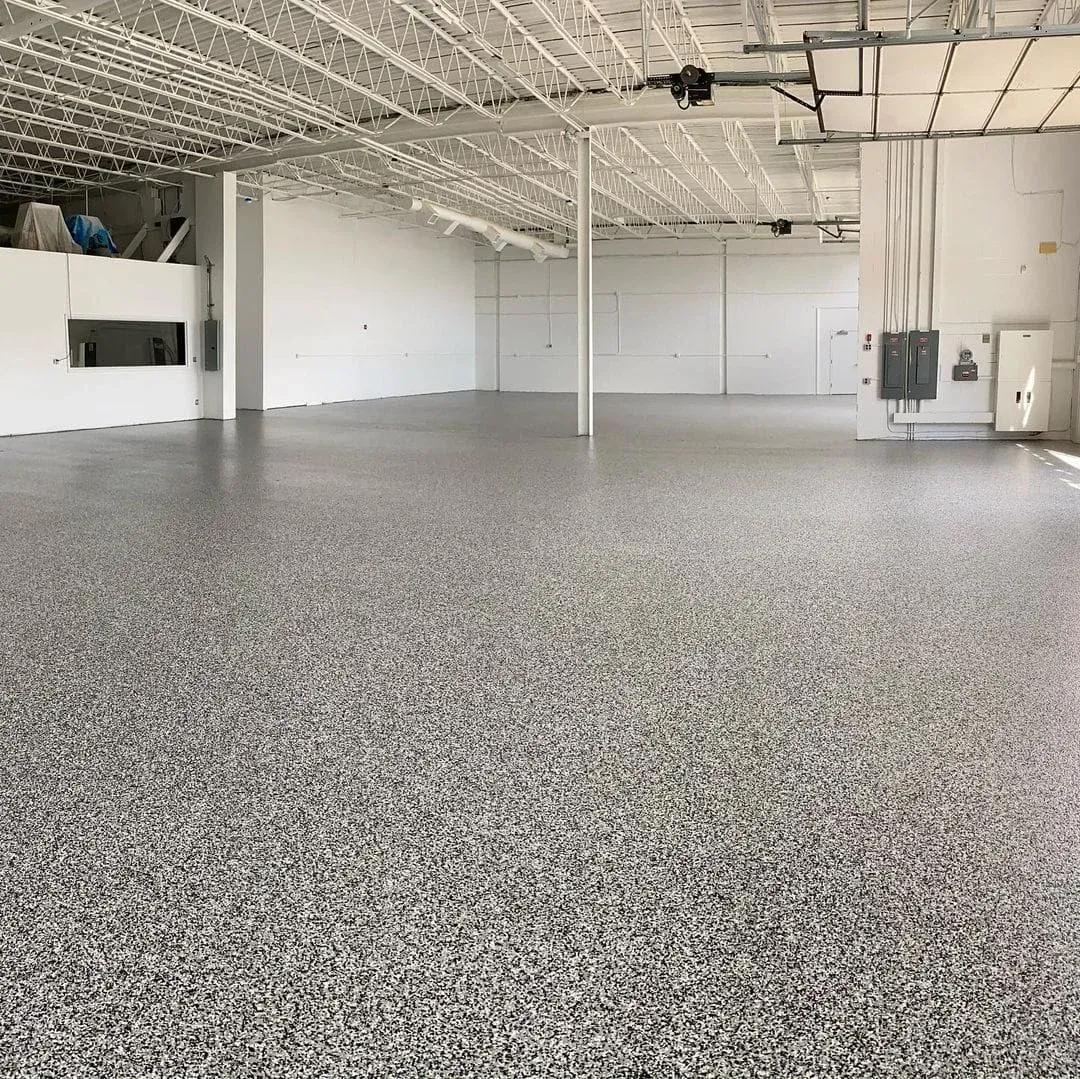
Grey full-flake finish selected for a bright, durable and visually consistent interior.
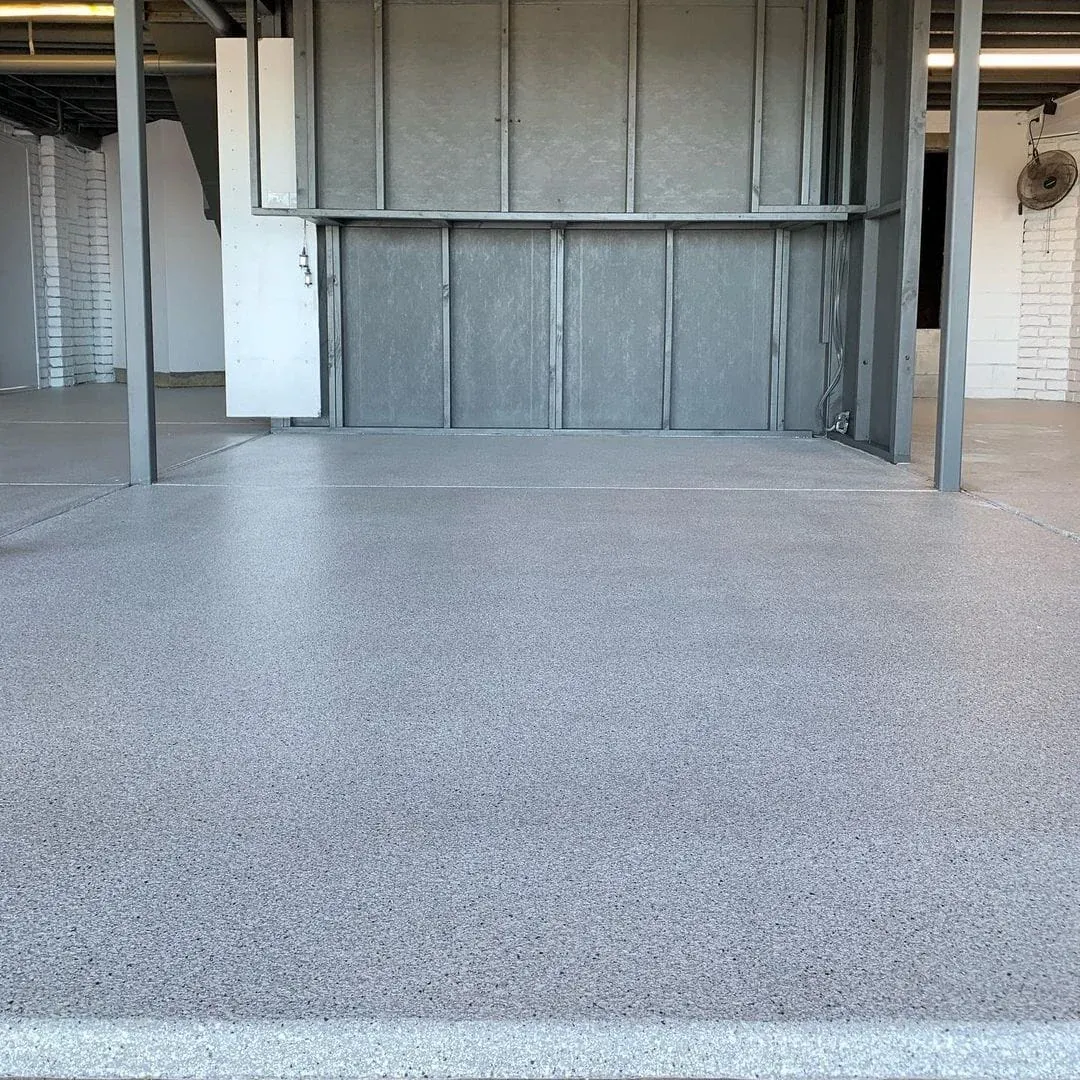
Continuous broadcast finish carried through an entrance and adjoining interior zones.
View more completed finishes in the Priority One project gallery.
Why Retail Floors Wear Unevenly
Most stores do not wear evenly. Entrances collect water and grit. Queue lines and checkout areas repeat the same foot paths. Display fixtures create point loads and are occasionally dragged. Stock rooms see hard cart wheels, deliveries and box movement. Storefront glazing can also expose part of the floor to more sunlight than the rest of the space.
Wear Lanes & Scuffs
Entrances, queues, cash wraps and main aisles show traffic first, particularly on high-gloss or very uniform finishes.
Tracked-In Moisture
Wet footwear and grit can change traction at the door. Texture, mats, drainage and cleaning need to work together.
Slab & Adhesive Problems
Old tile adhesive, weak patches, cracks, joints and residual contamination can compromise a new finish if they are not addressed.
Storefront Sunlight
Direct light can expose colour-stability differences. An exposure-appropriate topcoat and realistic sample review matter.
Stock-Room Traffic
Carts, dollies, shelving and deliveries often require a more utility-focused build than the customer-facing sales floor.
Short Closure Windows
Preparation, coating stages and cure requirements must be planned around fit-out work, merchandising and reopening loads.
Retail Flooring Recommendations by Store Zone
The table below is a planning guide, not a substitute for a site assessment or the selected product data. One store may use the same colour family throughout while changing the texture, wear layer or complete system from one zone to another.
| Retail Zone | Typical Demands | Useful System Direction |
|---|---|---|
| Sales floor & showroom | Appearance, foot traffic, display movement and routine cleaning | Decorative epoxy, solid-colour resin, flake, metallic or polished concrete depending on the brand and slab. |
| Entrance & vestibule | Rain, grit, wet footwear, mats and concentrated traffic | Texture selected for traction and cleanability, with careful transition and storefront-light planning. |
| Checkout & queue | Repeated wear lanes, carts, strollers and long dwell time | Abrasion-conscious topcoat and a colour, pattern or sheen that does not advertise every scuff. |
| Stock room & receiving | Dollies, hard wheels, shelving, boxes and deliveries | High-build epoxy or a broadcast system with repair, edge and joint details matched to the traffic. |
| Service corridor | Back-of-house traffic, utility use and repeated cleaning | A practical resin build prioritizing durability, predictable maintenance and safe transitions. |
| Food or beverage area | Spills, stronger cleaners, water and possible temperature change | Compare quartz, urethane-cement or specialty resin systems against the actual exposure and cleaning plan. |
Retail Epoxy, Resin & Concrete Floor Options
“Retail epoxy flooring” describes a category, not one universal product. The right recommendation may combine an epoxy primer and body coat with a polyurethane or polyaspartic wear coat, use aggregate for a broadcast finish, or move to polished concrete when the slab and design direction make that the better fit.
| Flooring Option | Often Considered For | Important Planning Point |
|---|---|---|
| Solid-colour high-build epoxy | Modern stores, stock rooms, corridors and clean branded interiors | Uniform colours can show dust, scratches and slab imperfections more readily; topcoat and sheen matter. |
| Full-flake broadcast | Showrooms, entries and practical customer-facing or support areas | The pattern helps disguise routine marks; flake size, colour blend, texture and clear-coat build affect the result. |
| Quartz broadcast | Higher-traction entries, service routes and spill-prone retail zones | Aggregate and seal-coat selection must balance traction with the store's cleaning capability. |
| Metallic decorative epoxy | Boutiques, salons, feature areas and statement showrooms | Each installation is visually unique. Confirm samples, lighting, gloss expectations and tolerance for natural variation. |
| Polyurethane or polyaspartic topcoat | Wear surfaces needing selected abrasion, stain or colour-stability properties | Performance and return-to-service time depend on the exact product, film build, temperature and site conditions. |
| Polished or grind-and-seal concrete | Architectural retail floors where the concrete itself is part of the design | Existing cracks, repairs, aggregate exposure and colour variation remain part of the finished character. |
Existing Flooring & Concrete Preparation
- Identify tile, vinyl, paint, sealer, adhesive or other existing materials.
- Remove weak or incompatible finishes rather than trapping failure below the new floor.
- Mechanically prepare concrete to the profile required by the selected system.
- Repair spalls, cracks and weak patches according to their condition and movement.
- Preserve or detail moving joints; a coating does not stop structural movement.
- Review moisture risk before selecting the primer and complete build.
Appearance Decisions to Make Early
- Colour and pattern under the store's actual lighting, not only a screen.
- Matte, satin or gloss appearance and how each shows dust or scuffs.
- Texture at entrances, spill zones and customer paths.
- Transitions to adjacent tile, carpet, LVP, thresholds and millwork.
- How fixtures, shelving, cash wraps and partitions will be moved or installed.
- Whether brand colours, line markings or zone changes are required.
Our Prep-First Retail Flooring Process
- Site and operational review: confirm store use, layout, customer and delivery paths, existing finishes, cleaning, appearance goals and access dates.
- Substrate assessment: review the slab, moisture risk, cracks, joints, patches, contamination, transitions and any existing coating or adhesive.
- System and finish selection: match each zone with an appropriate build, colour, sheen, texture and topcoat based on the documented product limits.
- Mechanical preparation and repairs: grind or otherwise prepare the concrete, remove unsuitable material and complete the agreed remediation before coating.
- Installation and quality control: install the specified primer, body coats, broadcast media and wear coats while monitoring conditions and details.
- Cure, handover and care: confirm pedestrian, fixture, cart and full-service timing, then provide cleaning and maintenance guidance for the selected finish.
Downtime & Phased Installation
A “weekend installation” is not a universal promise. Timing depends on removal, preparation, repairs, room size, number of coats, temperature, ventilation and the product's cure requirements. The reopening plan should distinguish light foot traffic from replacing fixtures, rolling loaded carts or resuming full service.
Where the layout and selected system allow, work may be divided into phases or coordinated with a new fit-out, overnight access or a planned closure. Phasing adds transitions and logistics that should be resolved before the schedule is committed.
What Affects Retail Flooring Cost
- Total square footage, room count and minimum mobilization requirements
- Existing-floor or adhesive removal and disposal
- Concrete repairs, levelling, joint work and edge details
- Moisture risk and required primer or mitigation system
- Selected finish, film build, aggregate and topcoat
- After-hours work, phasing, access, ventilation and cure windows
- Fixture movement, protection, transitions and line or logo details
What to Send for a More Accurate Retail Flooring Quote
A site visit is the best way to confirm a retail-flooring scope. If the project is still in budgeting or tender stage, the following information helps us provide a more useful preliminary review.
Space & Substrate
Address, drawings or dimensions, current floor type, slab age if known, and clear photos of damage and transitions.
Use & Exposure
Customer traffic, carts or dollies, spill risks, cleaning products, storefront sunlight and any moisture history.
Schedule & Finish
Opening date, closure windows, fit-out sequence, fixture plan, desired colours, sheen, texture and sample requirements.
Why Choose Priority One
- Richmond-based contractor serving Vancouver and the Lower Mainland
- Prep-first scopes that address the substrate before the finish
- Front-of-house and back-of-house recommendations by zone
- Epoxy, flake, quartz, metallic and concrete-floor options
- Moisture-aware primer and system planning where required
- Written estimates with the selected scope and project assumptions
Questions Your Proposal Should Answer
- What will be removed and how will the concrete be prepared?
- Which repairs and joints are included or excluded?
- What primer, body coats, aggregate and topcoat are specified?
- What texture, colour, sheen and sample have been approved?
- When can people, fixtures, carts and full loads return?
- Which site conditions or owner responsibilities affect the work?
Flooring for Specialized Retail Environments
Some spaces need more specific guidance than a general retail floor. These pages address the traffic, cleaning, wet-use or operational conditions in those environments.
Retail Flooring Service Area
Priority One serves retail projects in Vancouver, Richmond, Burnaby, New Westminster, North Vancouver, West Vancouver, Coquitlam, Port Coquitlam, Port Moody, Surrey, Delta, Langley, Maple Ridge, White Rock and surrounding Lower Mainland communities. Selected larger projects elsewhere in British Columbia can be reviewed based on scope and schedule.
Retail Epoxy Flooring FAQs
What is the best flooring for a high-traffic retail store?
There is no single best system for every store. The right choice depends on the concrete, customer and cart traffic, entry moisture, storefront sunlight, desired appearance, cleaning routine and closure window. Epoxy, flake, quartz, metallic resin and polished concrete each suit different priorities.
Can epoxy flooring be used in both the showroom and stock room?
Yes, but the two areas may need different builds. A showroom may prioritize colour, sheen and visual consistency, while a stock room may need a thicker or more utility-focused system for carts, deliveries and harder service traffic.
Can you install a resin floor over existing tile, vinyl or adhesive?
Sometimes an existing finish can remain only if the complete assembly is compatible, sound and properly prepared. Weak tile, moving finishes, contaminants and unsuitable adhesive normally need to be removed. The substrate must be inspected before that decision is made.
How do you address slippery retail entrances?
We review tracked-in water, footwear, mats, drainage, cleaning and the surrounding floor. Aggregate and texture can be adjusted where suitable, but traction must be balanced with cleanability and no coating should be described as slip-proof.
How long does retail epoxy flooring take to install and cure?
Timing depends on removal, preparation, repairs, square footage, system layers, temperature and the selected products. The schedule should separately state when light foot traffic, fixtures, carts and full service can return rather than relying on one general cure time.
Can the work be phased around store operations?
Often it can, if the layout, access and product cure requirements support phasing. The plan must also account for temporary transitions, dust control, staff or customer separation, merchandising and the route needed to keep unaffected areas operating.
How much does epoxy flooring for a retail store cost?
Cost depends on floor area, existing-floor removal, concrete condition, moisture risk, repairs, selected system, texture, after-hours access and phasing. A site assessment or clear drawings and photographs are needed for a useful itemized quote.
How should a retail resin floor be cleaned?
Use the cleaning products, dilution, pads and equipment recommended for the installed system. Remove grit regularly, clean spills promptly and avoid assuming that a stronger chemical or more aggressive pad is automatically better. We provide care guidance for the selected finish at handover.
Vancouver & Lower Mainland
Plan the Floor Around Your Store
Send the location, approximate square footage, current floor, photographs, desired finish and required completion date. We will review the project and recommend the next step.