Identify the products
Provide the hydraulic fluid names, including the Skydrol® grade where used, alongside fuels, lubricants, degreasers and cleaning products.

Private hangars · FBO facilities · MRO bays
Planned around your aircraft, fluids and operating schedule.
Priority One Epoxy Flooring installs hangar floor coatings for aircraft storage, fixed-base operators and maintenance facilities. From concrete preparation to the resin finish and line markings, we build the scope around your slab, traffic and available shutdown window.
Explore our Million Air YVR project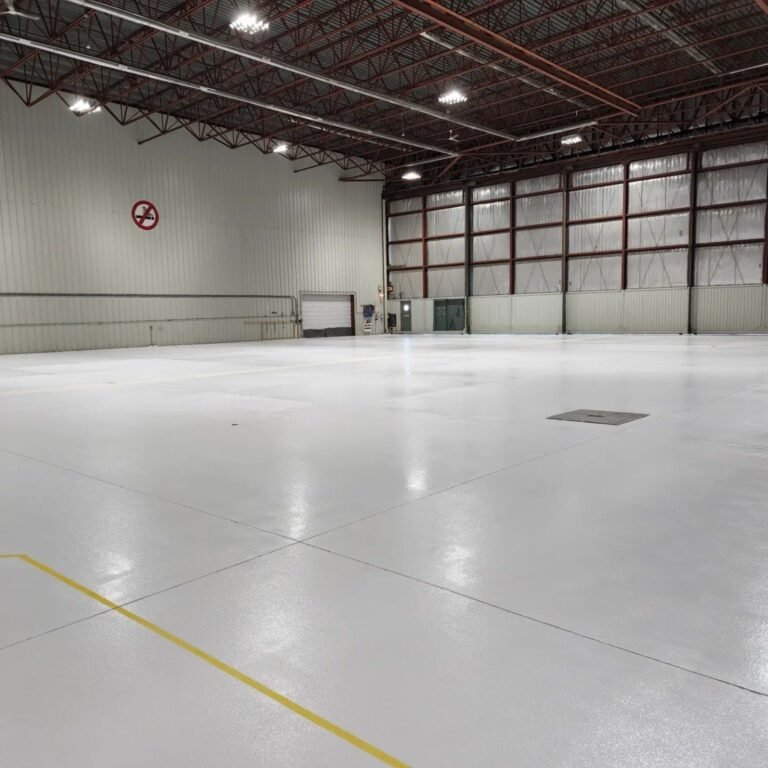
Completed aviation project
Approximately 34,000 sq ft of aircraft hangar coating work.
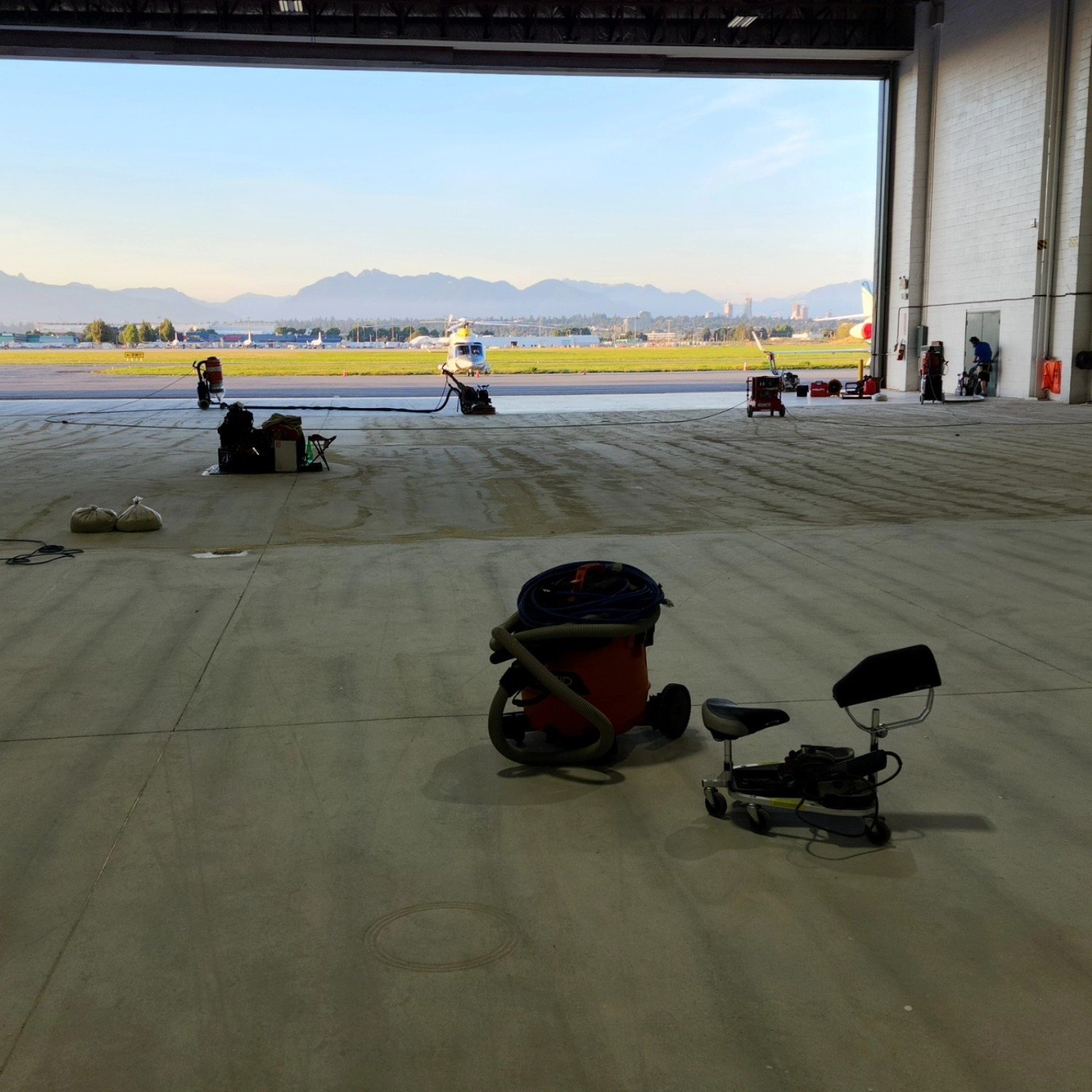
Priority One Epoxy Flooring completed mechanical surface preparation and new resin flooring for Million Air at Vancouver International Airport. The photographs show the hangar during preparation and after coating, including its light-coloured finish and yellow line markings.
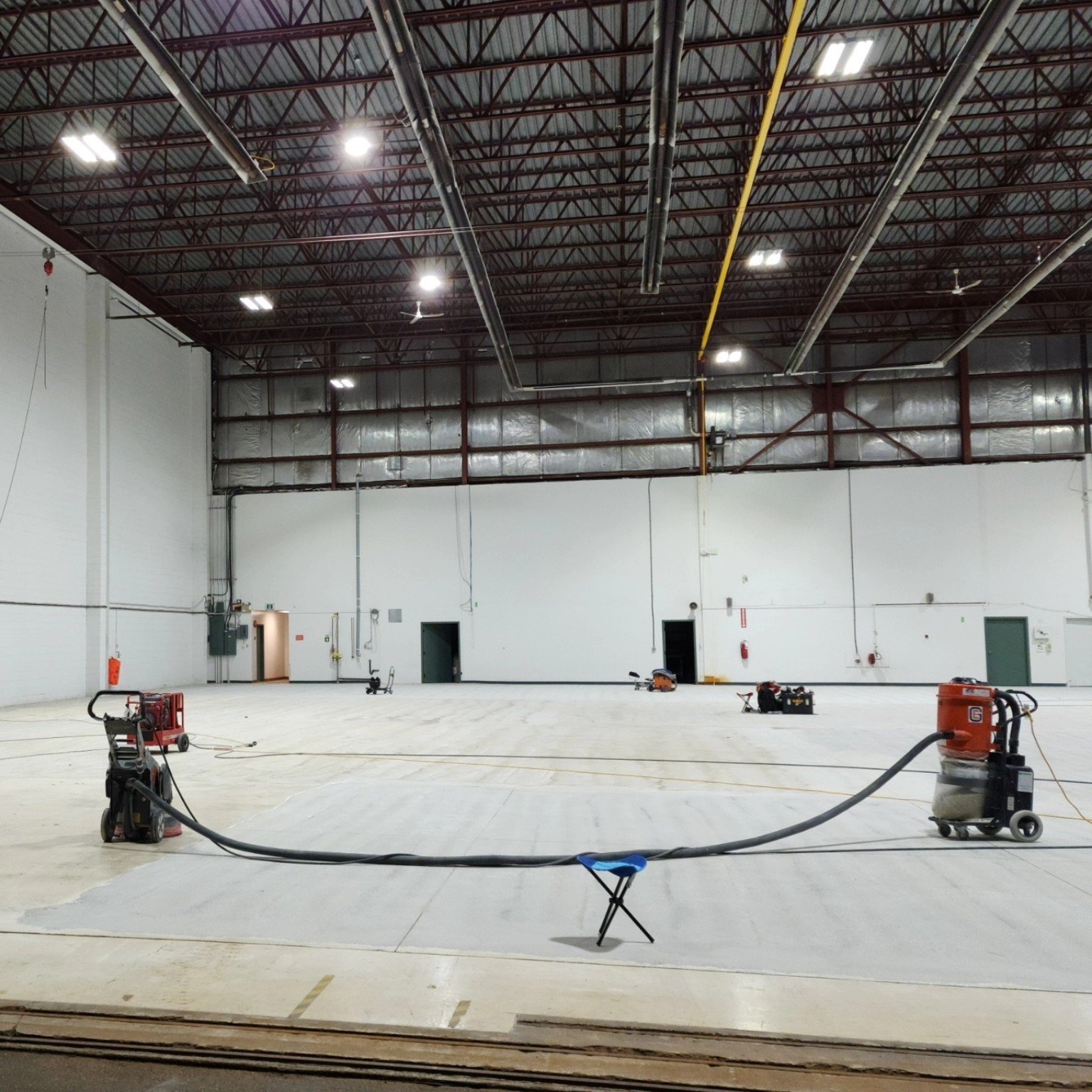
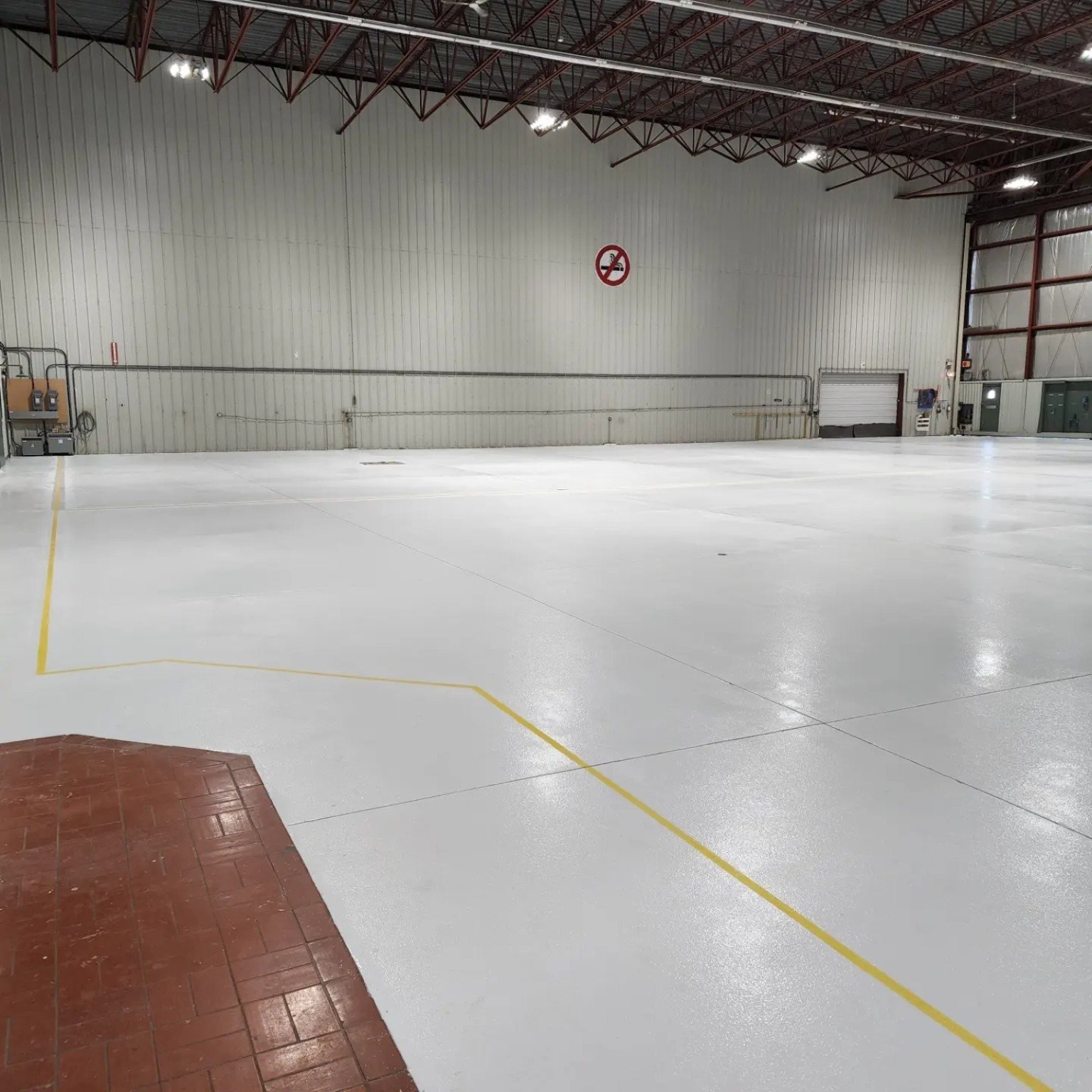
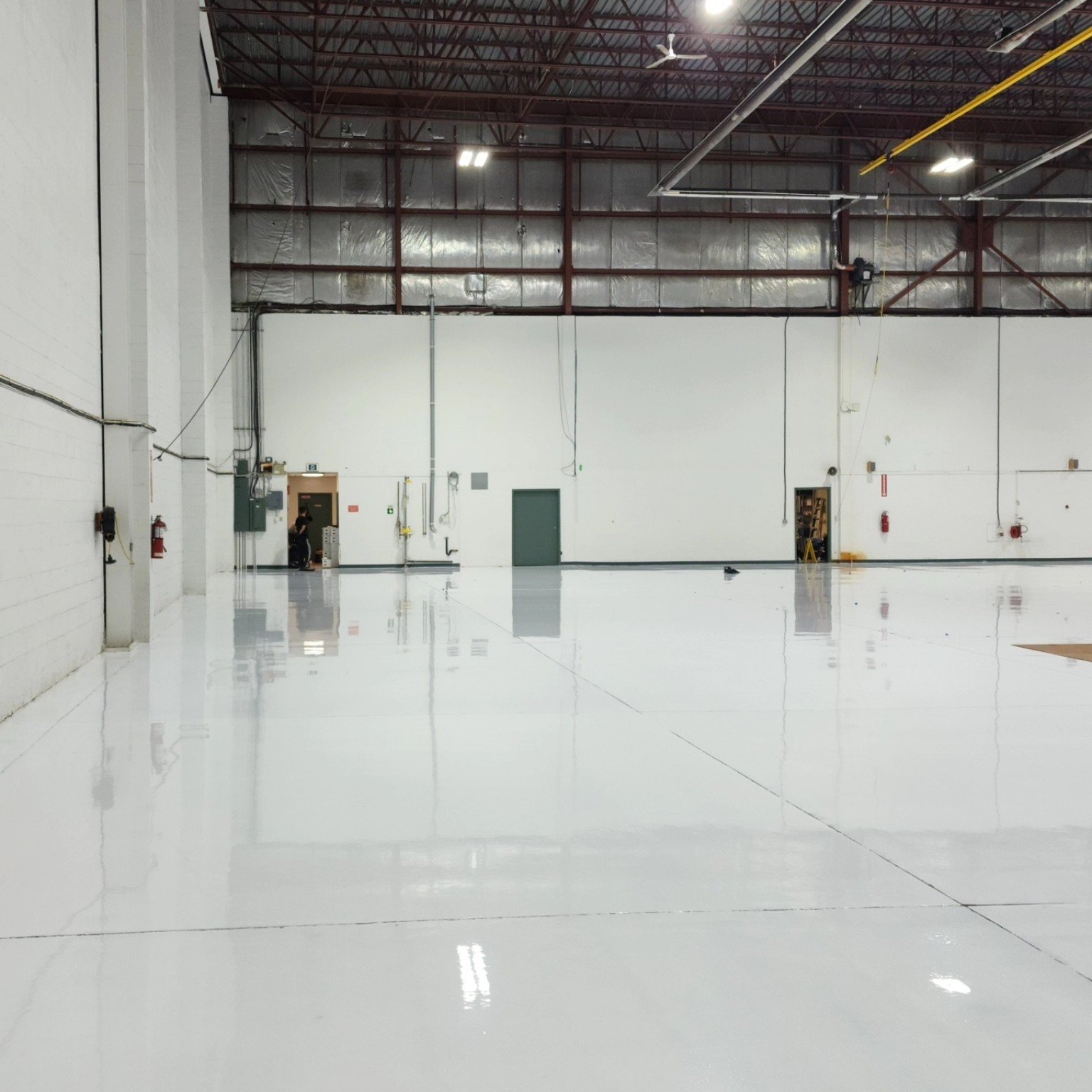
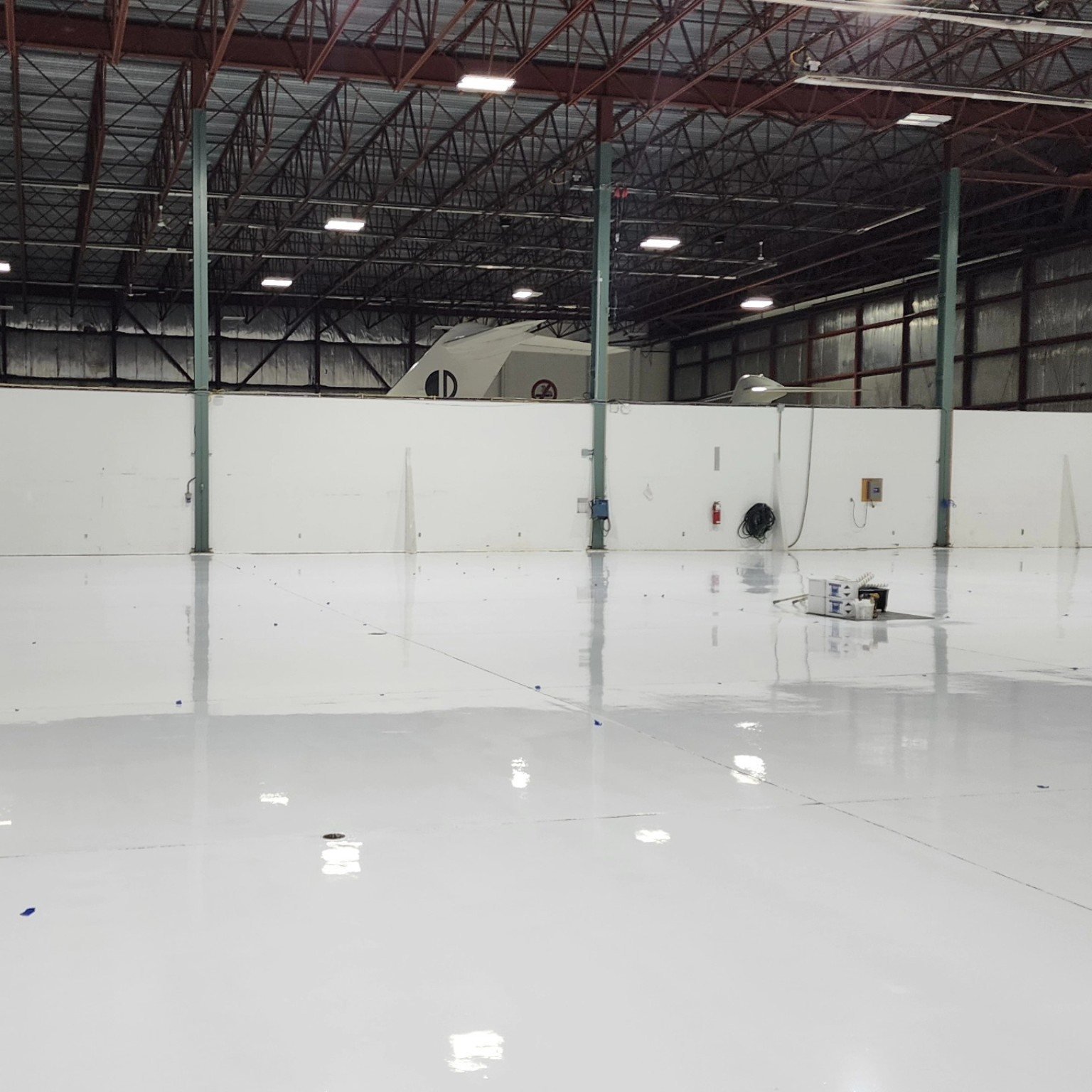
Select a project photograph to view it full size.
Aircraft hangar floor coating systems
A hangar floor includes preparation, repairs, primer, resin body coats and the wearing surface. We select compatible components around the traffic, fluids and maintenance conditions in each area.
| System approach | Where to consider it | What to confirm |
|---|---|---|
| High-build epoxy with a protective topcoat | Aircraft storage, corporate hangars and suitable maintenance bays. | Named products, film build, wheel traffic, cleaning needs and chemical-resistance data for the proposed assembly. |
| Textured or broadcast resin | Selected pedestrian routes, door transitions and areas exposed to tracked-in water or spills. | A texture sample reviewed against footwear, small-wheel carts, cleaning methods and wet conditions. |
| Urethane cement | Designated wet-service or wash areas where temperature and cleaning exposure justify it. | Actual wash temperature, chemical exposure, drainage, thickness and connections to adjacent coating systems. |
| Faster-curing resin options | Projects with limited shutdown windows, where the site and exposure requirements suit the selected chemistry. | Application conditions, ventilation, recoat windows and separate cure requirements for aircraft traffic and chemical service. |
The terms “epoxy,” “urethane” and “polyaspartic” describe families of materials. The manufacturer’s data for the named products and full build determines suitability.
Already have a coating specification? Send it with the floor area, fluid list and shutdown dates for a scope review.
Request a System ReviewSkydrol® & aviation fluid exposure
Fuel resistance alone does not establish suitability for every hydraulic fluid, cleaner or de-icer. We review the actual products and contact conditions before proposing the coating system.
Provide the hydraulic fluid names, including the Skydrol® grade where used, alongside fuels, lubricants, degreasers and cleaning products.
Explain where spills occur, their likely duration, temperature and concentration, and the cleaning process used to remove them.
Review the proposed manufacturer’s current resistance data and obtain technical confirmation where the exposure needs it.
The floor specification and spill-response routine work together. Any containment or static-control requirement should be identified in the facility brief.
Private · Corporate · Maintenance
Aircraft parking, towing, maintenance and pedestrian access place different demands on a floor. We review the layout and operations before deciding where the finish or detail should change.
Review aircraft parking, wheel movement, occasional servicing and cleaning. Select a finish that suits the actual exposure, desired appearance and maintenance routine.
Coordinate aircraft movements, tugs, service carts, staff access and presentation. Agree the coating zones, line layout and aircraft relocation sequence with the operator.
Map fluid exposure, wheeled tooling, stands, repair areas and cleaning conditions. The specification may vary between maintenance bays, tow paths and wet-service zones.
Concrete preparation & installation
The existing slab determines the preparation and repair scope. We review old coatings, contamination, moisture concerns and damaged areas before selecting the primer and coating build.
Movement joints need an appropriate detail through the finished floor. Door thresholds, drain edges, service covers and changes in system should also be included in the proposal.
Build a clearer coating quoteConfirm floor areas, existing conditions, testing needs, operational zones and the proposed assembly. Coordinate aircraft and equipment access.
Remove unsuitable coatings, address contamination and mechanically prepare the concrete to the selected system’s requirements. Complete the agreed repairs and details.
Apply compatible primers, resin body coats, specified texture and finish within the manufacturer’s application conditions and recoat windows.
Apply the agreed layout using compatible materials. Review inspections, cure milestones, cleaning guidance and the return-to-use conditions.
Installation around aviation operations
The programme includes access, preparation, repairs, application and curing. We assess whether phasing is practical against the facility layout and aircraft schedule.
Agree relocation, isolation, adjacent-aircraft protection, material routes, airport access arrangements and controls for dust, odour and ventilation.
Review how each section connects to the next. Include temporary access, turning routes, thresholds and the time needed between phases.
Confirm when foot traffic, aircraft movements, equipment loading, wet cleaning and chemical exposure can resume under the selected system’s conditions.
Appearance · Visibility · Wayfinding
Light-coloured finishes can help make spills and dropped items more visible. Review the colour and sheen under your hangar lighting, together with glare, tyre marks and cleaning expectations.
Plan aircraft parking outlines, pedestrian routes, equipment areas and tow paths with the operations team. Agree the layout, line colours and compatible marking system before installation.
Floor visibility supports inspections and housekeeping alongside the facility’s foreign object debris (FOD) procedures.
Illustrative colour directions. Availability, final colour, texture and sheen depend on the selected system; approve a physical sample.
View the full epoxy colour chartBudget & scope
The floor area is the starting point. Existing coating removal, oil contamination, repairs, moisture treatment and the required chemical-resistant build can change the scope substantially.
Compare quotes on the complete build and included details as well as price per square foot. Ask for preparation allowances, exclusions and cure conditions in writing.
Aircraft hangar flooring questions
Discuss the fluids, concrete, traffic and installation window before deciding on the coating system.
The appropriate system depends on the slab, traffic, fluids and shutdown window. High-build epoxy with a compatible protective topcoat is one option. Selected wet-service, textured or static-control areas may require a different assembly.
Confirm the exact fluid and exposure conditions against current manufacturer data for the proposed products. A general chemical-resistance or fuel-resistance claim is insufficient. The complete coating build and spill-cleaning routine also matter.
Recoating may be possible after assessing adhesion, compatibility, contamination and moisture. Sound material may be suitable for preparation and recoating; unsuitable or failing coatings require removal. A test area may be needed to confirm the approach.
That depends on the work, materials, isolation, ventilation and aircraft-protection requirements. We review aircraft relocation and adjacent operations with the facility team before proposing phases. Some work may require a wider shutdown.
Static-control requirements are defined by the operations and facility specification. Where required, flooring, grounding and verification need to form a compatible system. For component and electronics work, explore our aerospace and avionics flooring service .
The named coating system, installed build and site conditions determine the cure period. Foot traffic readiness can differ from readiness for aircraft, equipment loads, wet cleaning or chemical exposure. We include the required milestones in the installation plan.
We serve Vancouver and Metro Vancouver, with mobilisation for selected larger hangar projects elsewhere in British Columbia. Send the location, area and schedule so we can review the practical scope.
Other areas within your aviation facility
Manufacturing, component work, electronics rooms and technical support areas.
Aerospace facility flooringPassenger circulation, concourses and airport support spaces.
Airport terminal flooringGeneral workshops, mechanical rooms and service areas beyond aircraft bays.
Maintenance area flooringVancouver · Metro Vancouver · Selected BC hangar projects
Bring us the location, floor area, fluid list and shutdown window. We’ll review the preparation, coating assembly, markings and practical next steps with you.