
Retail interiors
A reflective finish can complement displays and lighting. Wet entrances, cleaning routines and grit control belong in the floor plan.

Concrete polishing · Vancouver & Metro Vancouver
Refined concrete for shops, showrooms & working spaces.
Priority One Epoxy Flooring grinds, densifies and polishes suitable concrete floors for commercial spaces and residential interiors. We help you select the aggregate exposure, colour and sheen, with stained concrete and grind-and-seal options where appropriate.
Your quotation starts with a slab assessment, clear repair expectations and a work schedule suited to your space.
Compare polishing, staining & sealing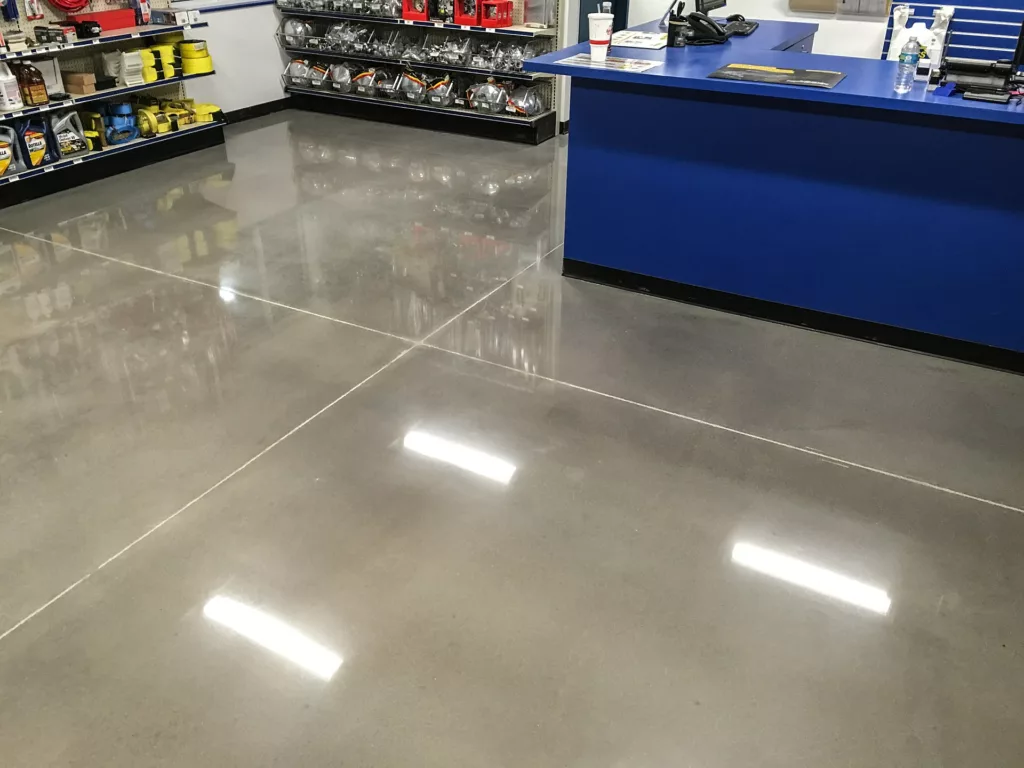
Concrete polishing in Vancouver
Polished concrete uses the existing slab as the finished floor. Mechanical grinding and refinement develop its appearance, while densification and selected protective treatments support the surface’s performance.
We work with owners, tenants, designers and contractors to define the finish, repairs and installation conditions before work begins.
Based in Richmond, Priority One Epoxy Flooring serves Vancouver and Metro Vancouver. We assess both the appearance you want and the concrete available to achieve it.
Finish references
Use these reference images to compare concrete surfaces and settings. The colour, aggregate, joints and repairs in your slab will influence its finished appearance.
A reflective finish can complement displays and lighting. Wet entrances, cleaning routines and grit control belong in the floor plan.
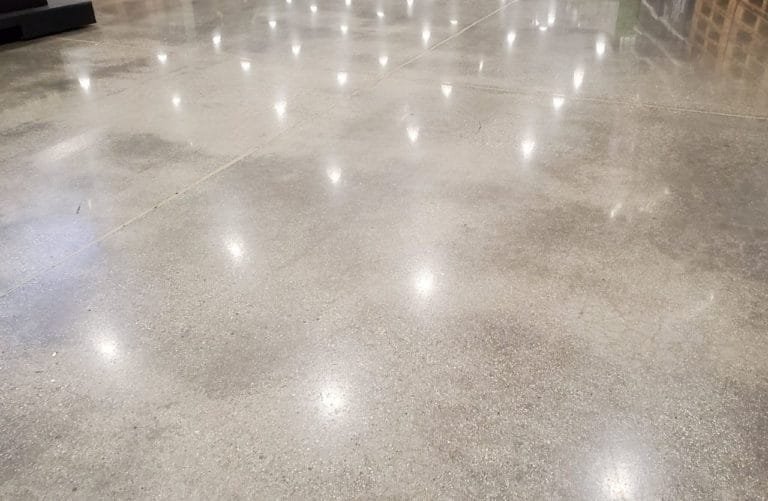
Grinding reveals the material already in the slab. Existing placement, repairs and grinding depth influence the pattern.

For open warehouse floors, consider dusting, wheel traffic, joints and maintenance alongside the appearance you want.
Have an existing floor or an inspiration photograph? Send both so we can discuss a realistic finish.
Discuss your concrete floor ↗Choose the right scope
These finishes can look similar in a photograph, but they involve different preparation and maintenance. Colour can be an additional stage within a polishing or sealing specification.
| Finish | How it is made | What to agree |
|---|---|---|
| Mechanical polishing | Progressive diamond grinding, honing and polishing, with a compatible densifier and specified protection. | Aggregate exposure, sheen, visible repairs, edges and maintenance. |
| Grind-and-seal | Concrete preparation followed by a topical sealer or clear coating. | Product suitability, coating sheen, traction, cure time and future recoating. |
| Stained or dyed concrete | A compatible colour treatment within the chosen polished or sealed system. | A sample, colour variation, protection and compatibility with the slab. |
| Prepared & sealed concrete | Specified cleaning or grinding and a selected protective treatment. | The preparation included, appearance, stain protection and renewal needs. |
A quotation should distinguish surface densification, stain protection and any separate moisture-control work. The specified products and your operating conditions determine what protection is appropriate.
Specify the appearance
Choose how much of the concrete’s aggregate you want to see, then discuss the level of reflection. A site sample helps establish what your actual slab can produce.
A restrained concrete appearance where the existing surface allows it. Old coatings, uneven finishing or damage may require grinding that changes the exposure.
Fine aggregate becomes part of the floor’s texture. Distribution can vary between slab areas and around previous repairs.
Deeper grinding reveals more of the stone in the concrete. The slab, grinding depth, edges and transitions influence the scope and cost.
A quieter finish can suit working interiors; greater reflection can complement showroom lighting. Agree on the finished appearance and care requirements, rather than choosing from a grit number alone.
Stains and dyes can introduce warmth or a design tone. Existing marks and repairs may absorb colour differently, so a sample is useful when colour consistency matters.
For projects with architectural specifications, the Concrete Polishing Council’s technical references can help define exposure, appearance and acceptance criteria.
Plan around the use
Plan the appearance around displays, lighting and customer circulation. Entrance mats, spill response and cleaning help protect the finish in busy commercial interiors.
Compare commercial resin flooring ↗Assess dusting, wheel traffic, damaged joints and the cleaning routine. Grinding can refine a surface; floor flatness, structural loading and chemical exposure need separate consideration.
Explore warehouse floor systems ↗Review access, edge work, adjacent finishes, noise and working hours. We discuss how preparation and finishing fit an occupied building or renovation schedule.
Assess the slab, previous floor coverings and below-grade moisture before choosing a finish. Repairs and the original concrete character can remain visible in a residential floor.
Washdown, hot water, acids, oils or frequent wet traffic can call for a different protective system. We can compare industrial resin flooring when those conditions influence the specification.
Preparation & installation
The finished appearance starts with the concrete’s condition. We define the required removal, repairs, exposure and sheen, along with access and protection of surrounding surfaces.
For new construction, involve the polishing contractor before the slab is placed and finished. Concrete placement and protection during subsequent trades affect the final result.
Arrange a Site AssessmentReview coatings, contamination, hardness, cracks, patches, moisture concerns, use and the finish you want. Discuss a sample where needed.
Remove incompatible surface materials, grind with dust-control arrangements, and address the specified repairs and joint treatment.
Use diamond tooling suited to the concrete to achieve the agreed exposure. Progressively refine the surface and apply compatible densification at the specified stage.
Add an agreed compatible stain or dye, where included. Complete the selected refinement and protective treatment following the product instructions.
Check the result, explain visible slab character and provide cleaning, protection and return-to-use guidance for the installed finish.
Polished concrete cost in Vancouver
We price the specific scope after reviewing your concrete and finish requirements. Large open floors and small divided rooms can have different labour needs per square foot.
Keep the finish looking its best
Sweep or dust mop, use suitable entrance mats and clean with a product compatible with the finish. Remove spills promptly, especially acidic liquids, oils and dyes.
Use protection under fixtures and moving equipment. Guards and sealers can need renewal, while worn polished areas may need restoration. The handover guidance should cover the treatment actually installed.
Common questions
Discuss the slab, the finished appearance and the maintenance you can provide before deciding on a system.
Ask about your project ↗Many existing slabs can be considered, but coatings, adhesive, oil contamination, soft concrete and repairs affect the result. We assess suitability and discuss a sample area when appearance is important.
They may remain visible after preparation and polishing. Repairs can improve the surface but can differ in colour from the surrounding concrete. Joints and movement need their own treatment; polishing does not create a structurally joint-free slab.
Mechanical polishing develops the finish by refining the concrete with progressively finer abrasives. Grind-and-seal uses prepared concrete with a topical sealer contributing to the sheen and protection. Their maintenance and renewal requirements differ.
Compatible stains or dyes can add colour to suitable concrete. The system, previous treatments and the slab’s absorption affect the result. We recommend discussing a test area before committing to a colour.
We quote the specific floor after reviewing its area, condition, exposure, sheen, repairs, edges and access. Send photos and approximate square footage so we can determine the assessment needed and prepare a written scope.
The work sequence depends on floor area, existing finishes, repairs and the selected specification. Repair materials, stains and protective treatments can add waiting periods. Your quotation should identify site access, phasing and return-to-use requirements.
Appearance alone does not establish slip resistance. Water, oils, footwear, the protective treatment and cleaning affect traction. Wet entrances or process areas need an exposure-specific assessment and, where required, testing of the proposed finish.
We can assess suitable residential concrete slabs as well as commercial floors. Below-grade moisture, access, previous flooring and the desired appearance need review. For a strata property, confirm the permitted finish and work arrangements before grinding.
Service life depends on the slab, traffic, protection and care. Remove grit, clean spills promptly and follow the maintenance plan for the installed system. Guards or sealers may need renewal, and worn areas may need professional restoration.
Start with your concrete
Send photos, approximate square footage and the finish you have in mind. We’ll review the next step and arrange a free site assessment in Vancouver or Metro Vancouver.