
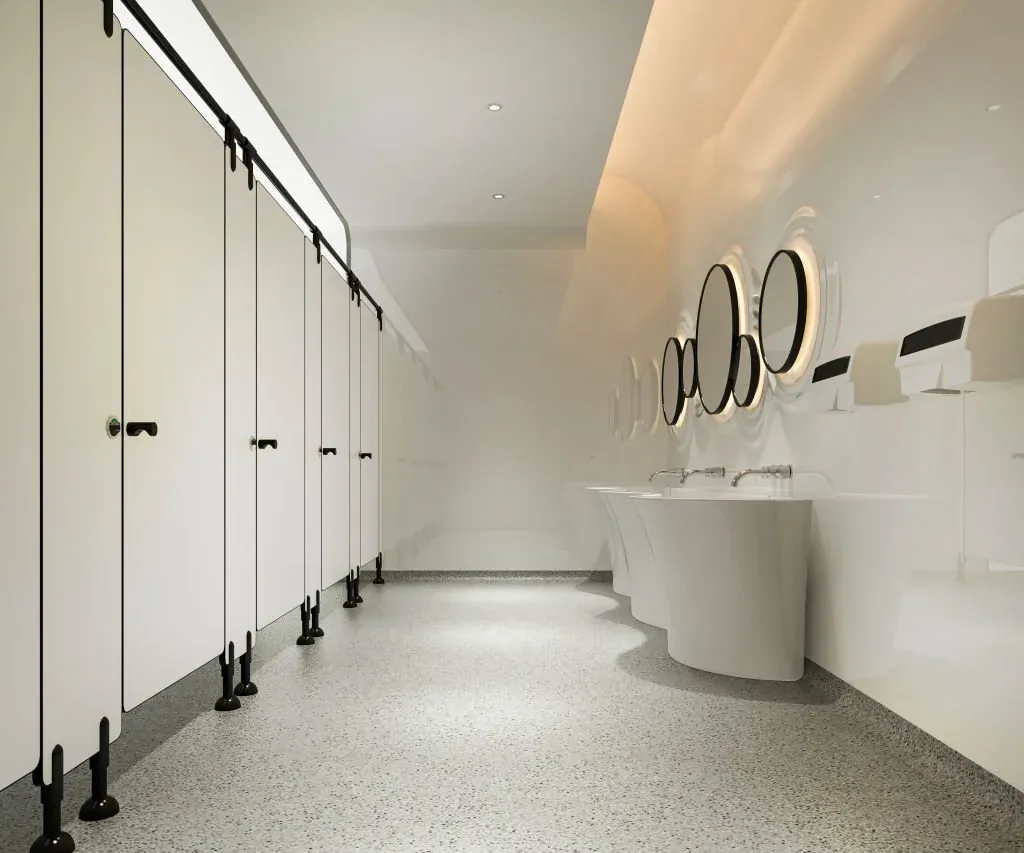
Public Facilities
Public Restrooms & Amenities
Seamless, non-porous epoxy flooring for schools, stadiums, arenas and public facilities requiring hygiene and slip resistance.
Priority One Epoxy Flooring installs high-performance clinical flooring systems for hospitals, clinics, imaging suites, laboratories, pharmacies, and long-term care across Vancouver & BC. Our urethane-cement, high-build epoxy/quartz, and rapid-cure coatings are engineered for aggressive disinfection, heavy cart traffic, and 24/7 operations — supporting infection control and long-term durability.
Hospitals and healthcare facilities demand floors that perform flawlessly in some of the toughest environments: continuous foot and cart traffic, harsh disinfectants, frequent spills, tight infection-control protocols, and the need for quiet, safe movement day and night. Priority One Epoxy Flooring designs and installs resinous flooring systems that meet these demands for acute care, outpatient clinics, medical office buildings, imaging suites, laboratories, pharmacies, surgical areas, and long-term care across Vancouver and British Columbia. Our healthcare floors are monolithic (no grout to harbor bacteria), dense and closed-pore (to resist staining and fluid ingress), and visualized for wayfinding (with color-zoned paths and safety markings) so that cleaning is faster, safety is higher, and uptime is maximized.
From urethane cement builds that tolerate hot-water disinfection and thermal cycling to high-build epoxy & quartz broadcast systems with tunable traction — and polyaspartic or aliphatic polyurethane topcoats for stain and chemical resistance — we tailor specifications to the clinical function, substrate conditions, and operating schedule of your facility. Our team delivers integral cove bases, sealed penetrations, slope-to-drain corrections, and ESD-safe options for device and imaging support areas, combining performance with clean, professional aesthetics.
Clinical spaces are unlike commercial offices or retail. They require floors that do more than look clean — they must stay clean under heavy use and rigorous disinfection, minimize trip/slip risk, and support infection-control practices. Porous joints, grout lines, and uneven transitions create harborage points for soil and microbes and slow down cleaning. The right seamless resin system eliminates these pitfalls and stands up to the real-world conditions of Canadian healthcare: tracked-in moisture, de-icers in winter, rolling equipment, and extended exposure to strong disinfectants.
ER corridors and treatment bays see constant traffic, liquids, and rapid cleaning cycles. We specify high-build epoxy with quartz broadcast for uniform traction and polyurethane or polyaspartic topcoats for stain resistance. Integral coves speed mop-and-rinse routines, while color zoning aids fast navigation during peak hours.
ORs demand seamless, closed-pore surfaces that resist harsh disinfectants and common surgical stains. Depending on your disinfection protocol and temperature cycling, options include urethane cement builds or epoxy/urethane systems with light texture and matte finishes that simplify visual inspection.
Quiet, smooth rolling and easy cleaning are priorities. We balance fine texture for safety with smooth-transition detailing at doorways and headwalls. Where comfort is desired, we can incorporate resilient/ergonomic resin layers while maintaining a cleanable, sanitary topcoat.
Heavy equipment and sensitive electronics call for ESD-aware options and robust abrasion resistance. We design conductive or static-dissipative resin floors with grounding grids and test points, plus slope corrections to keep cleaning efficient around plinths and bases.
Compounding suites and labs need chemical-resistant, seamless floors with integral coves and durable markings. We match resin chemistry to your MSDS list and select novolac or chemical-resistant urethane topcoats where aggressive agents are present. ESD packages available for analytical spaces.
Food service areas benefit from quartz broadcast textures and closed-pore topcoats that shed oils and sugars without staining. Drain detailing and slope corrections prevent ponding and support faster squeegee work.
We’re material-agnostic. Your clinical function, traffic, disinfectants, and shutdown windows drive the specification. The systems below are proven across hospital and healthcare environments:
The go-to for wet, thermally cycled, and high-sanitation areas like OR sub-sterile corridors, decon, and some procedure rooms. Urethane cement bonds to properly profiled concrete, handles hot-water cleaning, and cures to a dense, non-dusting surface.
Ideal for corridors, ER, clinics, and support areas requiring abrasion resistance and tunable traction. The quartz broadcast creates a predictable micro-texture that cleans efficiently and supports consistent slip resistance across large areas.
Topcoats that add stain, chemical and scratch resistance with adjustable gloss. Polyaspartics enable rapid turnarounds, minimizing downtime in active facilities.
For imaging support, device labs, and certain diagnostic areas, we offer conductive or static-dissipative systems with documented resistance ranges, grounding grids, and labeled test points to support your ESD control plan.
In clinical environments, details are everything. We focus on continuous, cleanable assemblies from floor to wall and across thresholds — reducing seams and joints that slow down disinfection and create risk. Our specifications include integral cove bases (typ. 100–150 mm), sealed penetrations at posts and conduits, and monolithic terminations under door hardware and equipment pads.
We coordinate closely with facility teams to minimize disruption, protect patients and staff, and maintain schedules. Every project includes documentation of substrate conditions, QA checks, and reopening criteria aligned to your SOPs.
Need to keep care areas open? We phase by room bank and corridor segment, scheduling night/weekend work and rapid-cure options to maintain continuity of service.
Healthcare floors should help prevent incidents while supporting staff comfort and patient experience. We use micro-texture that provides reliable traction without roughness, low-glare sheens to reduce eye strain under strong lighting, and optional resilient underlayers where comfort is essential — all within a seamless, sanitary, easy-to-clean envelope.
Compared with tile, sheet seams, or thin paint, resinous floors reduce cleaning labor, avoid recurring grout failures, and minimize unplanned shutdowns. With routine care, these systems maintain a professional appearance and consistent traction while protecting the slab from chemicals and repeated sanitation cycles.
Costs reflect square footage, system thickness, substrate repairs, moisture mitigation, slope corrections, drain/threshold detailing, ESD options, and working windows. Though healthcare-grade resin systems cost more upfront than thin coatings, they often deliver a lower total cost of ownership due to reduced cleaning time, fewer failures, and shorter shutdowns. We provide itemized proposals with alternates to manage budgets while maintaining clinical performance.
A Metro Vancouver hospital needed to restore 2,700 sq/ft of main corridor and 1,100 sq/ft of treatment pods with minimal disruption to patient flow. The existing sheet seams and transitions were trapping soils and lifting at thresholds. Our team implemented a three-phase plan over weekends: surface prep to CSP spec, high-build epoxy with fine quartz broadcast, integral coves at wall bases, and a satin polyaspartic topcoat for stain resistance and low glare. We installed color-banded wayfinding and sealed all penetrations and threshold terminations. Areas reopened on schedule with documented cure checks and a tailored cleaning SOP. The result: faster cleaning cycles, safer traction, and a cohesive professional appearance.
Priority One Epoxy Flooring serves hospitals, clinics, medical office buildings, and long-term care across British Columbia:
Urethane cement or epoxy/urethane builds with fine texture and closed-pore topcoats are commonly specified for wet scrub, thermal changes, and aggressive disinfection. We align the system to your SOPs and temperature cycles.
Yes. We plan night/weekend work, segment corridors, and choose rapid-cure topcoats to reopen areas quickly. We coordinate containment and ventilation with your facilities team.
Absolutely. We install conductive or static-dissipative systems with verified resistance ranges, grounding grids, and maintenance guidance tailored to your program.
We rebuild thresholds monolithically, reset drain bowls (as needed), seal penetrations, and install integral coves for a continuous, cleanable envelope that minimizes harborage points.
Small clinical zones can reopen in 24–48 hours with select fast-cure options. Larger projects depend on scope and substrate condition. We provide written warranties and a care guide tailored to your system.
Improve safety, simplify cleaning, and reduce lifecycle costs with a seamless floor designed for clinical environments. Request a site assessment for a tailored specification, phasing plan, and warranty options.
Industries We Serve
Seamless, non-porous epoxy flooring for schools, stadiums, arenas and public facilities requiring hygiene and slip resistance.
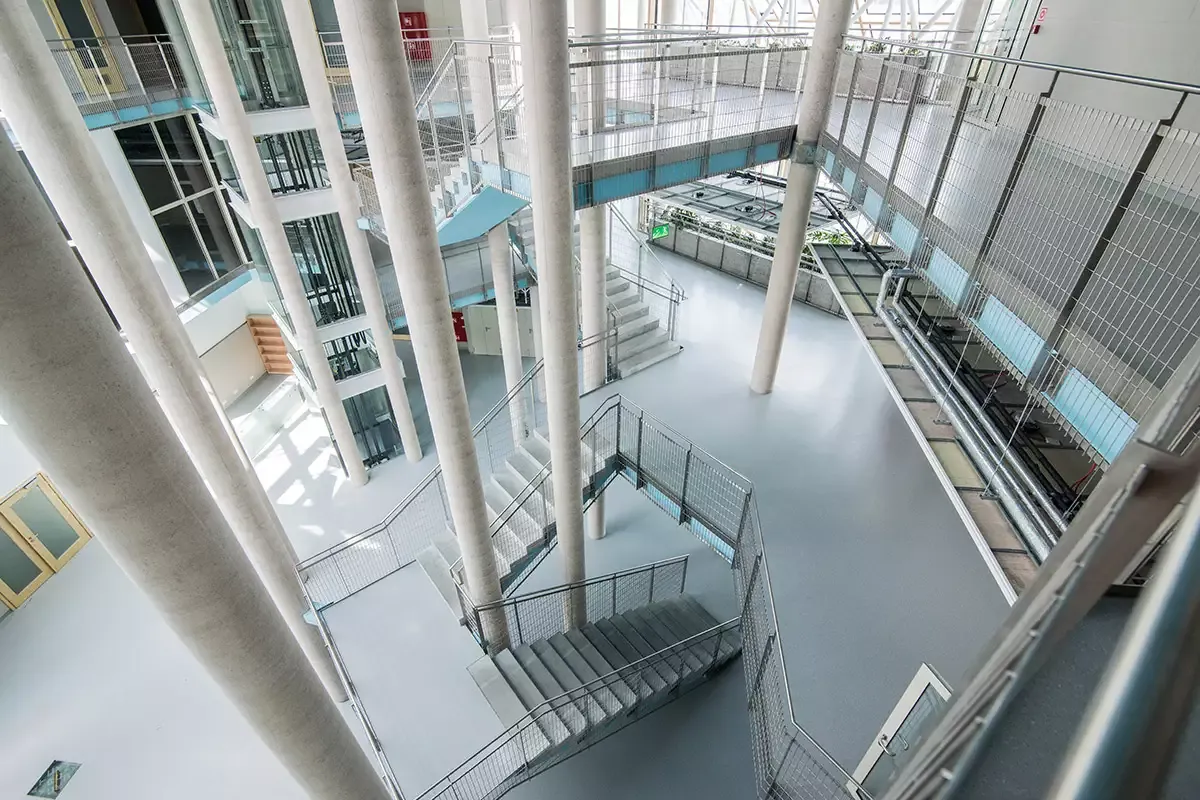
Durable, low-maintenance epoxy flooring for universities, schools, laboratories and research environments.
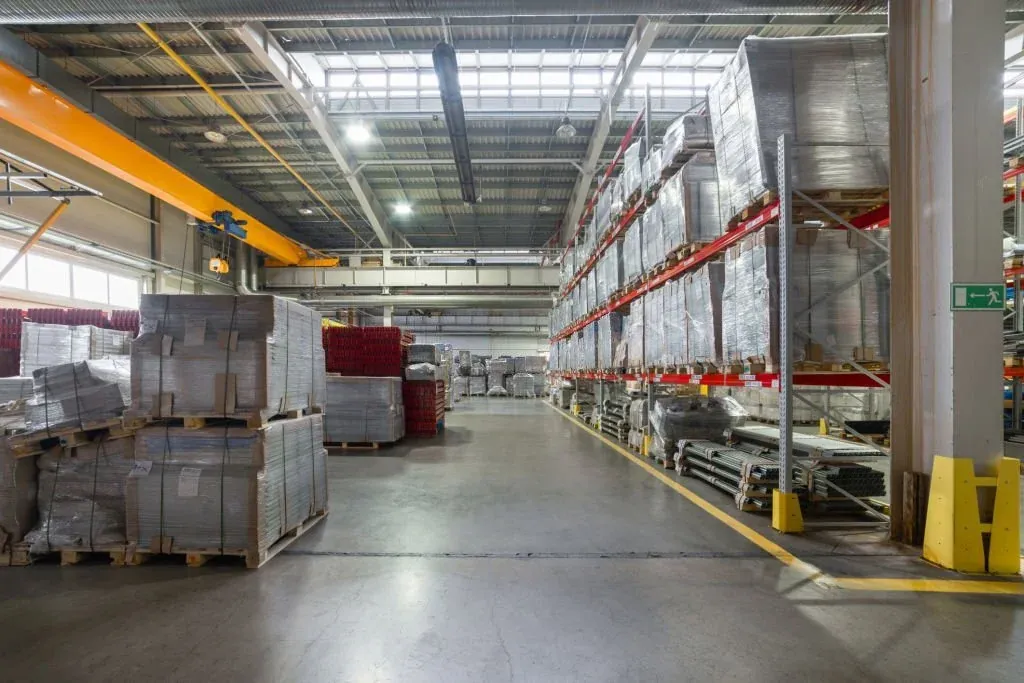
Heavy-duty epoxy systems engineered for forklifts, pallet jacks, logistics operations and 24/7 industrial traffic.

Light-reflective, chemical-resistant epoxy flooring for aviation environments, aircraft storage, and maintenance repair operations.