
Industrial Resin Floors Built for Chemicals, Moisture, Heavy Wear & Operational Uptime
Industrial floors usually fail because the wrong system was selected for the real environment, the slab was not profiled correctly, repairs were skipped, or moisture and exposure conditions were underestimated. In active facilities, that leads to peeling, wear lanes, contamination issues, repeated patching, and avoidable downtime.
Priority One Epoxy Flooring installs prep-first industrial epoxy and resin flooring for factories, processing areas, production support spaces, service bays, wash-down rooms, utilities, and mechanical areas across Vancouver, Metro Vancouver, and larger industrial projects throughout British Columbia. We begin with slab assessment, diamond grinding, repairs, and primer selection so the final system is matched to the environment instead of sold as a generic package.
This page is intentionally focused on industrial performance — not office interiors, retail presentation, or general warehouse-only traffic. If the floor has to handle chemicals, wet cleaning, impact, service abuse, or process-related exposure, this is the right page.
System selection is based on chemicals, cleaners, wash-down, rolling traffic, and service conditions.
Grinding, repairs, edge detailing, and bond-building preparation come before final build decisions.
Primer and build strategy are matched to slab condition and vapour risk, not guessed at after the fact.
We plan around shutdown windows, phasing, access routes, and real production constraints where possible.
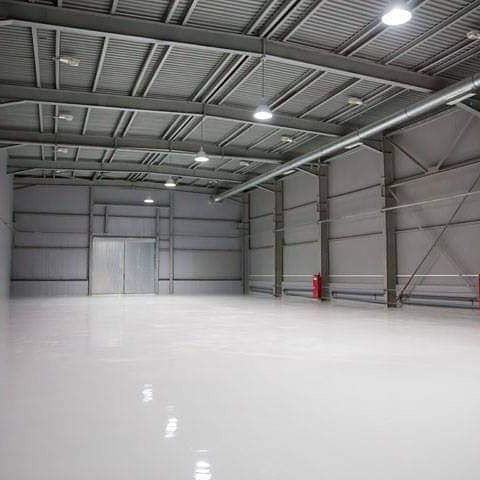
Where Industrial Epoxy Flooring Works Best
Strong fit for plant floors, production support zones, assembly areas, fabrication spaces, machine-adjacent rooms, and process-linked infrastructure areas.
Useful where cleaning is frequent, wet-use is common, and the floor needs better resistance to wash-down routines, detergents, and contamination pressure.
Built around oils, fluids, dropped tools, rolling equipment, practical cleanup, and everyday abuse in working service environments.
Good fit for damp rooms, infrastructure support areas, mechanical spaces, and utility environments where durability and cleanability matter more than presentation.
Traction, striping, walkways, hazard zones, and visual separation can be built around real site safety conditions instead of using one finish everywhere.
Where the plant cannot fully shut down, the build and schedule need to be designed around usable access windows and phasing logic.
Industrial Resin Flooring Systems We Install
The right industrial build depends on exposure profile, traffic type, moisture risk, cleaning frequency, thermal demands, and how aggressively the space needs to perform. We do not spec every industrial slab the same way.
Strong choice for general industrial floors, production support areas, service rooms, and harder-wearing facility spaces where seamless durability matters.
Useful in wet-use industrial spaces, wash areas, ramps, and slip-prone zones where traction needs to be balanced with long-term maintainability.
Topcoat selection affects stain resistance, wear life, cleanability, UV stability, and how quickly the floor can return to service.
Often the better fit in harsher wet-use, hot wash-down, thermal shock, and aggressive cleaning environments where standard epoxy alone may not be enough.
How We Select the Right Industrial Specification
We look at oils, fuels, detergents, wash-down chemistry, solvent exposure, and process contact instead of treating every industrial floor like a dry-use slab.
Forklifts, carts, service equipment, dropped tools, repetitive routes, and abrasion all affect the system thickness, texture, and topcoat strategy.
Below-grade conditions, vapour drive, damp environments, and temperature swings all affect primer selection and long-term bond reliability.
Slip resistance, hazard marking, striping, access limitations, shutdown windows, and return-to-service timing all shape the final scope.
Why Industrial Clients Trust Priority One
Most industrial coating problems start before the topcoat. We focus first on profiling, repairs, detailing, and the substrate conditions that control service life.
We do not push one stock coating package. The floor build should follow the facility’s actual use, exposure, and maintenance reality.
Where shutdown is limited, the project can often be planned by room, shift, lane, or usable area rather than trying to stop the whole operation at once.
We serve Metro Vancouver directly and support larger industrial scopes throughout British Columbia where project size and logistics make sense.
Industrial Project Planning, Access & Downtime
Industrial flooring projects are rarely just about the resin. They also depend on access routes, equipment, safety plans, usable shutdown windows, wet-area sequencing, curing time, and how the site needs to reopen.
- Phased by area or lane: useful when the whole facility cannot go offline at once
- Shift-based planning: helpful where production windows open and close around active operations
- Zone-specific detailing: different rooms and exposure areas may need different textures, topcoats, or striping
- Clear handover timing: reopening guidance matters as much as installation speed
How Industrial Flooring Quotes Are Usually Built
- Square footage and how many zones need different performance levels
- Concrete condition, contamination, old coating removal, and repair scope
- Moisture risk, below-grade conditions, and mitigation requirements
- Slip-resistance level, striping, and visual safety zoning
- Access limitations, phasing complexity, and shutdown timing
- Approximate square footage
- Photos or video of the slab
- Use-case, traffic profile, and chemical or cleaner exposure
- Any downtime window or reopening deadline
- Whether the site needs budget control, premium durability, or extreme-duty performance
Industrial vs Warehouse vs Commercial: Choosing the Right Performance Class
Best fit for chemical exposure, wet-use cleaning, processing support, service abuse, utilities, mechanical rooms, and more demanding facility conditions.
Better route for storage lanes, forklift aisles, pallet-jack traffic, docks, and logistics-heavy circulation patterns.
Better route for offices, retail stores, corridors, showrooms, lobbies, and other customer- or staff-facing interiors.
Need broader Vancouver city intent? Use the Vancouver epoxy flooring overview. Need logistics-heavy performance? Use the warehouse flooring page. Need business interiors? Use the commercial flooring page.
Related Industrial Flooring Pages
Use the pages below when the facility needs a more specific industrial use-case, specialty environment, or exposure-driven system selection.
Industrial Epoxy Flooring FAQ
Is industrial epoxy flooring strong enough for heavy use?
Yes — when the system is specified for the real exposure profile and installed over correctly prepared concrete. Heavier-use zones often need thicker or more specialized builds than light support rooms.
What flooring works best for processing and wash-down environments?
That depends on moisture level, cleaning routine, temperature swings, and chemical exposure. In harsher wet-use and hot wash-down conditions, urethane-cement is often the better fit over standard epoxy-only systems.
How do you help reduce peeling or premature failure on industrial floors?
Long-term performance starts with the substrate. Grinding, repairs, moisture-aware primer selection, and the right chemistry for the actual exposure profile all matter more than just adding another topcoat.
Can you work around equipment and production schedules?
Many industrial projects can be phased by room, lane, shift, or operating window so the work fits real facility constraints where site conditions allow.
What is the difference between industrial and warehouse epoxy flooring?
Industrial floors are usually specified for harsher exposure, wet-use cleaning, chemical contact, service conditions, and specialty performance requirements. Warehouse floors are more often centered on logistics traffic, storage lanes, abrasion, docks, and maintainability.
Request an Industrial Flooring Quote
Get a prep-first industrial resin flooring system designed around your exposure profile, safety requirements, cleaning routine, shutdown constraints, and long-term performance goals.