Woodworking & Industrial Arts
Floors planned around sawdust, rolling equipment, workbenches, tool drops and frequent sweeping or vacuuming. Texture must provide useful traction without trapping excessive fine debris.

School Shops • Industrial Arts • Trades Education
School shop flooring has to perform differently from an ordinary classroom floor. It may be exposed to rolling tool carts, fixed benches, dropped hand tools, abrasive dust, wet footwear, oils, adhesives, cleaning products and repeated movement between workstations. The right floor is not simply “epoxy paint.” It is a complete resin system selected for the substrate, room use and school schedule.
Priority One Epoxy Flooring designs and installs epoxy, quartz-broadcast, flake, polyurethane, polyaspartic and selected urethane-cement systems for K–12 school shops, college trades classrooms, makerspaces and technical education facilities in Vancouver and the Lower Mainland.
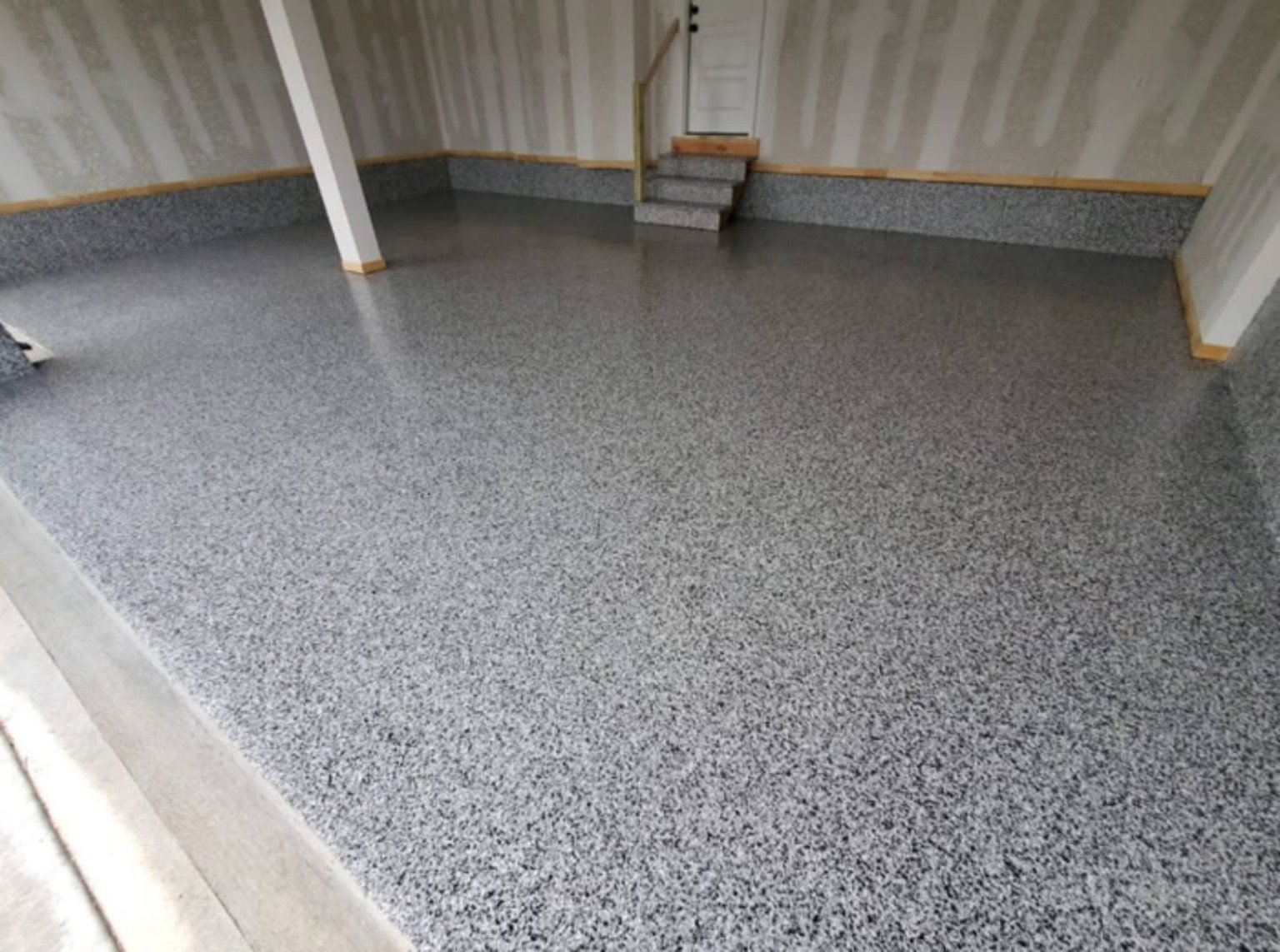
Premature failure usually comes from a mismatch between the floor, the concrete and the room—not from the colour of the coating. Thin coatings, weak preparation, trapped contamination and an incorrect texture can create peeling, dusting, difficult cleaning or uneven wear.
Different teaching areas create different risks. We review each room independently instead of specifying one identical coating throughout an entire education building.
Floors planned around sawdust, rolling equipment, workbenches, tool drops and frequent sweeping or vacuuming. Texture must provide useful traction without trapping excessive fine debris.
Systems selected for filings, carts, abrasion and the room’s oils or cleaners. Welding, grinding sparks and high-temperature work require separate review because ordinary resin flooring is not heat-proof.
Education spaces with vehicles, jacks, fluids and rolling loads may need a higher-build system and verified chemical resistance. Active commercial repair shops belong on our workshop service page.
Practical floors for carpentry, plumbing, electrical and construction-skills rooms with benches, training assemblies, carts, storage and changing work layouts.
Seamless finishes for fabrication tables, mobile equipment, adhesives, paints and mixed activities. Electronics rooms requiring static control need a purpose-designed ESD system—not ordinary epoxy.
Resin flooring for post-secondary technical teaching spaces where equipment loads, maintenance procedures, chemical lists and reopening deadlines must be documented before installation.
There is no single “best epoxy” for every school shop. The correct build depends on slab condition, traffic, impacts, chemicals, moisture, texture and downtime. This comparison shows common directions; the final system is confirmed after the room and substrate are assessed.
| System direction | Often suited to | Primary advantages | Important considerations |
|---|---|---|---|
| High-build epoxy with performance topcoat | General trades classrooms and dry technical rooms | Seamless, cleanable, durable and available in practical solid colours | Texture, chemical exposure, UV and cure time must be specified correctly |
| Quartz-broadcast resin flooring | Busier rooms needing greater texture and wear resistance | Durable broadcast build with adjustable traction and visual consistency | Aggressive texture may hold more dust and take more effort to clean |
| Full-flake epoxy/polyaspartic system | Makerspaces and lighter-duty multipurpose shop rooms | Attractive, practical and effective at disguising routine dust and wear | Not automatically suitable for severe chemicals, heat or heavy production |
| Urethane-cement system | Selected wet, washdown or more demanding service areas | Higher tolerance for moisture, impact, chemicals and thermal cycling | Usually unnecessary for a standard dry classroom; conditions must justify it |
| ESD or antistatic resin flooring | Electronics teaching labs with documented static-control requirements | Purpose-designed electrical performance when installed as a complete system | Requires project-specific testing, grounding coordination and maintenance guidance |
School shops may use colour to organize circulation routes, work bays, equipment clearances, storage zones or restricted areas. Options can include solid colours, decorative flake, quartz blends and compatible line marking.
Colour availability depends on the selected resin system and manufacturer. Final choices should be made from current physical samples—not only from a screen—because lighting, texture and sheen affect appearance.
Send us the school’s colour requirements, floor plan and any required safety markings during the assessment so they can be included in the written scope.
The installation plan is documented before materials are selected. This helps avoid specifying a finish that looks appropriate but does not match the slab, equipment or school calendar.
A resin floor can be specified with an appropriate traction profile, but no floor is slip-proof. Water, oil, sawdust, metal filings and other debris can reduce traction on any surface. Texture must therefore be balanced with the school’s housekeeping method and the need to roll carts or equipment.
We review likely contaminants, footwear, slopes, entrances and cleaning procedures before recommending the aggregate and topcoat finish. Ongoing housekeeping remains essential after installation.
Many projects can be coordinated for summer, winter or spring breaks, professional-development days or phased access windows. The usable schedule still depends on preparation, repairs, number of coats, site temperature, ventilation and the cure requirements of the selected products.
“Fast cure” does not remove the need for correct preparation or full-service cure. We confirm separate windows for foot traffic, cleaning, equipment placement and full room use before work begins.
This page is intentionally limited to education-based shop rooms and hands-on teaching spaces. The following pages cover different search and project intents, which helps Google and customers reach the correct service.
Priority One Epoxy Flooring is based in Richmond and serves school, institutional and commercial projects in Vancouver, Richmond, Burnaby, Surrey, Coquitlam, Port Coquitlam, New Westminster, North Vancouver, West Vancouver, Delta, Langley, Abbotsford and surrounding Lower Mainland communities. Selected larger education projects elsewhere in British Columbia can be reviewed individually.
The best flooring depends on the concrete, room activities, equipment, contaminants, cleaning method, traction needs and available shutdown. High-build epoxy with a performance topcoat, quartz-broadcast resin and selected flake systems are common directions, but the final build should be based on a site assessment.
Yes, epoxy and resin flooring can suit many woodworking and metalworking classrooms when the system is matched to dust, filings, carts, impacts, chemicals and cleaning. Welding, grinding sparks and high-temperature work require separate review because ordinary resin flooring is not heat-proof.
A properly prepared and appropriately built resin system can handle normal school-shop traffic, rolling carts, benches and occasional hand-tool drops. Concentrated loads, sharp impacts, machinery and equipment anchoring must be reviewed because no coating is damage-proof.
Standard resin flooring is not heat-proof and may be damaged by welding spatter, grinding sparks or very hot objects. Hot-work locations should be identified before specification so protective measures, designated zones or a more appropriate surface can be considered.
Yes. Aggregate and broadcast texture can be adjusted to the room, but no floor is slip-proof. The selected profile must balance traction with dust removal, cleaning and the movement of carts, stools and equipment.
Often, yes. Work may be planned for summer, winter or spring breaks or completed in phases. The required window depends on preparation, repairs, system build, site conditions and separate cure requirements for foot traffic, cleaning, equipment placement and full service.
Yes. Depending on the selected system, options may include solid colours, flake or quartz blends, walkways, equipment-clearance zones and compatible line marking. Final colours should be approved from current physical samples.
Sometimes, but the existing finish, bond, contamination, movement and finished floor height must be assessed. Unsound coatings, loose tile or unsuitable material may need removal before a reliable resin flooring system can be installed.
Send us the room type, approximate square footage, existing floor, photos, equipment list, known chemicals and preferred school-break window. We will review the site and recommend a practical system based on the actual conditions.