
Completed Aviation Project
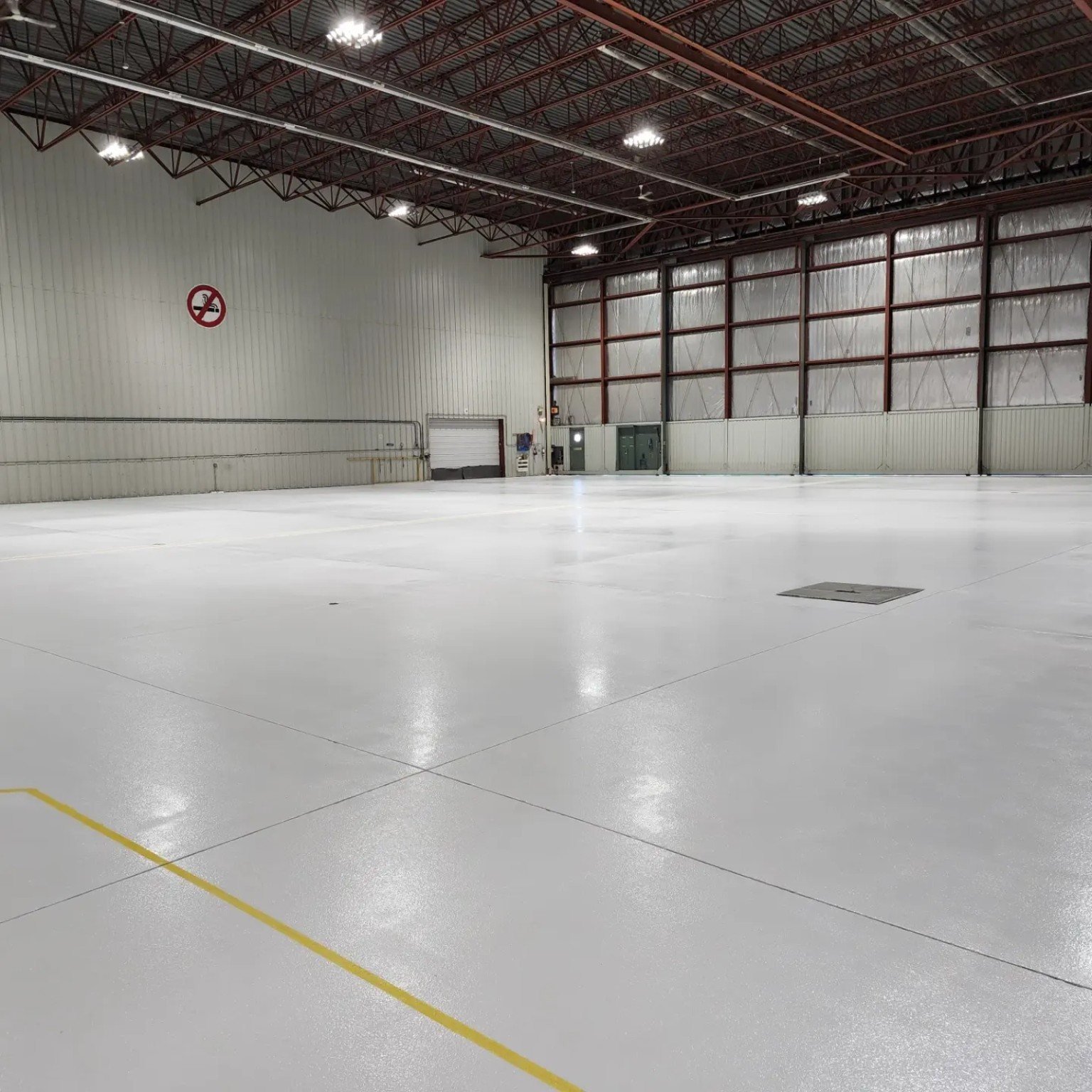
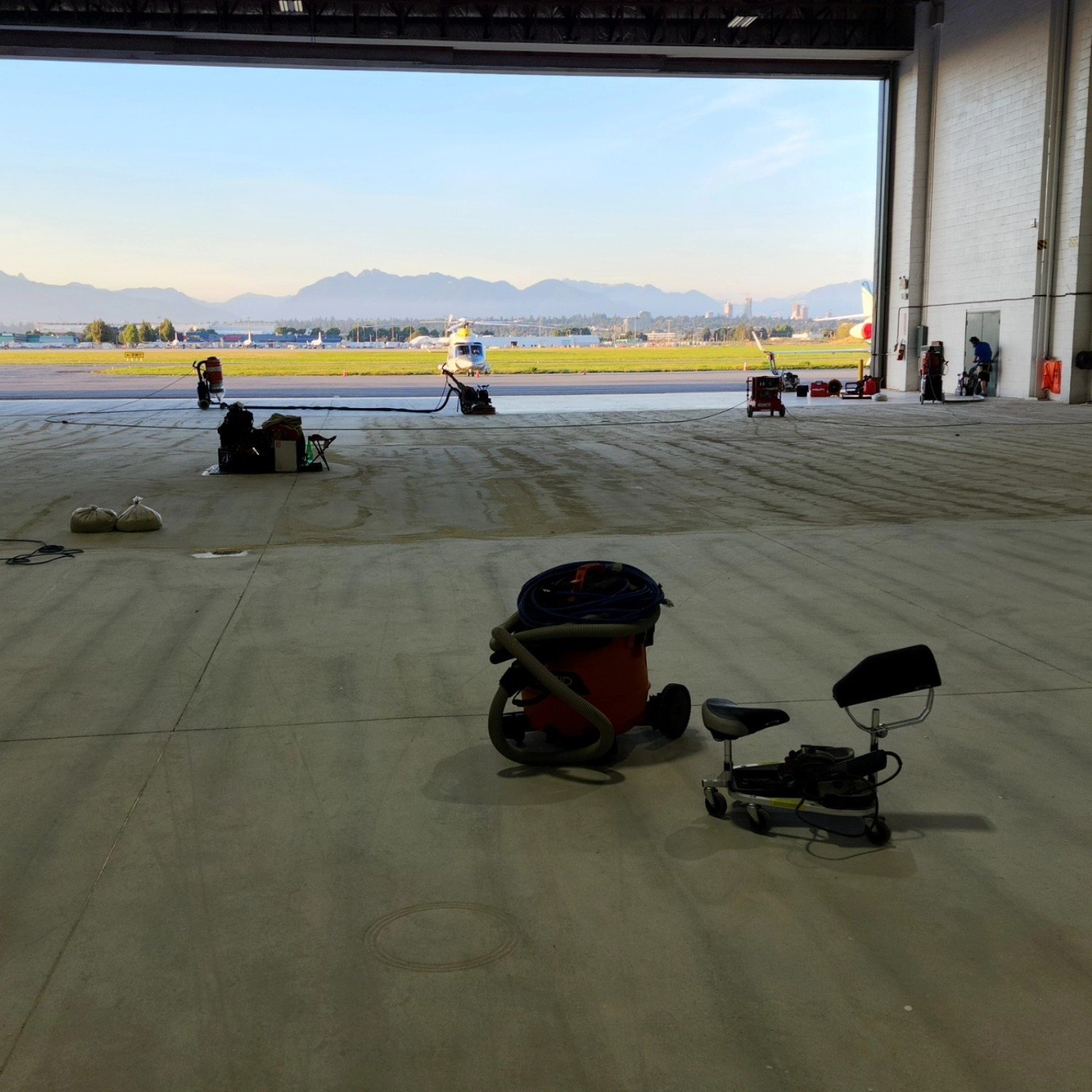
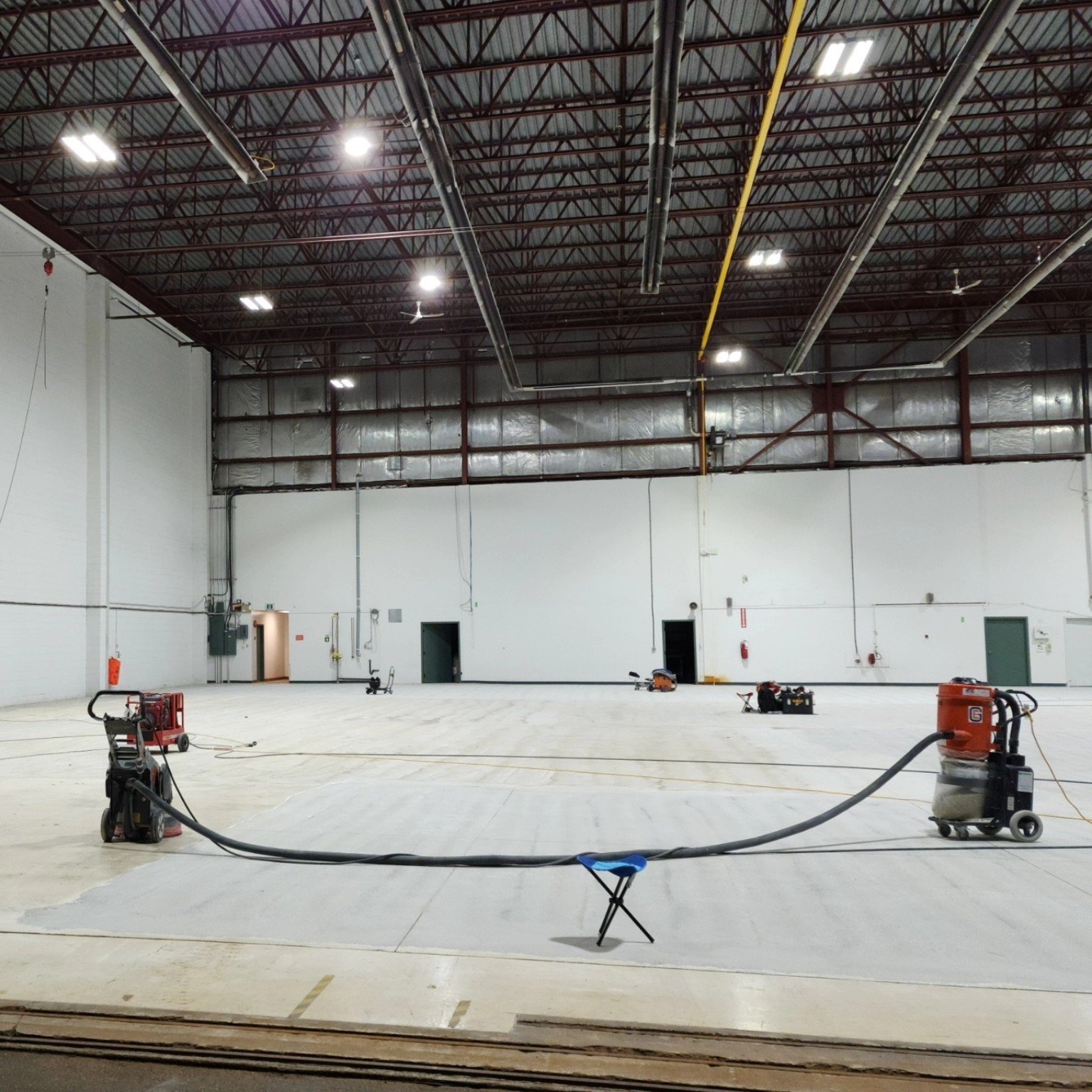
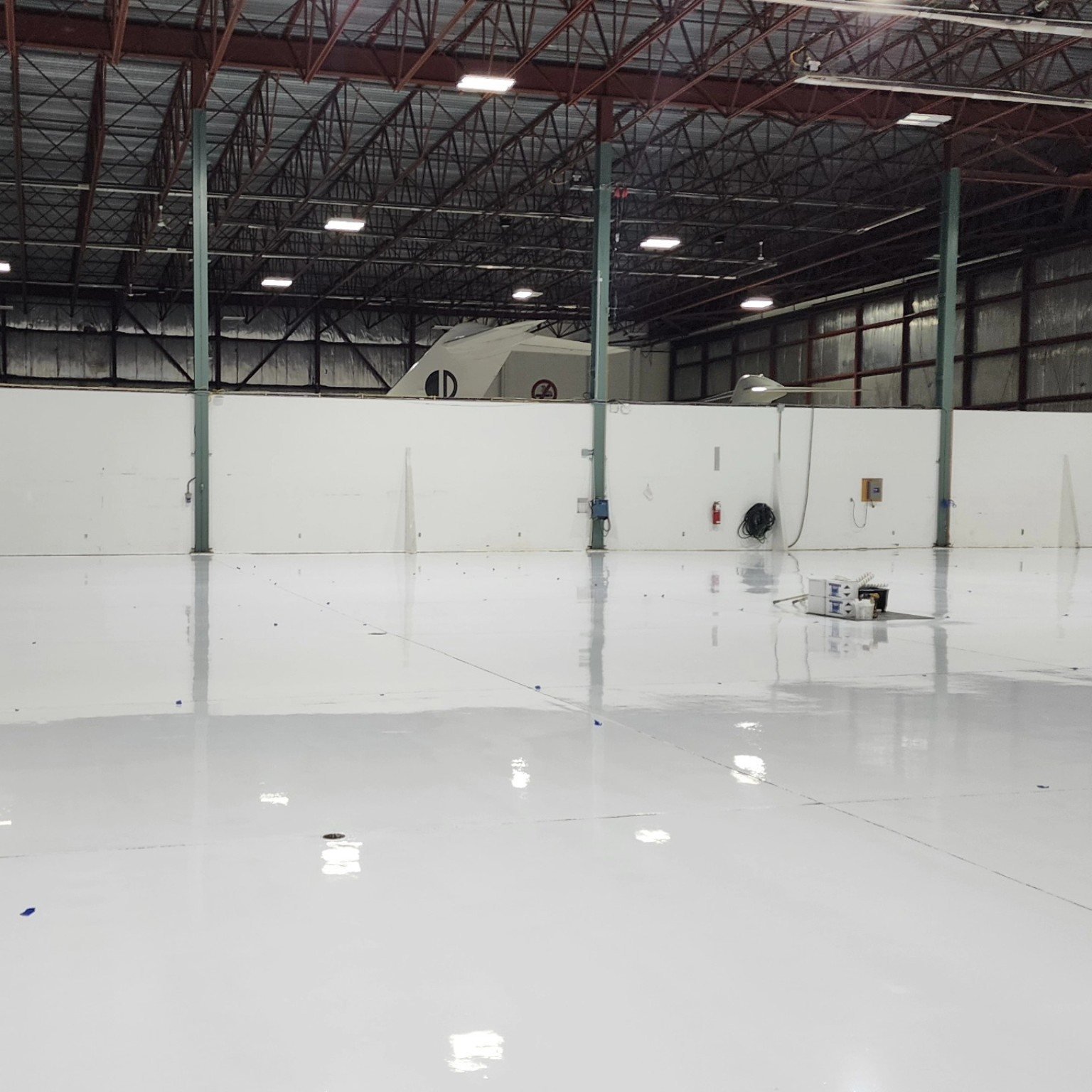
Million Air at YVR: approximately 34,000 sq ft of hangar coatings
Priority One Epoxy Flooring completed aircraft hangar coating work for Million Air at Vancouver International Airport. The project included extensive mechanical surface preparation before installation of the new resin flooring system.
These project photographs show the preparation and finished floor. They give hangar owners and facility teams a direct view of our work on a large aviation floor.
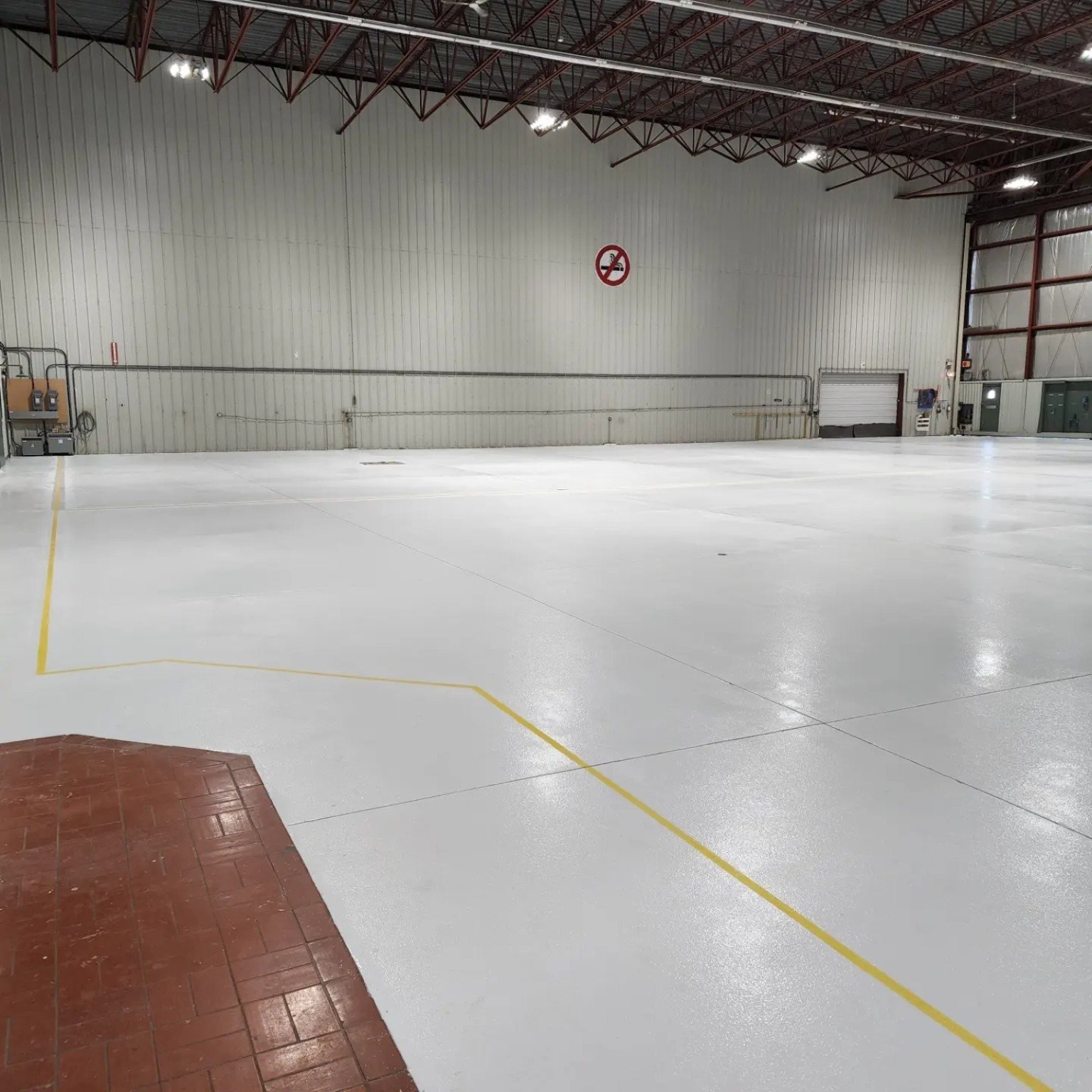
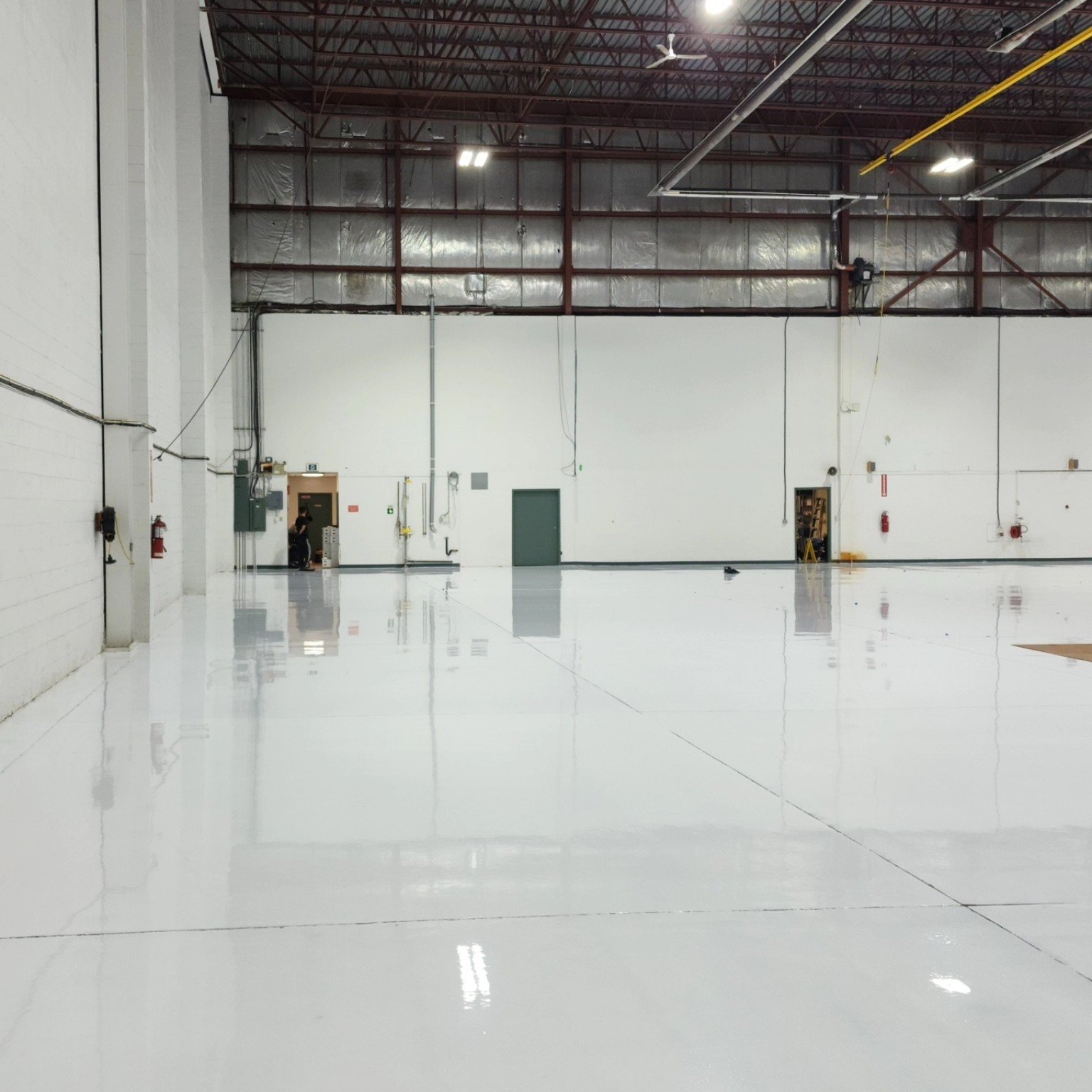
Select a project photograph to open the full-size image.
Hangar flooring planned around your operation
We install aircraft hangar epoxy flooring for private owners, corporate aviation facilities, fixed-base operators (FBOs), and maintenance, repair and overhaul (MRO) teams. The specification starts with what happens on your floor.
Private & storage hangars
Plan for aircraft parking, wheel traffic, cleaning and occasional maintenance. Finish selection balances appearance, visibility and the protection required by your actual use.
Corporate & FBO facilities
Review aircraft movements, tugs, service carts, presentation and access between bays. Coating work and line layouts need to fit the operating schedule.
MRO & service bays
Identify hydraulic fluids, fuels, cleaners, wheeled tooling and concentrated loads. Maintenance bays, tow paths and wet transitions may need different coating details.
Choosing an aircraft hangar floor coating system
A hangar floor is a complete assembly: prepared concrete, repairs, primer, resin body coats and the specified finish. Product compatibility and the installed build matter as much as the resin name.
High-build epoxy with a protective topcoat
An option for many storage and maintenance hangars. The epoxy body and compatible topcoat are selected together for wear, cleaning and the required chemical resistance.
Broadcast epoxy for added texture
Aggregate can adjust traction in traffic routes and spill-prone areas. The texture must also suit cleaning equipment, footwear and the movement of small-wheeled carts.
Urethane cement for demanding wet areas
Considered for designated wash or service zones where temperature changes and cleaning exposure justify it. Its suitability depends on the product and operating conditions.
Faster-curing resin options
Considered where the shutdown window is limited. Faster curing must still meet the required chemical, traffic and application conditions for the whole system.
Skydrol® resistance needs a specific product check
A coating described as chemical-resistant is not automatically suitable for every aviation fluid. Supply the exact hydraulic fluid, fuel, cleaner and de-icer names, together with expected temperatures and spill contact times. The proposed system should be checked against the manufacturer's current chemical-resistance data before approval.
Routine spill removal remains necessary. Chemical resistance does not mean unlimited exposure or permanent stain protection.
What your hangar flooring specification should cover
| Condition | Details to confirm |
|---|---|
| Aircraft, tugs & equipment | Wheel types, turning routes, stands, jacks and point loads. A coating protects the surface; it does not increase the slab's structural load capacity. |
| Concrete & moisture | Existing coating adhesion, oil contamination, cracks, spalls and moisture results against the selected system's limits. |
| Joints, edges & drains | Identify moving joints and agree the repair and termination details. Active movement needs appropriate joint treatment rather than simply coating over it. |
| Wet zones & door thresholds | Review tracked-in water, cleaning methods, drainage, sunlight and exterior exposure. Specify texture and UV resistance where needed. |
| Static-sensitive operations | Confirm whether an ESD or conductive system is required by the facility specification. Standard epoxy should not be assumed to provide static control. |
| Access & reopening | Agree work boundaries, aircraft relocation, ventilation, dust control and separate release times for foot traffic, equipment and chemical exposure. |
Concrete preparation and installation
- Review the hangar and agree the scope. Confirm floor area, operational zones, fluids, access requirements and the proposed coating build.
- Assess and prepare the slab. Review moisture and contamination, remove unsuitable coatings, and mechanically prepare the concrete to the selected system's required profile.
- Complete repairs and detail work. Address weak concrete, cracks, spalls, edges and agreed joint or drain details before the main coating work.
- Install the specified coating system. Apply compatible primers, body coats, texture and topcoats within the manufacturer's application and recoat conditions.
- Finish markings and plan handover. Complete the agreed layout and review cleaning guidance, applicable warranty terms and return-to-service requirements.
Hangar floor coating cost and downtime
What determines the price?
We quote from the actual scope. A sound, accessible slab and a contaminated floor with failing coatings require different amounts of work.
- Floor area, existing coating removal and mechanical preparation
- Concrete repairs, moisture treatment and joint details
- Resin build, chemical resistance and topcoat selection
- Texture, colours, coves and line markings
- Phasing, airport access, mobilization and shutdown constraints
Compare proposals on preparation, coating build and included details as well as the price per square foot.
When can the hangar reopen?
The schedule includes preparation, repairs, application and curing. A surface that is ready for foot traffic may still need more time before aircraft movements or chemical exposure.
Where access allows, sections can be planned around aircraft relocation and maintenance schedules. Work boundaries, ventilation and protection of nearby aircraft must be agreed with the facility team.
Return-to-service times are set from the selected products and site temperatures. We review the required reopening date before recommending the system.
Floor colours, visibility and line markings
A light, relatively uniform floor can make spills, tools and foreign object debris (FOD) easier to see. Review colour and sheen under your hangar's lighting, balancing visibility with glare and cleaning needs. Flooring supports inspections; it does not replace the facility's FOD procedures.
Walkways, equipment zones, aircraft parking outlines and tow paths can be planned with your operations team. The examples below come from our existing colour chart.




Colour references only. Availability depends on the selected coating system; approve a physical sample before installation.
View the full epoxy colour chartAircraft hangar flooring questions
What is the best floor coating for an aircraft hangar?
The best option depends on the fluids, traffic, slab and shutdown window. High-build epoxy with a compatible protective topcoat is one option. Wet areas, concentrated chemical exposure or static-sensitive work may require a different specification.
Will an epoxy hangar floor resist Skydrol®?
Only a system with suitable chemical-resistance data should be proposed for that exposure. Confirm the exact fluid and contact conditions with the coating manufacturer. Fuel resistance alone does not establish Skydrol resistance.
Can you recoat an existing aircraft hangar floor?
Often, after assessing adhesion, compatibility, contamination and moisture. Sound coatings may be suitable for preparation and recoating; failing or incompatible material needs removal. Repairs and a suitable test area may be necessary before proceeding.
Is a glossy hangar floor slippery?
Water, oil and other contamination can make a floor slippery. Texture can improve traction, but should be selected alongside cleaning methods, footwear and operating conditions. No floor finish removes the need for prompt spill control.
Does every hangar need an ESD floor?
No. Static-control requirements depend on the operations and facility specification. Where required, the floor must be part of a compatible, grounded and tested system. A conventional epoxy coating should not be treated as an ESD floor.
Do you handle hangar projects outside Vancouver?
We are based in Richmond and serve Vancouver and the Lower Mainland. Mobilization for selected larger hangar projects elsewhere in British Columbia is reviewed against the location, scope and schedule.
Related aviation flooring services
Aerospace & avionics
Flooring for electronics, component work and static-sensitive aerospace environments.
Aerospace & avionics flooringAirport terminals
Flooring for passenger circulation, concourses and airport support areas.
Airport terminal flooringGeneral maintenance areas
Resin flooring for mechanical rooms, workshops and non-aviation service spaces.
Maintenance area flooringRequest an aircraft hangar flooring quote
Send the hangar location, approximate square footage, floor photographs, fluids used on site and your shutdown window. Our Richmond-based team will review the requirements and discuss the next step for your Vancouver or BC project.