Types of Epoxy Floor Coatings in Vancouver — Choosing the Right System
Overview of self-levelling, flake, mortar, quartz, ESD and moisture-control epoxy systems for garages, warehouses, clinics and commercial spaces across Vancouver & BC.
Not all epoxy floors are built the same. The right system for a garage is often very different from what you’d specify for a food facility, a warehouse, or an electronics lab. Performance depends on traffic, chemicals, moisture conditions, and the finish you need day-to-day.
This guide breaks down the most common types of epoxy floor coatings used across Vancouver and BC, what they’re best for, and how to choose the right build based on real site conditions.
Important: This article is for educational purposes and is not a project quote or installation scope. For service details and system options, visit our epoxy flooring service page.
Epoxy flooring systems (not just “one coat of paint”)
Professional epoxy floors are built as layered systems. Each layer has a purpose: bonding to concrete, building thickness, adding traction or decoration, and protecting the surface from wear and chemicals.
- Primer: bonds to mechanically prepared concrete and reduces porosity.
- Build coat: self-levelling, slurry, or mortar layer that provides thickness and strength.
- Broadcast layer (optional): flakes or quartz for appearance and traction.
- Topcoat: clear or pigmented layer tuned for abrasion, chemicals and UV (where applicable).
Comparison of common epoxy floor coating types
| System Type | Best For | Key Strengths | Main Considerations |
|---|---|---|---|
| Self-levelling epoxy | Garages, showrooms, light industrial | Smooth finish; easy cleaning; strong wear resistance with proper build | Slip texture may be needed in wet zones; prep is critical |
| Quartz / slurry epoxy | Wet areas, entrances, healthcare, food-adjacent spaces | Traction-tunable; durable; decorative options | More steps; texture must match cleaning SOPs |
| Epoxy mortar | Forklift aisles, loading docks, slab repair | Highest strength; rebuilds pitting/spalling; long service life | Higher cost; usually targeted to high-abuse lanes |
| Flake / chip epoxy | Residential garages, shops, light commercial | Forgiving aesthetic; hides imperfections; good day-to-day traction | Topcoat design matters for cleanability and durability |
| ESD / conductive epoxy | Electronics, labs, sensitive equipment zones | Static control; supports equipment protection requirements | Must be specified and tested to meet the required performance target |
| Moisture-control epoxy primer | On-grade slabs, older buildings, moisture-prone sites | Improves long-term bond performance on damp substrates | Requires moisture evaluation; not a finished wear surface by itself |
Epoxy coating types (what they’re used for)
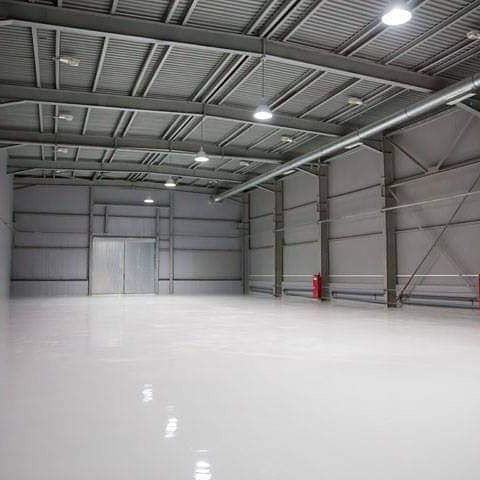
- Creates a smooth, high-build surface that looks clean and modern.
- Common for garages, showrooms, clinics and light industrial.
- Often paired with a wear-resistant topcoat where traffic is higher.
- Uses aggregate to build texture, traction, and durability.
- Strong for wet or safety-driven zones that still need cleanability.
- Texture can be tuned so it’s safe without becoming hard to maintain.
- Thick-build systems for serious loads and slab rehabilitation.
- Often used in forklift lanes, dock areas and impact zones.
- Common approach: mortar where needed + smoother coating elsewhere.
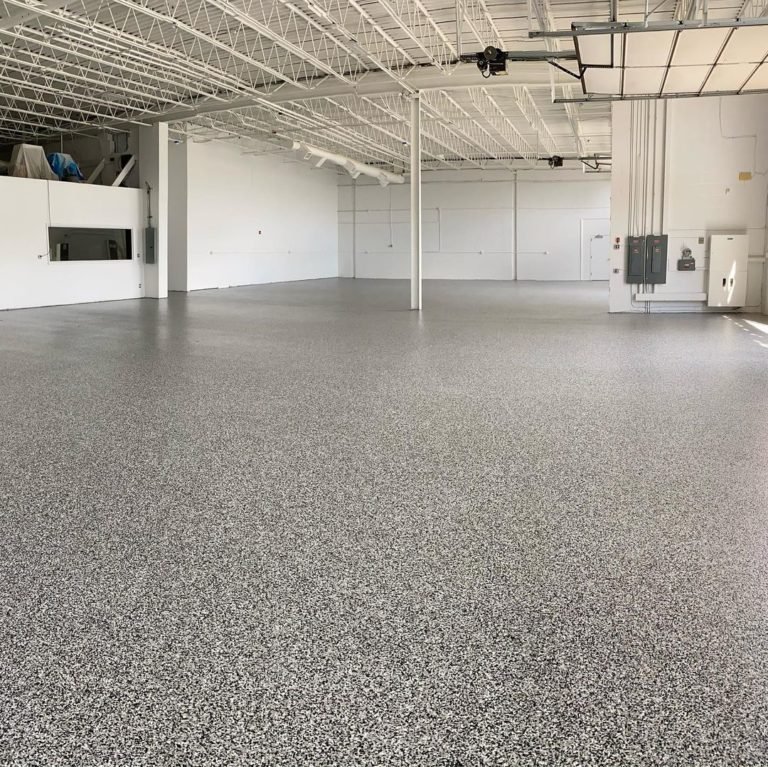
- Broadcast decorative chips, then seal with clear coats.
- Popular in residential and commercial garages because it hides dust and imperfections.
- Great balance of appearance, traction and everyday maintenance.
- Designed to manage electrostatic discharge for sensitive environments.
- Used in electronics, labs, data rooms and imaging areas.
- Should be tested and verified against the required spec.
- Foundation layer that helps manage moisture vapour transmission.
- Useful on on-grade slabs and older buildings across the Lower Mainland.
- Supports long-term adhesion under flake, self-levelling, quartz or mortar builds.
Matching epoxy coating type to real-world use
As a rule, the “best” epoxy coating type is the one matched to how the space is actually used:
- Garages & workshops: flake or self-levelling systems with traction tuned at entry points.
- Warehouses & logistics: heavier builds and targeted mortar lanes where turning and loads are highest.
- Food-adjacent & wash-down spaces: textured systems that balance traction with sanitation procedures.
- Clinics & labs: seamless, cleanable finishes; ESD where the use case requires it.
- Retail & showrooms: smooth, visually consistent finishes designed for appearance and easy upkeep.
Design & maintenance practices that protect performance
Choosing the right epoxy type is step one. Long-term performance depends on correct substrate prep, moisture awareness, and simple operational habits.
- Match thickness to loads (cars vs. forklifts vs. carts).
- Plan texture by zone (wet areas vs. dry corridors).
- Address slab moisture and repairs before choosing materials.
- Include transitions, edges, and detailing where traffic concentrates.
- Remove grit so it doesn’t wear the topcoat.
- Clean spills promptly (oils, chemicals, food acids).
- Use compatible cleaners (avoid harsh film-forming products).
- Maintain wheels/casters and avoid dragging sharp loads.
- Inspect turning lanes, thresholds and high-wear zones.
- Plan re-topcoats before wear reaches the body coat.
- Repair isolated damage early to prevent wider failure.
- Change in use (heavier loads, new chemicals, wash-down routines).
- Recurring wear concentrated in the same lanes.
- New safety, traction or hygiene requirements.
What’s the best epoxy coating type for a garage?
Many garages do well with a flake system because it’s forgiving, traction-tunable and easy to live with. The right primer depends on the slab’s moisture conditions and history.
When is epoxy mortar worth it?
Epoxy mortar is typically used where slabs are badly worn or loads are heavy (forklifts, impact zones, dock lanes). It can rebuild the surface and extend service life where thin coatings would fail early.
Do all projects need moisture-control primer in Vancouver?
Not always—but moisture evaluation is important in the Lower Mainland. On some on-grade slabs, moisture-control primers significantly reduce the risk of blistering and debonding.
Are textured systems harder to clean?
They can be if the texture is too aggressive for the cleaning method. The goal is to match texture level to the space so it stays safe without becoming difficult to maintain.
How do you choose the right system?
Start with how the space is used (traffic, loads, chemicals), then consider moisture conditions and safety goals. A written specification should match those requirements—not a one-size-fits-all template.