Commercial & Industrial Epoxy Floor Coatings: Benefits, Best Uses & System Selection
Commercial and industrial epoxy floor coatings are used to protect concrete in warehouses, production spaces, workshops, service corridors, utility rooms, labs, and other demanding facilities where durability, cleanability, safety, and long-term slab protection matter.
This guide explains where epoxy floor coatings perform best, how they compare with urethane cement and polyaspartic systems, what facility conditions matter most during specification, and when epoxy is not the right answer.
In commercial and industrial environments, the floor is not just a finish. It affects housekeeping, safety, maintenance budgets, downtime, and overall facility presentation. Bare concrete can dust, absorb spills, stain, and deteriorate under abrasion, impact, moisture, and rolling traffic. Once that wear begins, the surface becomes harder to clean and more expensive to maintain.
Properly specified epoxy floor coating systems create a dense, seamless, bonded surface over prepared concrete. Depending on the environment, the system may include a primer, moisture-control layer, high-build epoxy, aggregate broadcast, and a protective topcoat. The goal is not just to “coat the floor,” but to match the system build to the actual operating conditions of the space.
Commercial vs industrial epoxy floor coatings: what is the difference?
Commercial and industrial floor coatings are often grouped together, but the operating conditions are usually different. Commercial spaces typically prioritize cleanability, appearance, easier maintenance, and reliable daily performance in business interiors such as stockrooms, utility rooms, corridors, staff areas, service zones, and selected customer-facing spaces.
Industrial environments are usually more demanding. They may involve heavier rolling loads, stronger chemical exposure, impact, process traffic, wet cleaning, harsher maintenance conditions, or stricter performance requirements around production and uptime. In those settings, coating thickness, texture, topcoat chemistry, and repair scope become more critical.
The most important difference is not the label. It is the environment. A floor system should be selected based on what the slab is exposed to, how the area is cleaned, what moves across it, how much downtime is available, and what level of long-term performance is required.
What commercial and industrial epoxy floor coatings actually do
Commercial and industrial epoxy floor coatings are resin-based systems installed over concrete after proper surface preparation. When the resin and hardener react, they cure into a hard, bonded surface that helps protect the slab and creates a more controlled finish for the environment above it.
These are not simply “painted floors.” In serious facilities, epoxy flooring is usually specified as a multi-layer build matched to traffic, impact, chemical exposure, moisture conditions, sanitation requirements, and downtime limits. System thickness, traction level, topcoat type, and repair scope should all be chosen based on the use case rather than copied from a generic package.
Main benefits of epoxy floor coatings in commercial and industrial environments
Durability and wear resistance
One of the biggest reasons facilities move to epoxy is to protect concrete from daily abuse. Warehouses, workshops, production spaces, service corridors, and back-of-house commercial areas often deal with repetitive traffic patterns, turning wheels, dragged loads, and dropped tools that can quickly wear untreated slabs.
- Supports heavy rolling traffic and frequent daily use
- Helps reduce surface dusting and wear
- Protects against abrasion in traffic lanes and staging zones
- Extends the service life of the underlying concrete
Chemical and stain resistance
Many commercial and industrial floors are exposed to more than foot traffic. Oils, degreasers, coolants, cleaners, process spills, and by-products can stain or degrade unprotected concrete. Epoxy systems help create a surface that is easier to contain, inspect, and clean.
- Improves resistance to many common spills and contaminants
- Reduces staining compared with bare concrete
- Makes cleanup faster and more controlled
- Supports cleaner operating conditions in active facilities
Safety and operational clarity
Epoxy floors can be built with traction suited to the environment and can also incorporate striping, hazard markings, pedestrian lanes, and work-zone demarcation. That makes them useful for both safety and facility organization.
- Slip-resistant textures for wet or higher-risk areas
- Better visual clarity in work zones
- Colour zoning for traffic paths and storage areas
- Cleaner, easier-to-inspect surfaces for facility teams
Cleanability and hygiene
In food, beverage, healthcare, laboratory, and controlled spaces, the absence of grout joints and porous concrete surfaces can be a major advantage. Seamless resin floors are easier to wash, sanitize, and maintain than many traditional hard-surface alternatives.
- Seamless finishes help reduce dirt traps
- Faster daily cleaning and easier scrubber maintenance
- Better suited to sanitation-sensitive environments
- Supports a cleaner overall facility presentation
Where epoxy floor coatings perform best
Epoxy flooring is not a one-system-fits-all answer, but it performs extremely well in many environments when matched properly to the use case.
Warehouses and distribution centres
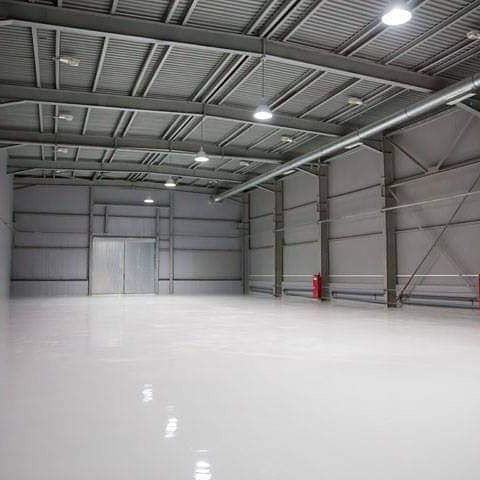
Warehouses often benefit from high-build epoxy systems because they improve cleanability, reduce dust, and provide a more durable finish under regular rolling traffic. In busier operations, traffic lanes, turning points, and impact zones may need reinforcement or a heavier-duty system build.
Manufacturing plants and production floors
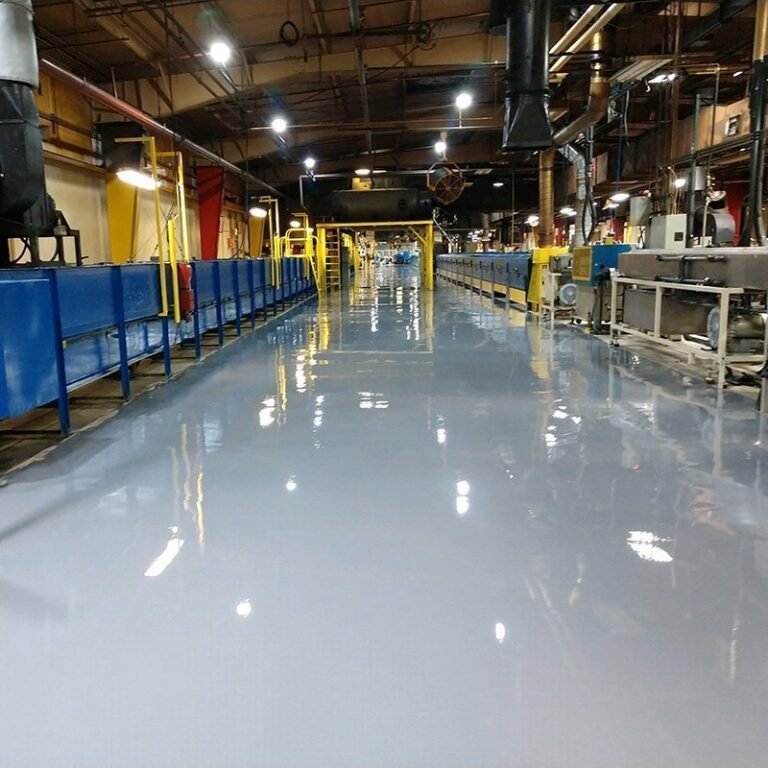
Production environments often need a balance of durability, cleanability, and chemical resistance. Epoxy is commonly used in manufacturing areas where floors must support equipment, process traffic, maintenance activity, and housekeeping standards without constant patching or dust generation.
Commercial back-of-house and support spaces
In commercial environments, epoxy can work well in service corridors, mechanical rooms, utility areas, stockrooms, staff spaces, and other hard-working interiors where durability and easier maintenance matter more than decorative flooring.
Retail, showroom, and selected customer-facing interiors
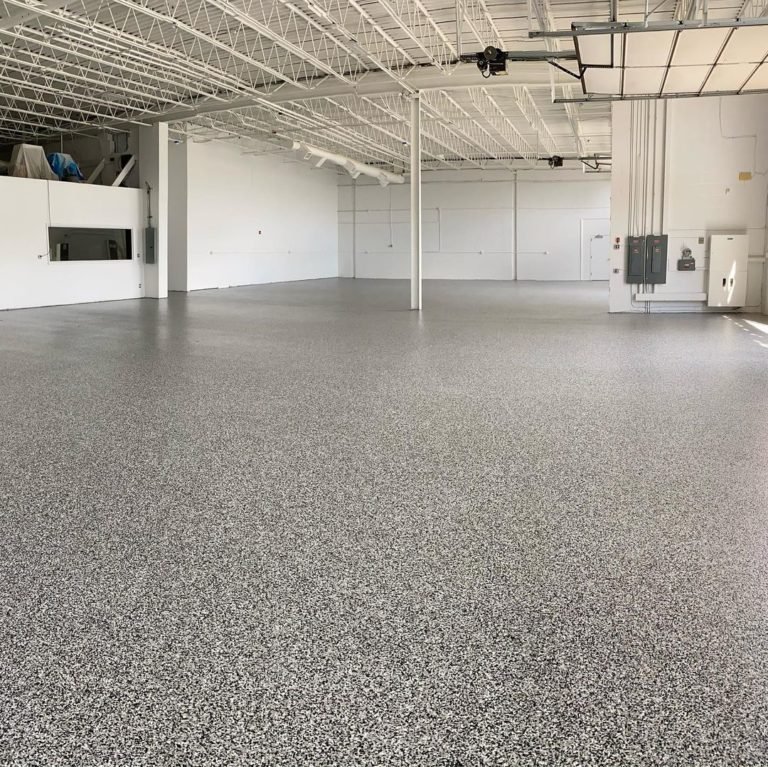
Decorative epoxy systems and cleaner solid-colour builds can also be a fit in customer-facing environments. When designed properly, these floors provide a polished appearance while remaining easier to clean than many porous hard-surface options.
Healthcare, pharmaceutical, and laboratory environments
Healthcare and controlled environments often need seamless, hygienic flooring with strong cleanability and resistance to regular sanitation procedures. In those spaces, system selection should account for chemical exposure, detailing requirements, traffic levels, and transition conditions such as cove bases and terminations.
Related pages: pharmaceutical flooring solutions and laboratory epoxy flooring.
Workshops, service bays, and maintenance areas
Workshops and service environments are good examples of where system choice matters. Some spaces are fine with high-build epoxy, while others need heavier-duty builds or urethane cement depending on heat, chemical exposure, point loads, and wet-cleaning practices.
For more use-case detail, see our workshop epoxy flooring solutions page.
When epoxy is not the best flooring system
Epoxy is versatile, but it is not the best answer for every facility condition. Some environments are harder on the floor than a standard high-build epoxy system should be expected to handle.
Hot washdown and thermal shock
Areas exposed to hot water, steam, or repeated temperature swings often perform better with urethane cement rather than a standard epoxy build.
Severe moisture conditions
Moisture-related failures are a common reason coatings blister or debond. Where slab moisture is elevated, mitigation layers or alternative system strategies may be required.
UV-exposed or fast-return projects
In some environments, especially where cure speed or UV stability matters, polyaspartic topcoats or alternate resin systems may be the better fit.
Severely damaged concrete
If the slab is heavily worn, contaminated, cracked, or structurally compromised, repair scope and rebuild strategy may matter more than the coating chemistry alone.
Epoxy vs urethane cement vs polyaspartic
Many decision-makers use the word “epoxy” to describe all resin flooring. In practice, the right system may be epoxy, urethane cement, polyaspartic, or a hybrid combination depending on the environment.
| System | Best Fit | Main Strengths | Main Considerations |
|---|---|---|---|
| High-build epoxy | Warehouses, production spaces, many commercial support areas, service corridors | Strong adhesion, good chemical resistance, durable finish, clean appearance | Needs proper prep and moisture control; not always ideal for severe thermal shock or heavy washdown |
| Epoxy mortar | High-impact zones, slab rebuilds, severe wear areas | Very high strength, useful for resurfacing damaged concrete, handles harder abuse | Higher cost and often reserved for specific zones rather than entire buildings |
| Urethane cement | Food plants, wet process areas, hot washdown, thermal-shock environments | Excellent thermal and chemical performance, strong in wet or hot conditions | Usually more specialized and not always needed in dry general-use areas |
| Polyaspartic | Fast-turn environments, quick return-to-service projects, selected UV-exposed areas | Rapid cure, good abrasion resistance, better UV stability | Fast cure requires tighter execution and experienced installation |
In many facilities, the best answer is not to force one chemistry everywhere. A building may use epoxy in dry traffic zones, urethane cement in hot washdown areas, and faster-curing topcoats where return-to-service timing matters. Matching the system to the exposure conditions is usually more important than trying to simplify everything into one product category.
Common specification mistakes in commercial and industrial flooring
Choosing a system by price alone
A cheaper package can become more expensive if it fails early, needs repeated patching, or was never suited to the environment in the first place. System fit matters more than headline cost.
Ignoring moisture conditions
Moisture issues are one of the most common causes of debonding and blistering. Slab testing and, where needed, moisture-control layers are critical.
Underestimating traffic and impact
Forklift routes, pallet-jack turns, dock thresholds, and heavy point loads can require thicker or reinforced systems. A light-duty spec in a hard-use zone will not age well.
Using the same texture everywhere
Different zones of the same facility often need different traction levels. Wet process areas, wash zones, and dry corridors should not all be treated identically.
What facility owners should review before specifying a coating
The right flooring system is usually chosen by evaluating the environment first, not by starting with a product name. Traffic type, slab condition, moisture risk, chemical exposure, cleaning methods, downtime limits, and detailing requirements all influence which system makes sense.
- What traffic moves across the floor every day?
- Is the slab dry, clean, and structurally suitable for coating?
- Will the space face chemicals, washdown, heat, or thermal shock?
- Does the floor need slip resistance, colour zoning, or line marking?
- Are some areas better suited to epoxy while others need another resin system?
- How much downtime is actually available for installation and cure?
Maintenance practices that protect long-term performance
Even a well-installed floor needs the right maintenance approach. Good housekeeping and periodic review help extend service life and protect appearance.
- Remove abrasive grit and debris regularly
- Clean spills promptly, especially oils, chemicals, and process residues
- Use cleaners compatible with the installed flooring system
- Inspect high-wear lanes, thresholds, and turning zones
- Repair local damage early before it spreads
- Re-topcoat high-wear areas before the system is fully worn through
Commercial and industrial epoxy floor coatings FAQs
How long do commercial and industrial epoxy floors last?
With correct preparation and an appropriate system build, epoxy floors can perform for years in active facilities. Lifespan depends heavily on traffic, impact, moisture conditions, and maintenance practices.
Are epoxy floors good for warehouses?
Yes. High-build epoxy is a common warehouse flooring option because it improves cleanability, reduces dust, and performs well under regular traffic when matched to the operation.
Is epoxy always the best flooring for food-processing plants?
Not always. Some dry areas may suit epoxy well, but hot washdown, wet processing, and thermal-shock environments often call for urethane cement instead.
What usually causes epoxy flooring to fail early?
The most common causes are poor surface preparation, moisture issues, slab contamination, and selecting a system that is too light-duty for the environment.
Can commercial and industrial flooring work be phased to reduce downtime?
Yes. Many projects are completed in phases, and some resin systems can be selected specifically to shorten cure windows and reduce operational disruption.
Use this page for coating selection and system comparison. For project-specific installation information, explore our main commercial and industrial service pages below.