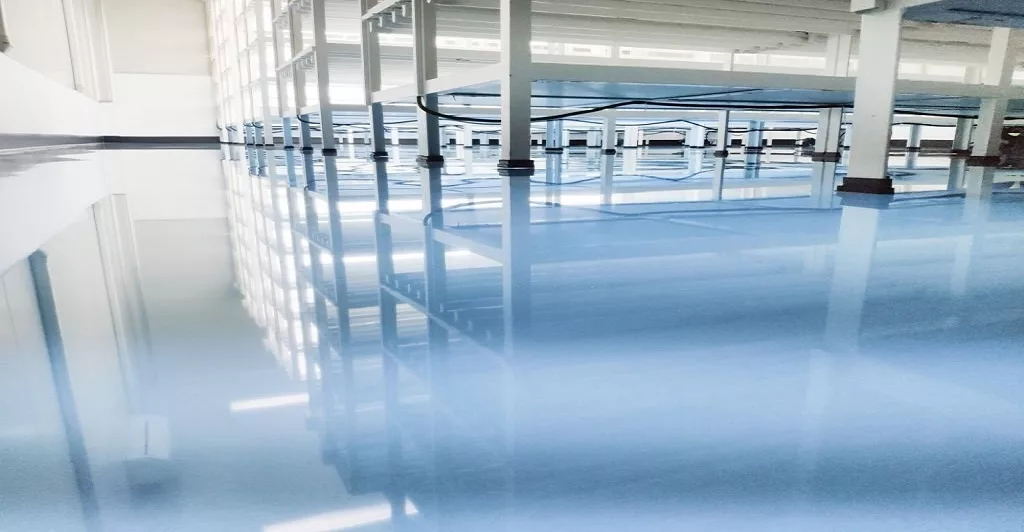
Polyaspartic vs Polyurea Floor Coatings — Key Differences (BC & Vancouver)
A practical comparison of cure speed, UV stability, flexibility, durability, and cost — designed to answer “what’s the difference between polyurea and polyaspartic?” and help you choose the right floor coating system.
Polyaspartic and polyurea floor coatings are often mentioned together because both are high-performance resins used on garages, parkades, and industrial slabs where fast turnaround and long-term durability matter.
But they are not identical. In general, polyurea cures extremely fast and can be very flexible, while polyaspartic is engineered to be more controllable during installation and highly UV stable. The real-world “best” choice depends on UV exposure, downtime requirements, slab movement, and how the space is actually used day-to-day.
Polyaspartic vs Polyurea for Vancouver & BC Weather
British Columbia floors deal with wet winters, temperature swings, road salt, and (in many spaces) tight shutdown windows. Both polyaspartic and polyurea can be excellent floor coatings — but the best system depends on UV exposure, downtime, surface moisture control, and how much movement your slab sees.
In real installs, “failures” usually come from prep and conditions (moisture, contamination, profiling, temperature/humidity) — not from the resin name on the label.
Core differences that matter most
- Polyurea: extremely fast set times; great for ultra-short shutdown windows, but less forgiving.
- Polyaspartic: fast return-to-service with more working time for consistent roll/finish control.
- For both, environmental control (temperature/humidity) impacts flow, cure behavior, and finish quality.
- Polyaspartic: commonly selected where UV exposure matters (garage doors, aprons, bright openings).
- Polyurea: often used under a UV-stable topcoat if sunlight exposure is present.
- UV stability affects yellowing risk, gloss retention, and long-term clarity over decorative systems.
- Polyurea: typically higher flexibility; useful where movement is expected.
- Polyaspartic: can also be flexible, but formulas vary widely by manufacturer and use case.
- Joint/crack strategy matters more than marketing: repair plan + movement accommodation wins.
- Both can perform at a very high level when the system is designed correctly.
- Performance is driven by prep, profile, system thickness, and the full build (primer/body/topcoat).
- “Best” depends on chemical exposure, traffic type (tires, pallets, forklifts), and cleaning routines.
Polyaspartic vs Polyurea — quick comparison table
| Factor | Polyaspartic | Polyurea |
|---|---|---|
| Working time | Fast, but typically more controllable for consistent finish | Very fast; requires tight workflow and experienced crews |
| UV stability | Commonly strong UV performance (formula-dependent) | Often needs a UV-stable topcoat in sun-exposed zones |
| Flexibility | Varies by product; can be flexible with the right build | Often higher flexibility; useful for movement-prone environments |
| Return to service | Fast return; widely used for quick-turn floors and topcoats | Ultra-fast return; best when downtime is extremely limited |
| Typical role in systems | Common as a UV-stable clear/topcoat over flake or quartz | Common as base/body coats in speed-driven or industrial builds |
| Best fit | UV-exposed areas, decorative systems, controllable installs | Extreme speed needs, flexible performance, shutdown windows |
Where each system makes the most sense
- UV exposure matters (sunlight near doors/openings)
- You want fast return to service with more workable install conditions
- You need a tough, clear topcoat over flake or quartz systems
- You care about long-term clarity and gloss retention
- Downtime is extremely limited and speed is the top priority
- You want high flexibility in movement-prone environments
- Your crew/system design accounts for very fast cure behavior
- You’re optimizing for industrial throughput over decorative finishing time
Cost: what actually drives price (polyaspartic vs polyurea)
Searchers often ask whether polyaspartic or polyurea is “cheaper.” In practice, the price difference is usually less important than the factors that drive the total system cost:
- Concrete prep scope: coating removal, oil contamination, grinding profile, crack/joint work.
- System build: primer/base/body/topcoat, thickness, and whether you’re adding flake or quartz.
- Downtime constraints: faster turnarounds can increase labor complexity and planning.
- Exposure: UV, chemicals, hot tires, pallet/forklift traffic, and cleaning methods.
If your goal is long-term performance, prioritize prep quality + system design over the resin name alone.
Decision guide: which coating is better for your floor?
- If UV exposure is significant (bright garage door zones, sunlit edges): lean polyaspartic as a UV-stable layer.
- If downtime is the #1 constraint and you need the fastest return: polyurea may be the better base/system driver.
- If slab movement is expected: ensure the build addresses joints/cracks properly; resin choice alone won’t solve movement.
- If you want the “best of both”: many pro systems use them together in a layered build.
Is polyurea always better because it cures faster?
No. Faster cure can be a benefit, but it can also increase installation difficulty. The best system matches UV exposure, downtime, and traffic — and is installed under the right conditions with proper concrete prep.
Is polyaspartic more UV-stable than polyurea?
Often yes. Polyaspartic is commonly selected for UV stability in sun-exposed zones, but final performance depends on the specific product formula and the full system build.
Can polyaspartic and polyurea be used together?
Yes. Many professional floor coating systems combine resins in a layered build (primer/body/topcoat) to balance speed, durability, and UV stability.
What causes failures with these fast-cure coatings?
Most failures trace back to poor prep, moisture, contamination, or installing outside the product’s environmental window (temperature/humidity). Fast-cure products are less forgiving — prep and process matter.