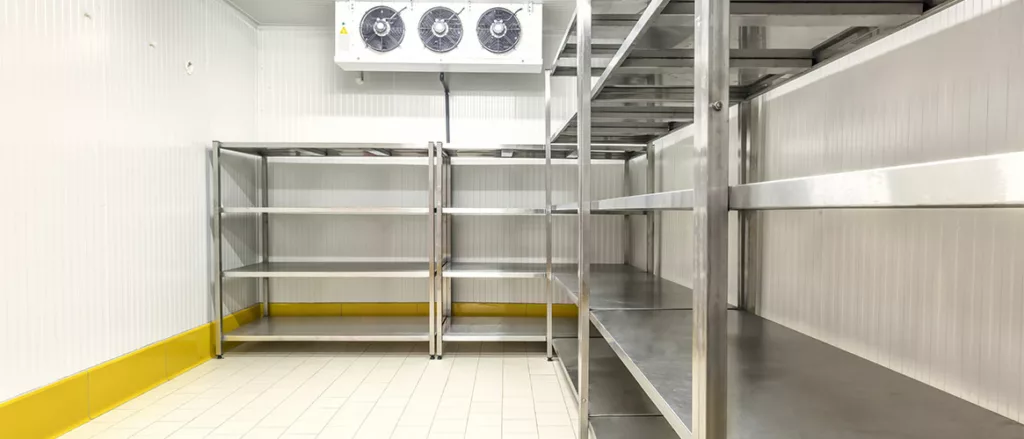
Walk-In Cooler Flooring: Epoxy vs Urethane-Cement (What Works in BC)
A practical guide to walk-in cooler & freezer flooring for restaurants, food facilities, and cold storage across Vancouver & BC — including system types, failure points, install steps, and maintenance.
Walk-in coolers, freezers, and refrigerated corridors are harsh flooring environments. Condensation, wash-downs, temperature swings, and constant rolling loads expose weak concrete fast — and once floors crack or trap moisture, sanitation becomes harder and inspection risk goes up.
That’s why many cold rooms use resinous flooring systems (epoxy, urethane topcoats, and urethane-cement). The goal is a seamless, non-porous surface that’s cleanable, slip-tuned, and resilient through cold cycles.
Why cooler floors fail (and why it’s usually not the “epoxy”)
Most walk-in cooler flooring failures trace back to a few predictable issues — and the resin you pick is only one part of the equation.
- Moisture vapor drive pushing up from the slab (especially older or below-grade slabs).
- Cold condensation sitting at joints, edges, and door thresholds.
- Poor prep (smooth concrete, contamination, or “etch-only” prep).
- Thermal cycling from wash-downs or door-open temperature swings.
- Impact & rolling loads at the entry where pallet jacks and carts turn.
- Mechanical prep + proper concrete profile for bond.
- Right primer for the slab condition (and moisture strategy when needed).
- System thickness matched to traffic (not “one coat”).
- Cleanable traction where water/ice is present.
- Correct detailing at drains, coves, joints, and thresholds.
Epoxy vs urethane-cement for walk-in coolers & freezers
Both systems can be excellent — the “best” choice depends on your cleaning method, temperature swings, and how hard the room is used.
- Great for dry-to-damp cooler rooms and refrigerated corridors.
- Strong chemical resistance and cleanability when properly built.
- Works well with wear layers (urethane/polyaspartic) for abrasion resistance.
- Must be designed correctly for moisture risk and temperature limitations.
- Best choice where floors see hot water / steam cleaning or aggressive thermal cycling.
- More tolerant of temperature swings than standard epoxy.
- Thicker, more “industrial” feel — ideal for heavy wash-down zones.
- Common in processing, sanitation-heavy food zones, and blast areas.
- Dry coolers / corridors: epoxy build + wear layer + cleanable traction.
- Wet wash-down rooms: urethane-cement + coves + drainage detailing.
- Thresholds & ramps: reinforced build + targeted texture for traction and durability.
Key details for CFIA/HACCP-style sanitation programs
Inspections focus on cleanability, damage, and harbor points. These details are often more important than the brand of resin:
- Integral cove base at wall transitions (no open corners).
- Sealed penetrations and tight transitions at equipment edges.
- Drain surrounds detailed to resist impact and water intrusion.
- Joint strategy that matches the slab (and prevents recurring edge failure).
- Cleanable texture in wet zones (not overly aggressive grit).
- Consistent traction at thresholds (where ice and condensate form).
- Good drainage and slope management to prevent standing water.
- Clear maintenance guidance (what cleaners to avoid).
Installation overview: what a durable cold-room floor needs
Cold storage work is won or lost in the preparation and detailing. A reliable install typically includes:
- Assessment: slab condition, moisture risk, temperatures, cleaning method, traffic, drains, and thresholds.
- Mechanical prep: diamond grinding or shot-blasting to achieve the correct surface profile.
- Repairs & detailing: cracks, spalls, joints, coves, drain edges, and threshold reinforcements.
- Primer strategy: matched to the slab and moisture conditions.
- System build: thickness and texture tuned for carts/pallet jacks and sanitation needs.
- Cure + handover: clear reopening windows and cleaning/maintenance guidelines.
Where resinous cold-room floors add the most value
- Seamless, cleanable floors that reduce odor and staining risk.
- Traction tuned for wet footwear and quick staff movement.
- Durable thresholds where carts and deliveries roll through.
- Systems built for wash-downs, chemicals, and thermal cycling.
- Cove bases and drain detailing that supports audit readiness.
- Hard-wearing surfaces for pallet jacks and heavy rolling loads.
- Impact resistance and wear performance in staging lanes and aisles.
- Cleanability that improves daily housekeeping and reduces downtime.
- High-visibility finishes that improve lighting in enclosed spaces.
- Non-porous floors that don’t absorb spills and proteins.
- Slip-tuned surfaces near doors, drains, and wet corridors.
- Finish options that stay professional in retail-adjacent areas.
Maintenance tips that keep cooler floors audit-ready
- Remove grit (it accelerates wear under wheels and boots).
- Use approved cleaners and avoid film-forming products unless specified.
- Address ice build-up near thresholds early (before it turns into chipping).
- Inspect drains, coves, and entries for impact damage on a set schedule.
- Plan targeted maintenance (touch-ups or re-wear-layering) before you wear through the build coat.
Can epoxy floors handle freezing temperatures?
They can — when specified correctly and installed over properly prepared concrete with the right primer strategy. For areas with extreme thermal cycling or hot-wash sanitation, urethane-cement is often the safer choice.
Are these floors food-safety friendly?
Resinous floors are commonly used in food environments because they’re seamless and non-porous when detailed correctly. Cove bases, sealed transitions, and cleanable textures help support sanitation programs.
Will the floor be slippery when wet or icy?
It doesn’t have to be. The key is specifying a cleanable traction profile by zone — with extra grip at thresholds, ramps, and drain areas — without creating a surface that traps soil and becomes hard to sanitize.
How much downtime should we plan for?
Downtime depends on the system and site conditions. Many projects are phased so operations can continue. Cure windows and reopening schedules should be set before work starts so you can plan product moves and staffing.
Can damaged cooler floors be resurfaced?
Often, yes. The surface must be mechanically prepared, damaged zones repaired, and moisture risk addressed before installing a new system. A site review determines whether localized repair or full resurfacing is the best move.